Most people don’t know what phishing is until they become a victim. Phishing statistics show that this type of cybercrime is on the rise, and the best way to reduce the chances of becoming a victim is to get informed.
Cybercriminals hope their victims will take the bait and give them sensitive data or access to their systems. Unfortunately, antivirus software can’t help if we’re reckless. The data we have gathered here will help you better understand the threats and be safer in the online world.
Top Phishing Facts (Editor’s Choice)
Phishing attacks against financial institutions have increased by almost 7% in 2021
There were 1,001 data breaches in the US in 2020
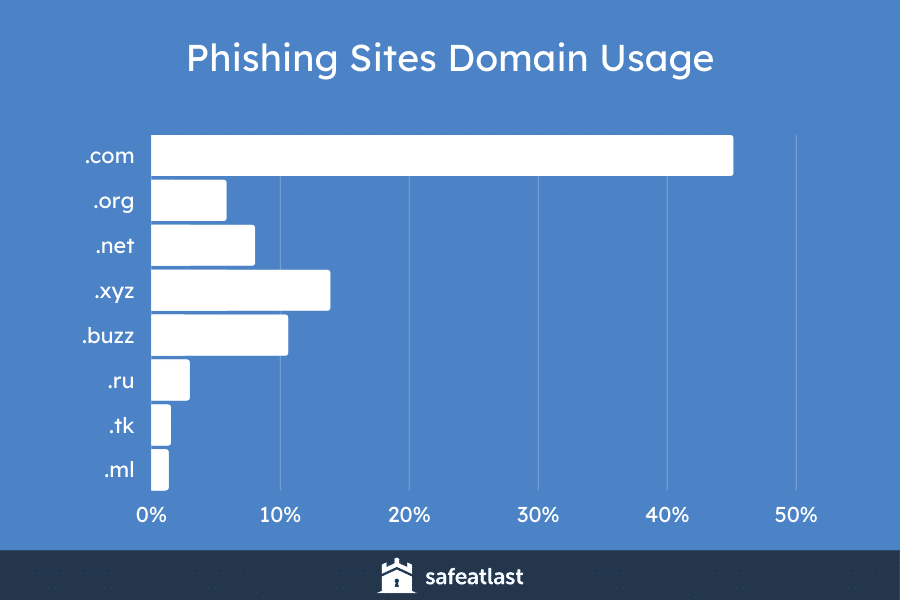
40% of phishing sites use .com domains
10% of spear phishing emails are part of a sextortion scam.
Phishing attacks in the US more than doubled in 2020
Google and Facebook lost $100 million as a result of phishing attacks.
83% of spear phishing attacks are brand impersonations
61% of internet users can’t identify phishing websites and emails
General Phishing Statistics
1. Phishing attacks against financial institutions increased by almost 7% between Q4 of 2020 and Q2 of 2021.
(APWG)
Financial institutions have always been popular targets, and the number of attacks is growing. In Q4 of 2020, they dealt with 22.5% of all phishing attacks, but the percentage jumped to 29.2% in Q2 of 2021. Another sector taking a massive hit is cryptocurrency.
Digital wallets and exchanges have seen a dramatic rise in cyberattacks. They went from 2% of all phishing attacks in Q1 of 2021 to 7.5% in Q2 of 2021. The results are not surprising, considering the popularity and significant increase in cryptocurrency value. These phishing attack statistics show that attacks are targeted towards lucrative sectors.
2. Around half of all phishing attacks were targeted at financial institutions and social media in Q1 of 2021.
(Statista)
Financial institutions and social media were the most popular targets at the beginning of 2021. At the same time, SaaS and webmail sectors had a slight decrease, with 19.6% of all phishing attacks. With money flowing in from the government incentives and the lockdowns causing people to spend more time at home and on social networks, the results are not surprising.
3. The FBI states that the phishing attacks in the US more than doubled in 2020.
(FBI)
FBI phishing statistics show that there were 241,342 complaints, with losses going over $54 million in 2020. This was more than a 100% increase compared to 2019 when 114,702 cases and $57 million in losses were reported. Interestingly, even though the number of attacks increased dramatically, the overall damage was actually lower in 2020.
4. 46% of phishing websites use SSL certificates.
(Webroot)
This is one of the most worrisome phishing facts. Internet users often rely on that certificate as proof that the website is legit, and the very fact that there are so many false websites out there using this certificate is very troubling.
With SSL certificates, hackers add a lock icon and the HTTPS prefix to the web address. These are the two tell-tale signs of genuine websites, so users never even suspect the site they’re using isn’t trustworthy.
Types of Phishing Attacks and Emerging Trends
5. One out of ten spear phishing emails is part of a sextortion scam.
(ComputerWeekly)
Sextortion and blackmail emails were once part of large campaigns that most spam filters would detect. Nowadays, hackers send fewer of these emails targeting specific people, so they’re much more likely to end up in the target’s inbox.
These emails usually come from hacked Google and Microsoft accounts and target executive managers at companies. In them, hackers claim to have made a compromising video of the victim using their computer’s camera and demand a large Bitcoin payment.
6. In 2019, almost 90% of businesses were victims of phishing attacks.
(Proofpoint)
A 2020 Proofpoint hacking statistics report shows that 88% of organizations experienced targeted phishing attacks in 2019. That same year, 86% had their business email network compromised by hackers. These numbers demonstrate that instead of casting a wide net, hackers are now targeting specific businesses to ensure their phishing campaigns’ success.
7. In Q3 of 2020, most phishing sites used .com domains.
(Securelist)
During the third quarter of 2020, 40.09% of phishing websites were hosted on .com domains, making them even more difficult to distinguish from genuine sites. Statistics on phishing attacks reveal that hackers also used other seemingly legit domains, such as .org (1.79%) and .net (3%). However, many opted for phishy-looking domains like .xyz (5.84%) and .buzz (2.57%).
Interestingly, the top 10 includes three top-level domains: .ru (Russian national domain) in 2.93% of cases, .tk (the domain of Tokelau, a territory of New Zealand) in 1.47% of cases, and .ml (Mali’s national domain) in 1.3% of cases.
8. Since 2011, the number of mobile phishing attacks has been growing by 85% each year.
(Lookout)
According to mobile phishing statistics, the number of attacks has been growing since 2011 at a steady annual rate of 85%. In the first quarter of 2020 alone, mobile phishing attacks have gone up by 37%. Mobile devices are mostly targeted for all the personal and corporate data they carry. Research shows that mobile users are three times more likely to fall for phishing scams.
9. There were more than 611,000 phishing sites in the first quarter of 2021.
(Statista)
The latest phishing statistics show that a total of 611,877 unique phishing sites were discovered in the first quarter of 2021. Encouragingly, this number marks a 5% decrease compared to the last quarter of 2020. Unfortunately, it’s also about four times more than what we saw in early 2020. That tells us that this downward trend will not last long and that the numbers will rise again.
Interesting Phishing Stats
10. Spam messages accounted for 28.5% of global email traffic in 2019.
(Statista)
Minor interruptions aside, the share of email spam in total email traffic has been steadily declining since 2008. That year, 92.6% of all email messages exchanged worldwide were spam. In the 11 years since then, the share of spam emails has gone down by more than two-thirds, according to internet spam statistics. The number from 2019 also represents a significant decline from 2018, when email spam volume was 45.3%.
11. More than 50% of ransomware is distributed through phishing emails.
(Statista), (Proofpoint)
Phishing emails are still the preferred way for criminals to conduct ransomware attacks. Cybercriminals can buy, rent or lease ransomware instead of creating their own. That gives them more time to invest in new phishing techniques and baits. Ransomware statistics show six major organizations with as many as 350,000 emails sent daily in June 2020.
12. Gmail blocks over 100 million phishing emails daily.
(Google Security Blog)
Google phishing statistics reveal that Gmail’s built-in filters block more than 100 million phishing emails daily. In 68% of the cases, blocked emails are part of a previously unknown phishing scam. Google notes that the attacks are usually targeted at a few dozen organizations with corporate accounts on Gmail. This again shows that hackers have reduced the volume of attacks to focus on those most likely to fall for their scam.
13. Phishing scam statistics show that about two-thirds of internet users can’t identify phishing websites and emails.
(Avast)
Avast’s survey showed that 61% of participants couldn’t distinguish between a genuine and fake Amazon login page. It could be that users are relying too much on their antivirus programs and don’t pay attention.
In just one month, the company has blocked almost 3 million phishing attempts targeting more than 590,000 US users.
14. Google and Facebook lost $100 million as a result of phishing attacks.
(Fortune)
Even tech giants like Facebook and Google aren’t immune to these attacks. Cybercrime statistics show that these two companies lost over $100 million in one of the biggest phishing attacks to date. A hacker pretended to be a computer parts supplier and was regularly sending invoices. The companies were clearing them without suspecting anything.
What makes this case interesting is that the criminal was caught. Unfortunately, that happens very rarely in cybercrime. The criminal was arrested in Lithuania and extradited to the US. He is now serving a sentence in US federal prison.
15. “Urgent” is the most common word in phishing emails targeted at businesses.
(PhishingBox)
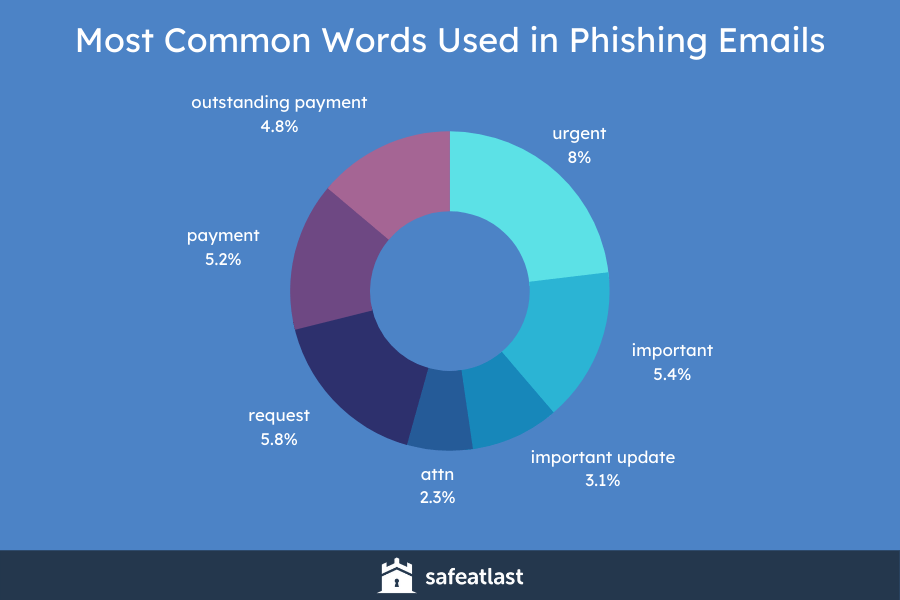
This word appears in 8% of all phishing emails sent to organizations in an attempt to scam them. According to phishing attacks statistics, variations of this word are also used, including “important” (5.4%), “important update” (3.1%), and “attn” (short for attention; 2.3%). Other keywords commonly found in phishing emails targeted at organizations included “request” (5.8%), as well as “payment” and “outstanding payment” (5.2% and 4.8%, respectively).
Statistics also reveal that hackers targeted 5,803 organizations with emails containing these words in 2018. Each of these organizations received 4.5 such emails on average.
Data Phishing vs. Spear Phishing Stats
16. In 2020, there were 1,001 data breaches in the US.
(Statista)
According to data breach statistics, more than 1,001 data breaches occurred due to data phishing attacks, compromising 155.8 million records. Most of these attacks targeted businesses intending to steal confidential information and client data. This marked a 19.8% decrease from 1,473 breaches in 2019 when hackers stole more than 164 million records.
17. According to internet fraud statistics, 65% of hackers use spear phishing.
(PhishingBox)
While data phishing targets multiple recipients as part of an extensive campaign, spear phishing is aimed at a single organization or individual. It generally requires a lot more effort than mass low-quality phishing attacks. That’s mainly because the hackers need to find details that would make them look credible. But, in turn, these attacks bring more profit.
18. 83% of spear phishing attacks are brand impersonations.
(Channel Futures), (Statista)
Spear phishing statistics reveal that brand impersonation is by far the most popular way to carry out these attacks. It involves hackers posing as a trustworthy brand or company in an attempt to gain access to valuable information from their targets. In 2019, Microsoft was the most impersonated brand. Financial institutions like banks were also often impersonated.
Google and Amazon were the two most impersonated brands in 2020 (13% each). Social media platforms Facebook and WhatsApp are in second place (9%), followed by Microsoft (7%). Online fraud statistics show that other commonly impersonated brands include Apple, Netflix, PayPal, and Huawei (2% each).
19. 96% of hackers use spear phishing to gather intelligence.
(PhishingBox)
Apart from intelligence gathering, hacker groups cite disruption (10%) and financial gain (6%) as their main motivators for launching a spear phishing attack. The number of known spear phishing groups has had a steady rise over the last few years. In 2016, there were 116 known groups. Phishing email statistics show that the following year, this number rose by 18.1% to 137. There were 155 active groups in 2018, marking a 13.1% increase year-over-year.
20. The losses from business email compromise schemes skyrocketed to $1.8 billion in 2020.
(FBI)
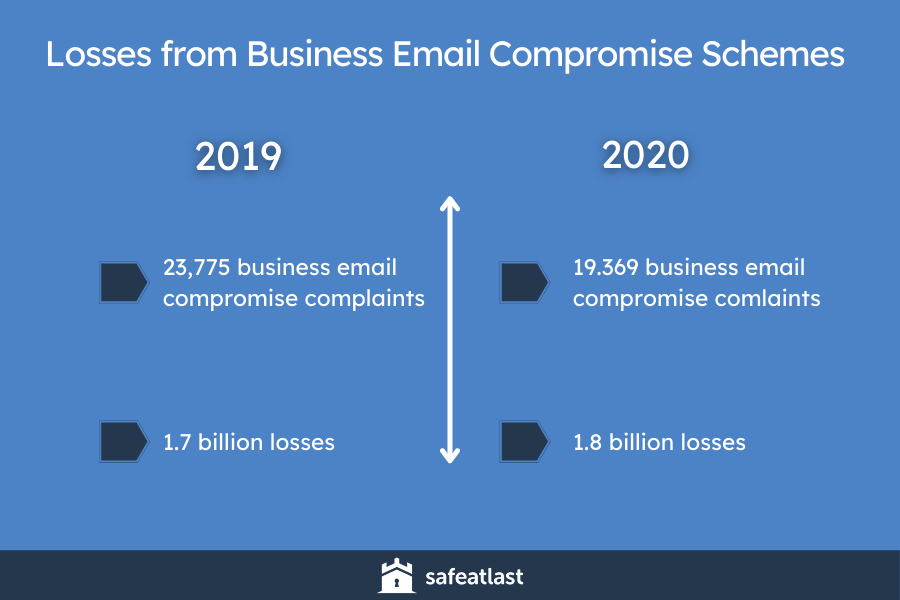
In its annual report, the FBI states that it received 19,369 business email compromise complaints. The losses reported were $1.8 billion. However, if we compare that to 2019 data (23,775 complaints and $1.7 billion in losses), we can see that the number of complaints dropped, but the losses increased. These business email compromise statistics indicate that hackers are shifting their focus from mass phishing attacks to more precise and sophisticated attacks that bring in a larger bounty.
Conclusion
Phishing attacks have become much more sophisticated. If we combine that with the fact that most can’t tell the difference between fake and genuine websites and emails, it’s easy to see why no one should take these statistics on hacking and phishing for granted.
Whether you’re an executive at a big company or just a regular internet user, you must be careful online. Don’t click on any suspicious links sent from an unknown email address.
If you receive an unusual email from someone claiming to be your coworker, always check with them first before opening any attachments.
When visiting websites, double-check the address bar before entering your personal information to ensure it’s not hackers trying to scam you.
People Also Ask
How big of a problem is phishing?
According to a Kaspersky Lab report, there were more than 103 million attempted phishing attacks worldwide in the third quarter of 2020. In the second quarter of the year, hackers also set up more than 140,000 phishing websites. While both these numbers are lower than in recent years, today’s phishing emails and sites are much more difficult to tell apart from their genuine counterparts. Hackers nowadays use SSL certificates, HTTPS address prefixes, .com domains, and compromised Google and Microsoft email accounts, all this to ensure the potential victim falls for their scheme.
How many phishing attacks occurred in 2020?
According to the FBI’s statistics, there were 241,342 phishing attacks in 2020, which generated losses higher than $54 million. Its statistics also show that the number is on the rise. For instance, there were more than 114,000 phishing attacks in 2019 and more than 26,000 in 2018. What’s worrying is that the quality is also improving. Hackers are switching from mass low-quality campaigns to targeted, sophisticated attacks.
What will phishing cost in 2021?
In its study, the Ponemon Institute concluded that the average annual cost of a phishing attack in 2021 is around $14.8 million for a company with 9,600 employees. The amount has almost quadrupled since 2015 when it was around $3.8 million. In addition, the attacks are becoming more sophisticated and target higher-ranking executives, which, in turn, brings better profits.
How many phishing attacks are attempted everyday?
Valimail, a cybersecurity company, estimates that there are about 3 billion spoofed emails sent every day. This is 1% of all emails sent each day globally. Spoofing allows phishing and spam emails to appear as if they are coming from legitimate sources. Furthermore, Google’s data shows that Gmail blocks more than 100 million phishing emails every day. Considering that it has 1.5 billion users, we can conclude that roughly 7% of users are targeted by cybercriminals.
How many businesses are targeted by spear phishing attacks each day?
Spear phishing is on the rise, both in quantity and in quality. According to one study, 75% of organizations experienced phishing attempts, and 35% experienced spear phishing in 2020. 96% of phishing attacks arrive by email, and Symantec research says that one in 4,200 emails is, in fact, a phishing email. The most common subject lines were: Urgent, Request, Important, Payment, and Attention.
How many victims of phishing are there?
According to the FBI, there were 241,342 victims of phishing attacks in 2020, more than a 100% increase compared to 2019. The statistics look even grimmer when compared to 2018 when there were just 26,000 victims. These are official statistics based on the reported phishing attacks. The real numbers are likely higher because victims sometimes become aware of the attack months after it happened. We can assume that the numbers we see in phishing statistics will continue to rise since cybercrime is a lucrative business.
More than 10 million US citizens become victims of fraud every year, most of it related to stolen identity. Just as disturbing is the fact that health insurance-related ID theft accounts for over a quarter of all reported identity theft cases, according to medical ID theft statistics.
This type of identity theft is very dangerous because others can use your healthcare credentials to pay for expensive medical services. You could thus find yourself tens of thousands of dollars in debt — and that’s not to mention all the time and paperwork required to resolve the issue.
Here you’ll learn more about this type of identity theft and find out just how big of a problem it is for the whole society and not only the individuals directly affected by it.
Top Medical ID Theft Statistics (Editor’s Choice)
3,256 data breaches occurred in the US healthcare sector 2005–2019
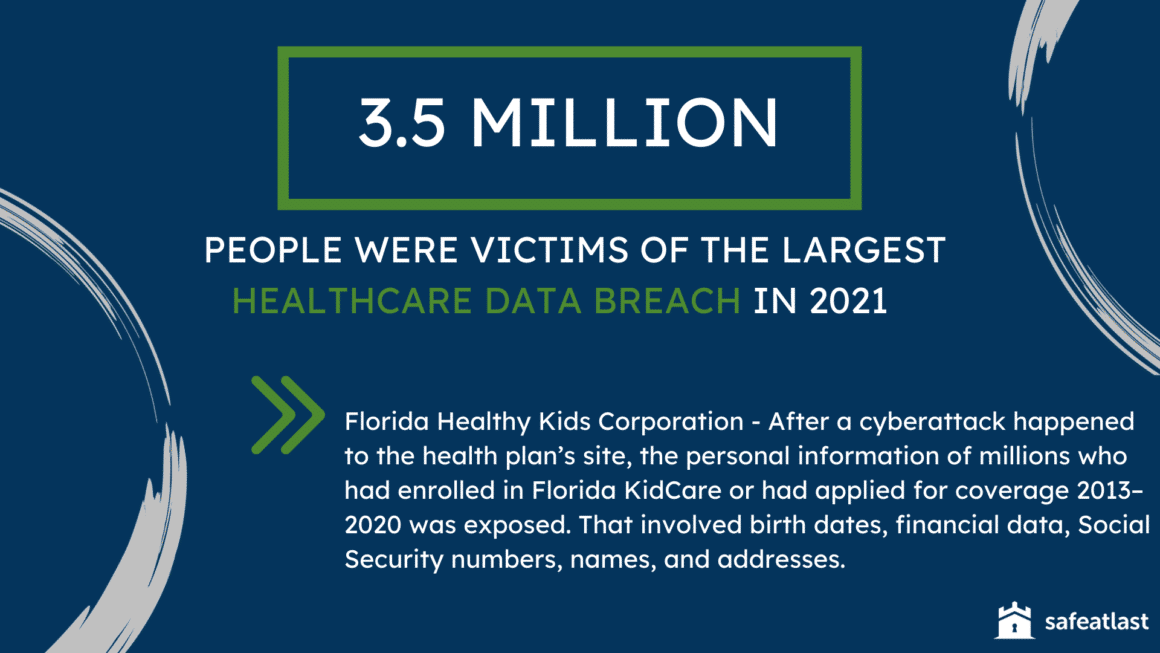
3.5 million people were the victims of the largest 2021 healthcare data breach
In 2019, there were over 50 healthcare-related thefts of physical media and devices
Due to unauthorized access, over 4.5 million records were compromised in 2019
In 2019, healthcare data breaches affected over 35 million people
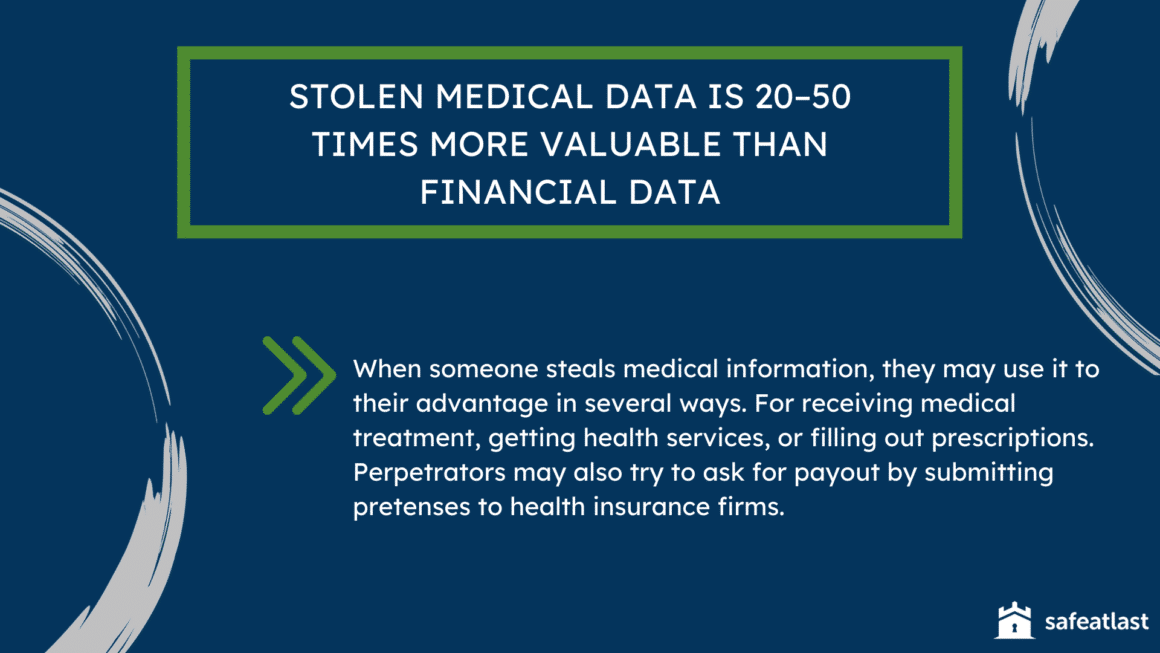
Stolen medical data is 20–50 times more valuable than financial data
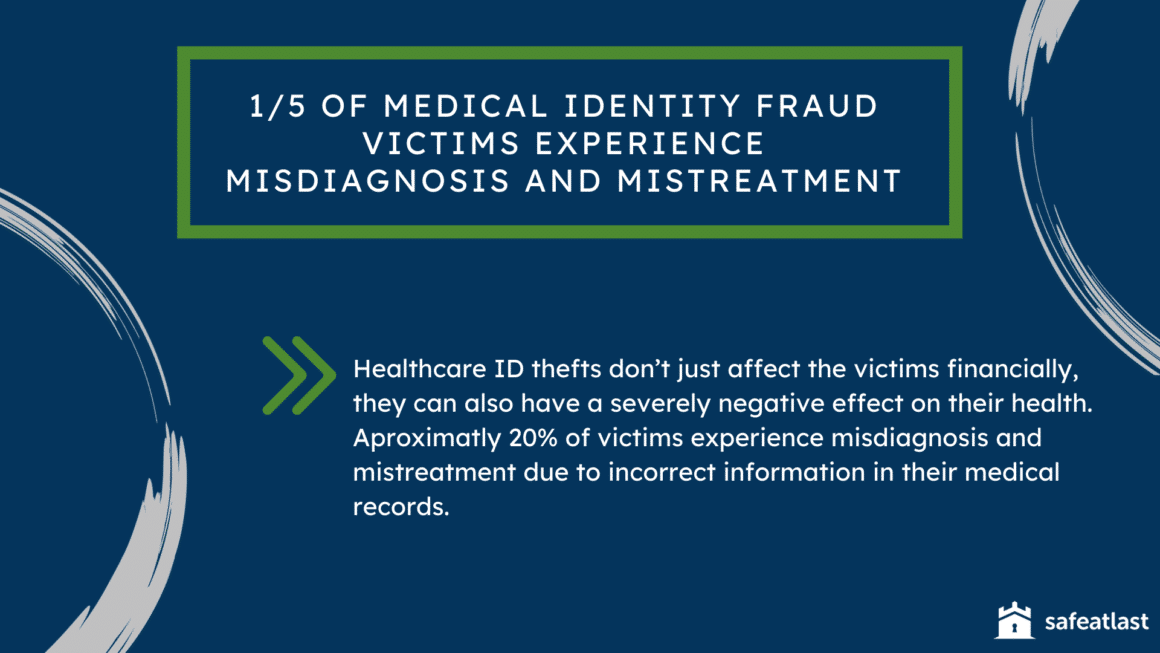
A fifth of medical identity fraud victims experience misdiagnosis and mistreatment
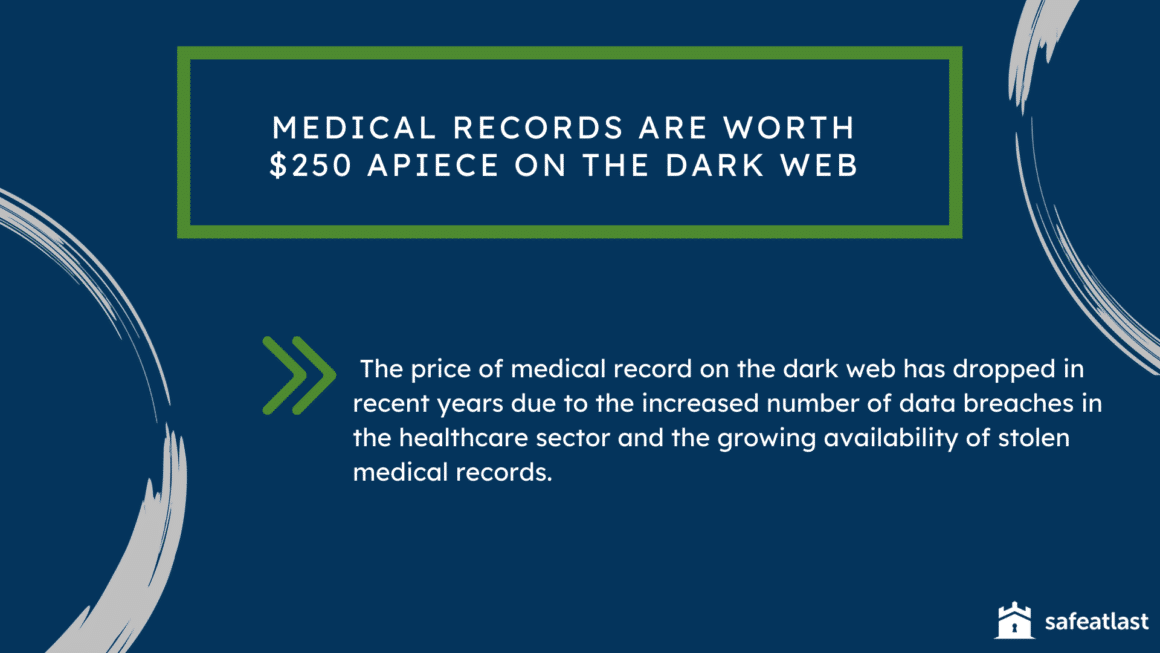
On the Dark Web, medical records can be sold for $250 apiece
General Medical ID Theft Statistics
This set of stats will highlight the most important statistics on healthcare-related ID theft, which is one of the most common types of fraud in the US. You’ll also learn how identity theft and data breach stats affect the healthcare sector.
1. The healthcare sector has the highest cost per stolen record.
(Statista)
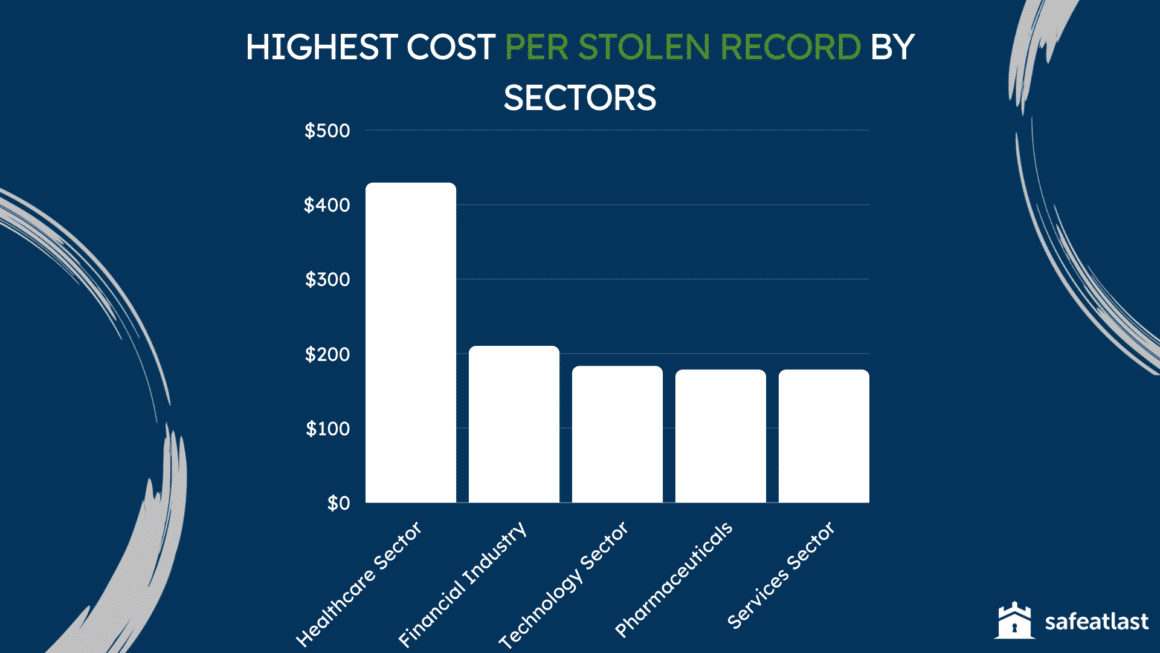
The average global cost per stolen record due to data breaches in the healthcare sector is $429, medical ID theft statistics reveal. In comparison, the cost per stolen record in the financial industry is $210, while the technology sector loses $183 per stolen record. Rounding out the top five are the pharmaceuticals and services sectors, both of which lose $178 on average.
2. Internal attacks are the most successful data breach type in healthcare.
(Statista)
Internal attacks are by far the most impactful in the healthcare sector, with a success rate of 66%. According to medical identity theft stats, hacker attacks are close behind with a success rate of 63%, while 56% of cases where health insurance information is published accidentally result in ID frauds. The theft of physical media (27%) and computers (17%) is also common.
3. Between 2005 and 2019, 3,256 data breaches occurred in the US healthcare sector.
(Statista)
In 2019, the US healthcare sector was the target of 525 successful data breaches. Looking at medical identity theft stats over the years, we can see that only 70 successful attacks were recorded just a decade earlier. This marks a staggering 650% increase between 2009 and 2019. The lowest number of breaches occurred in 2005, only 16, but the growth was inevitable due to technological advancements and the digitization of the healthcare sector.
4. The largest 2021 healthcare data breach impacted 3.5 million people.
(Health IT Security)
Medical identity theft statistics note that in 2021, health data breaches impacted more than 40 million people, and over 550 organizations reported such violations to HHS. The largest one happened in January and was reported by Florida Healthy Kids Corporation.
After a cyberattack happened to the health plan’s site, the personal information of millions who had enrolled in Florida KidCare or had applied for coverage 2013–2020 was exposed. That involved birth dates, financial data, Social Security numbers, names, and addresses.
5. In 2019, there were 303 hacking incidents in healthcare.
(HIPAA Journal)
Hacking statistics show that hackers carried out 303 medical records theft cases in 2019, which is the highest number in the last decade by a wide margin. In comparison, there were only 161 hacking incidents in 2018, marking an 88.2% increase year-over-year. The number of cases was significantly lower earlier in the decade, but that’s because providers didn’t have the technology to detect and fight hacker attacks promptly. As such, many attacks in the past lasted for months before being detected.
6. There were 54 healthcare-related thefts of physical media and devices in 2019.
(HIPAA Journal)
This number refers to the thefts of personal computers, tablets, and other devices that contain sensitive medical information. These medical identity theft cases were at a 10-year low in 2019. Interestingly, most such thefts in healthcare were recorded in 2013 and 2014 — 152 and 150 incidents, respectively. Since then, their number has been decreasing steadily, likely due to healthcare companies’ growing reliance on cloud storage instead of physical storage.
7. In 2019, more than 4.5 million records were compromised due to unauthorized access.
(HIPAA Journal)
Identity theft in healthcare hit its peak in 2019. That year, 147 cases of unauthorized access occurred due to employee error, negligence, or malicious insider attacks. All these incidents compromised more than 4.5 million medical records, marking a 10-year high.
Find out how to deter identity theft.
8. More than 35 million people were affected by healthcare data breaches in 2019.
(HIPAA Journal)
Hacker attacks and IT incidents left more than 35 million records compromised, according to medical identity theft statistics from 2019. Although higher than the previous three years, this is still well below the 2015 numbers — more than 110 million records were compromised that year.
9. A report reveals that almost 600 healthcare data breaches occurred in 2020.
(Bitglass)
That equated to a 55% rise from the previous year. Moreover, the average cost per breach grew by around 10%. In other words, it was $429 in 2019 and reached $499 in 2020. On top of that, it took 236 days for an average healthcare firm to recover from the breach.
Statistics on Medical Identity Theft Cases
Millions of identity theft cases occur in the US every year. As already said, more than one-quarter of those involve the theft of another person’s health insurance credentials. In this set of stats, we’ll see how often this type of identity theft happens and how much it costs.
10. Compared to financial data, stolen health info is 20–50 times more valuable.
(IDX)
When someone steals another person’s medical information, they may use this medical identity theft to their advantage in several ways.
Namely, they may ask to receive medical treatment, get health services, or fill prescriptions. Furthermore, perpetrators may try to ask for payout by submitting pretenses to health insurance firms.
11. On average, a victim of medical identity theft pays $13,500 to resolve the problem.
(IDX)
There has not only been an increase in the cyber attacks against healthcare companies, but also in medical identity theft, as per medical identity theft stats. You’ve learnt how much that sets the victim back.
However, the victims aren’t the only ones feeling the impact of this criminal action. In fact, medical identity theft costs the healthcare industry around $30 billion annually.
12. 73% of respondents said they’d share their health info to improve patient care.
(Statista)
The survey was conducted to check the willingness of Americans to share their personal medical data intended for research and health care.
In addition, around 72% of them stated they would share their data so that experts could better understand diseases and find new ways of preventing and treating them.
13. 20% of medical identity fraud victims experience misdiagnosis and mistreatment.
(Center for Victim Research)
Healthcare ID thefts don’t just affect the victims financially — healthcare fraud and abuse can also have a severely negative effect on their health. According to a study by the Ponemon Institute, 20% of victims experience misdiagnosis and mistreatment due to incorrect information in their medical records. Many have also experienced delayed care, which could sometimes have a fatal outcome.
14. Medical records are worth $250 apiece on the Dark Web.
(Trustwave)
According to a report on medical identity theft from 2019, medical records are worth up to $250 on the Dark Web. Their price has dropped in recent years due to the increased number of data breaches in the healthcare sector and the growing availability of stolen medical records.
Conclusion
Identity theft is one of the most prevalent crimes in the 21st century. Hackers commonly attack healthcare providers and insurers to steal medical records and sell them on the Dark Web. Considering that cybercriminals generate revenues of $1.5 TRILLION annually, they are not likely to stop doing it.
These statistics show you just how far-reaching and serious this problem is today. But the rise in healthcare ID theft shows no sign of stopping. On the contrary, it’s expected to continue growing along with the number of people who need services their insurance policy doesn’t provide. If you become a victim, here is how to file a report for identity theft.
People Also Ask
What is medical identity theft?
Healthcare ID theft occurs when somebody gains access to sensitive personal information, such as your name and social security number. They can use this information to pay for expensive medical services and treatments without your consent. Hackers who carry out successful attacks against healthcare providers and insurance companies steal thousands of medical records at once. They then sell them on the Dark Web, where one record costs up to $250.
Is medical identity theft common?
This type of identity theft has become one of the most common crimes in the US, directly affecting close to 100,000 people every year. According to the Federal Trade Commission (FTC), 2019 saw a 101% increase in the number of healthcare ID theft cases. What’s more, healthcare identity theft accounted for more than a quarter of all reported ID thefts in 2018.
How can you protect yourself from medical identity theft?
Although there’s no way to keep your personal information completely secure, you can still take some steps as a precaution and possibly prevent the theft of your medical information. Firstly, if your insurance identification card is stolen or missing, you need to report it and ask for a new one. Secondly, you can’t share your personal health information with anyone, especially companies claiming to offer free services or products. Never share your personal information via phone or email unless you’re sure the other party isn’t a scammer. Choose only companies that are guaranteed to offer the best identity theft protection if you plan to avail of such services.
How many people’s identities are stolen each year?
Identity theft crimes have experienced a significant rise in the last few years. According to the FTC, US citizens filed 650,072 reports of stolen identity in 2019. This number accounted for 20% of all fraud reports received by this institution. It is safe to assume that many more cases went unreported, likely because the victims are still unaware their identity has been stolen.
Which is the most common age group for victims of identity theft?
One of the most affected groups by identity theft are victims aged between 40 and 69. Research shows that people aged 40–49 file about 15% of all ID theft reports, while those in the 50–59 brackets account for 24% of all submitted reports. Military personnel is also a high-risk group because they use their social security numbers for identification. College students are 400% more likely than others to have their identity stolen by friends, medical ID theft statistics reveal.
The digital world is constantly advancing and changing the ways we use the internet. Voice search statistics reveal that voice search technology has considerably advanced recently.
In fact, the capabilities of speech-enabled devices have expanded vastly, allowing consumers to conduct increasingly accurate searches.
This is one of the fastest-growing ecommerce trends, and people use voice to search online businesses, purchase all sorts of goods, or just look for various pieces of information.
We’ve collected all the relevant data about the voice search you need to prosper in a voice-first world. So, let’s dig in.
Top Voice Search Trends (Editor’s Choice)
57% of adults in the United States use voice-enabled technology
65% of 25-49-year-olds speak to their voice-enabled devices at least once a day
Siri handles 25 billion requests monthly across more than 500 million devices
According to a survey, 41% of respondents aged 65 and above use Amazon’s Alexa
27% of online users worldwide use mobile voice search in 2021
In 2021, 33% of users rely on their phones to access voice assistants
Voice-based shopping is projected to hit $40 billion by 2022
By 2024, there will be 8.4 billion digital voice assistants on the market
Top Usage Voice Search Stats
The widespread use of smartphones and their built-in virtual assistants has resulted in a surge in voice search usage. In fact, over 41% of adults and 55% of teenagers use voice search daily.
1. 57% of adults in the United States use voice-enabled technology.
(Marketing Charts)
Moreover, according to the same report, three out of ten people use voice assistants daily. In contrast, 43% of adults in the United States never use voice assistants, as per voice search usage statistics.
On the bright side, the majority are at least aware of the technology, as only 3% of people are unaware of it.
2. Around 65% of 25-49-year-olds speak to their voice-enabled devices at least once a day.
(Eurolink)
According to this data, the age group mentioned above is the most likely to conduct daily voice searches. According to stats on voice search demographics, the 18-24-year-olds and 50+ year-olds come right after the age group of 25-49.
Considering that voice searchers of the said generation are the most active ones, people may think that they are also the ones boosting early adoption of the technology. However, that’s not the case. As a matter of fact, the 18-24 age group is responsible for that, as voice search technology statistics confirm.
3. 42% of the global internet population performed a voice search on a device in Q1 2019.
(Statista)
The same survey conducted among 278,359 respondents globally reports that mobile phones were the most common devices, with 32% of the surveyed users. More specifically, the 16-24 age group was the most common demographic group, with 39% of them using mobile devices to conduct voice searches.
4. According to the most recent data, 24% of Americans aged 18-29 own an Amazon Echo smart speaker.
(Statista)
However, as it’s probably no surprise, the percentage of people owning a smart speaker drops as they become older. For example, stats on Amazon Echo demographics point out that only around 10% of people aged 55-64 have one.
Amazon Echo was the first smart speaker to hit the market in the United States in 2014, and it soon became a popular item across the world in English-speaking countries. For instance, in 2020, Amazon Echo was used by 70% of smart speaker users in the United States.
5. According to voice search statistics, after using voice search, 28% of customers phone the company they voice searched for.
(Eurolink, Portal Tech Tips)
After a voice search, this is the most typical activity. At the same time, there are other popular follow-up actions. For example, 27% check the business’s website, 19% check its location, 14% do more research on the company, and 12% research other businesses.
So the voice search technology is becoming much more intelligent than it used to be. Interestingly, people can now also perform background checks using this technology. All in all, these advances make voice search crucial to companies.
Virtual Assistant Statistics
Virtual assistants, which are becoming more prevalent in consumer electronics products, may reply to requests, deliver information, and help users control other connected smart devices. As a matter of fact, voice assistant services are now available on over a billion devices.
6. According to studies, Google Assistant is the best voice assistant, answering accurately 92.9% of the time.
(Loup)
To determine which digital assistant was the best, 800 questions were presented to Google Assistant, Siri, and Alexa, the three most popular digital assistants. In comparison to a year ago, each platform showed progress.
Google Assistant was able to comprehend every query. As per Siri statistics, it came in second, comprehending 99.8% of questions and responding accurately 83.1% of the time. Alexa understood 99.9% of the questions and answered accurately 79.8% of the time.
7. As per a study, VocalisCheck shows more than 80% effectiveness in COVID-19 detection.
(ClearBridge Mobile, Med-Tech)
Virtual assistants and AI-powered chatbots were crucial in fighting COVID-19. Vocalis Health uses voice analysis to check a person’s health status with its AI-based platform. In this case, it analyzes voices for sounds of the virus, and the results have been amazing.
Moreover, the voice search market became even more powerful when voice and conversational AIs helped screen and triage patients in 2020.
On top of that, Apple’s Siri took one step further by assessing COVID-19-related questions and recommending telehealth apps to make health services accessible to all affected individuals.
8. Today, Alexa offers over 100,000 skills.
(Tom’s Guide, CNET)
More specifically, Alexa can control your smart home devices, play trivia games, stream music, order Amazon items, listen to the weather, listen to the news, etc. Voice search facts note that some of the most popular skills include Send a Hug or Alexa Guard.
In detail, Send a Hug is a great way to let others know you love them, even if you are miles apart. As for Alexa Guard, it taps into the Echo speaker microphones when there’s an alarming sound in your home.
9. According to a study, 70% of iPhone users use Siri occasionally or rarely.
(iPhone in Canada)
Interesting facts about Siri reveal that most individuals avoid using Siri in public because it makes them feel uncomfortable. In other words, most users use voice assistants when they are alone at home or in the car, probably due to hands-free driving regulations. It can also help them with GPS navigation systems.
10. According to a survey, 41% of respondents aged 65 and above use Amazon’s Alexa.
(Marketing Charts)
Additionally, stats on Alexa demographics show that the percentage of people aged 55–64 who use Amazon’s Alexa is slightly lower — 40%.
What’s also worth mentioning is that both age groups (55-64 and 65+) are considerably more likely to use Amazon’s Alexa than the other ones surveyed. More precisely, 29% of people aged 25-34 and 19% of people aged 18-24 use Amazon Alexa.
11. Siri handles 25 billion requests monthly across more than 500 million devices.
(Tech Crunch)
What’s more, it covers many languages and countries. In fact, it covers 21 languages across 36 countries.
Furthermore, Apple is adding two more voices to Siri’s English choices, giving Siri users the option to choose from 16 different voices. This addition replaces the default female voice, providing more diversity.
Voice Search Statistics 2021
By the end of 2021, the smart speaker market have grown by 21% to 163 million devices. Furthermore, this year, the number of people buying voice-activated speakers will exceed 25.6 million.
12. 27% of online users worldwide use mobile voice search in 2021.
(Search Metrics, Live Mint)
Voice search is booming, and the whole world is witnessing this popularity growth. For instance, voice search statistics demonstrate that voice search queries are increasing at a rate of 270% every year in India, with 82% of smartphone users using voice-activated technology.
13. According to research, 91% of voice assistant users use their voice to browse the internet.
(Net Imperative)
According to the same research conducted in the United Kingdom, the United States, and Germany in 2021, 41% of users shop using their voice assistants. On the other hand, only 22% of voice assistant users feel safe using them in public.
14. 33% of users use their phones to access voice assistants.
(Statista)
Voice assistant technology is most often used on phones in the United States, voice search trends affirm. In-car voice assistants are the second most popular, with 13%. Other popular and widely used devices include tablets (5%), smartwatches (3%), and laptops (3%).
15. 35% of users claim they use voice assistants to check the weather forecast.
(Marketing Charts)
Not surprisingly, the study found that voice assistants are most commonly used to find out what weather users can expect. In addition, voice search stats report that 33% of users use these smart devices to play music, 22% use them to make calls, and 18% are using them to send emails or other types of messages.
There are also people (16%) who use voice assistants to schedule chores in order to save time and regulate integrated household technology. Last but not least, 15% use them to check personal calendars.
16. Voice technology trends show that 25% of adults use voice assistants regularly or occasionally to buy things.
(Marketing Charts)
On the other hand, 65% said they use a search engine to ask questions regularly or occasionally.
In addition, 60% of users said they use voice assistants at least occasionally to look up information on products and services, while 40% use them to look up brand information.
Future of Voice Search
Current trends indicate that voice search will become more popular in the future. Given the stats we’ve presented above, even the healthcare industry will put more money into voice-tech integration in the next few years.
17. According to a report, the number of voice assistant devices in the United States will reach 870 million by 2022.
(Tech Crunch)
According to the Juniper Research report, 5 billion assistants will be installed on smartphones globally by the same year. Furthermore, there’s a 2022 forecast for voice-based ads, too. The revenue from voice-based ads might reach somewhere around $19 billion.
18. Statistics on voice search reveal that voice-based shopping is projected to hit $40 billion by 2022.
(Compare Hare)
This is based on a survey of 1,500 smart speaker owners and implies that this new channel could be the next significant game-changer in the retail industry.
As per the survey, the increasing popularity of smart speakers will almost certainly lead to a significant increase in voice shopping. Currently, about 25% of people in the US have a smart speaker.
19. According to smart speaker statistics, 55% of US households will have a smart speaker by 2022.
(BBC)
In other words, 70 million households will have approximately 175 million devices. So, these voice-activated devices that help you listen to podcasts, order meals, or check the weather will continue to be increasingly popular in our homes.
20. There will be 8.4 billion digital voice assistants on the market by 2024.
(Statista)
The statistic about voice search growth mentioned above doesn’t come as a surprise, as virtual assistants have become a critical component of the smart device market, playing a crucial role in how users engage with their devices.
As a matter of fact, companies are increasingly looking for more innovative uses of smart technology as their business operations grow and their technologies advance. There are currently about 110 million virtual assistant users in the United States alone.
Conclusion
Voice search data demonstrates that voice search isn’t going away anytime soon, if ever. Voice search is growing in popularity because speaking is easier and faster than typing.
We’re rapidly approaching an era when we search primarily with our voices. As more and better devices enter the market, voice search will become more accessible.
This means that more individuals will take advantage of this valuable feature, influencing the technology’s progress. In a nutshell, voice search is the way of the future.
People Also Ask
How often is voice search used?
Voice search is becoming more popular in the United States, primarily through Google Assistant, Siri, and Alexa, the three most prominent digital assistants. Many people prefer voice search to typing because it allows them to ask questions faster. In early 2019, over half of all adults used voice search, with 33% using it monthly. This is an increase from the previous year’s 25%.
How important is voice search?
People have always considered voice search a luxury, but as more of us use voice commands to search the internet, it has become more of a need. The ease and accessibility of simply voicing your queries are excellent, as well as the fast way of receiving information or an answer. Furthermore, voice-enabled technology can provide excellent customer service. To be more precise, this technology uses voice-enabled bots — assistants that communicate with customers only through voice. Voice bots can ingest, analyze, understand, and respond to clients using natural language and answer their questions in real-time.
How do I get found on voice search?
With the voice search era upon us, marketers and SEO experts should constantly optimize their content for voice search, and the following are some of the strategies: – Updating content (adding short questions and answers to improve and make the content more searchable and recognizable by the smart voice assistants.) – Aiming for rich answers (concise pieces of information found above typical Google’s search results.) – Using long-tail keyword phrases as a goal (due to the conversational nature of the voice search trend, these searches are longer than the ones on a keyboard. Also, Google favors long-form, comprehensive material.) – Using natural (conversational) language in all types of content. – Using Google My Business listings because people use their voice to search for “near me” businesses and services. As a matter of fact, this listing is an essential means for Google to know where your company is located.
What percentage of Google searches are voice searches?
It’s far more convenient to do hands- or eyes-free search than to stop and write a query when you’re on the go. According to the most recent data, voice searches account for 20% of all Google smartphone searches. Furthermore, in 2020, consumers spent 30% of their time browsing the web on devices that do not have a screen, thanks to the rise of artificial intelligence.
What is the future of voice search?
All signs point to voice search becoming more prevalent in the future. Even the healthcare industry will invest more in voice-tech integration. According to some estimates for 2022, the number of voice assistant devices in the US will reach 870 million, voice commerce will exceed $40 billion, and 55% of US households will own a smart speaker. In addition, there will be 8.4 billion digital voice assistants by 2024.
What is the most popular voice assistant?
Virtual assistants can be found almost anywhere. From the smart speaker on your coffee table to your smartphone in your pocket, this technology is everywhere. Google Assistant, Siri, and Alexa are the three most popular digital assistants. Be that as it may, according to a recent study and voice search statistics, Siri is the most popular virtual assistant globally, with a market share of 35%.
The college years can be some of the most impactful, formative, and important in a person’s life. Many of the main considerations in picking a university are things like campus life, academic performance, mentorship, extracurricular opportunities, and student support.
We began conducting research into the safest colleges in America because none of these positive college experiences are possible without the university providing a safe and nurturing environment for students to break out of their shell and grow into their adult selves.
To parents, in particular, safety is often an even more important consideration than academic performance.
Colleges know this and will often create PR designed to convince parents and students alike that they are the safest choice.
To help you with such an important decision, we’ve compiled a list of the safest colleges in the US.
We used a methodology that incorporates reported data and campus crime rates, while also considering local crime, law enforcement support, and campus transparency.
With the data meticulously run through this method, our statistical analysis has resulted in a list we are quite confident in.
However, please don’t confuse this list as ranking one college as better than another in areas unrelated to safety.
Methodology
The National Council for Home Safety and Security recently released a methodology for identifying the safest colleges. Their method utilizes FBI crime reports combined with campus crime rates.
We found their calculations for crime rates less comprehensive than they should be, relying only on the total number of campus crimes to be divided by the campus police numbers.
For the purpose of this list of the safest colleges in America, we expanded upon this original method while adding more significant metrics, such as the number of crimes per 1,000 students and local crime rates.
Additionally, crime stats in states without marijuana prohibitions are lower, so we adjusted our rankings to compensate for this. This expanded methodology has resulted in what we see as a more viable ranking system.
Without further ado, here is our list of the safest places to study in America.
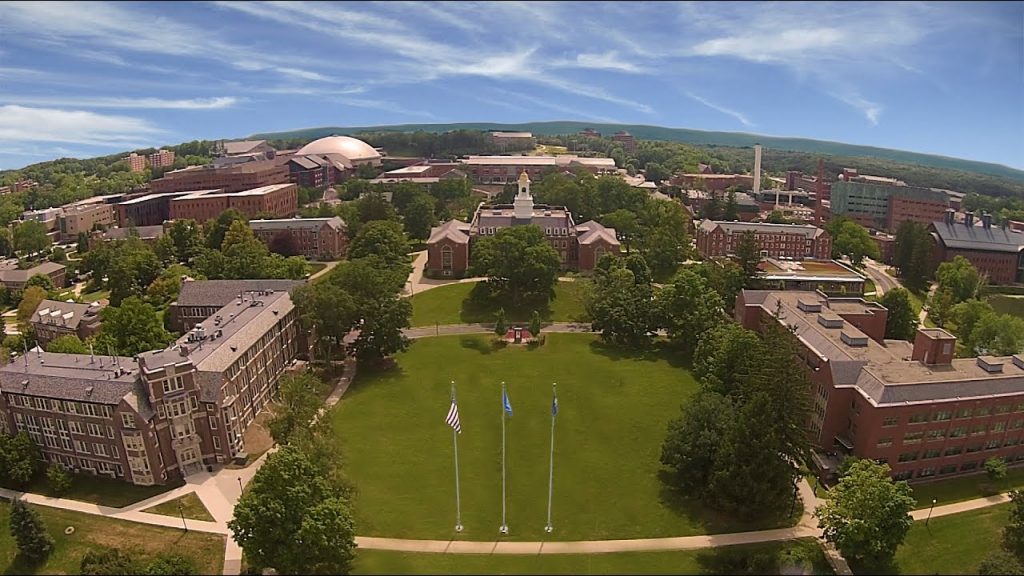
Coming in first on our list, UConn has a prominent but non-invasive police presence on campus, a system to ensure no one walks alone, and one of the lowest campus crime rates we have observed.
Along with being one of the best college towns in the US, Mansfield is a safe city with a relatively low crime rate at .73 per thousand residents. The university’s safety webpage also has helpful resources for students and community members alike to take action against any past or present wrongdoings. The Avery Point location is also one of the safest college campuses in the US.
Our magna cum laude of safety goes to Brigham Young University. The Idaho campus has some of the lowest crime rates of all the colleges we’ve seen, coming in at an impressive .0082 per thousand students. Rexburg as a whole has an impressive record, at just .39 per thousand residents.
Perhaps a reason for its high placement in the college safety rankings is the comprehensive code of conduct that students adhere to at the LDS university. Students and faculty speak of the school, and of its safety, very highly and have repeatedly found it to be an inclusive and nurturing environment for young adults.
With the New York City crime numbers dropping like a stone in recent years, it’s not shocking that we have a handful of schools from the Big Apple on our list of the top safest colleges.
NYU had no arrests on campus grounds and just 12 alleged crimes to go along with 14 acts of violence against women.
These are impressive numbers for an institution this large. Police visibility on campus is average relative to their New York contemporaries.
Tuition may be a scary aspect of the university, but rest assured that NYU rests at the summit of our list. And if you want to live a bit further from the island, you can choose from the list of the safest cities in New York, such as Rye, Glen Cover, or Irvington.
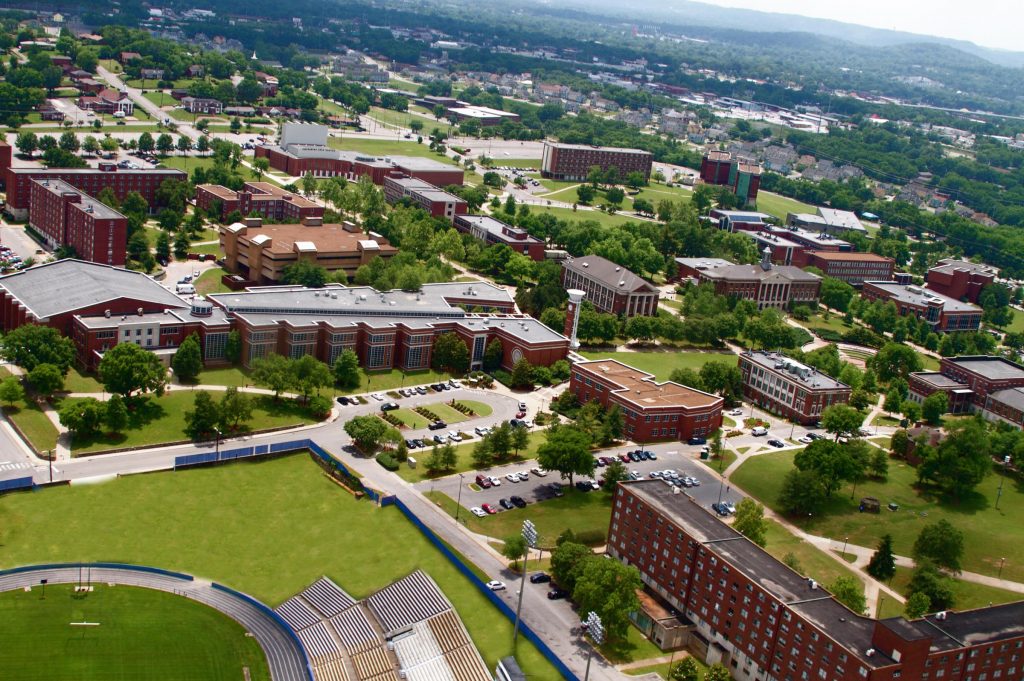
A healthy five-hour eastbound drive from busy Seattle finds us another one of the least dangerous colleges in America. The home of the Cougars recorded just seven arrests on campus. There’s light but consistent police visibility on campus to pair with well-lit walkways for every place you need to walk to on campus. You can definitely walk around without a stun gun, taser, or a pepper spray on you. However, it doesn’t hurt to have one of those, just in case. Pullman scores well for local crime too, with just 539 reported incidents last year.
Clemson had a shockingly low crime rate, with just .002 reported crimes per thousand students. If it weren’t for a marginally higher city crime rate than its predecessors, the university would be even higher on this list.
The campus crime rate makes them, statistically, the safest campus in the US. As a city, Clemson’s crime rate is 1.02 per thousand residents. The university has a strong police presence, great safety resources for students, and a great code of conduct that students adhere to.
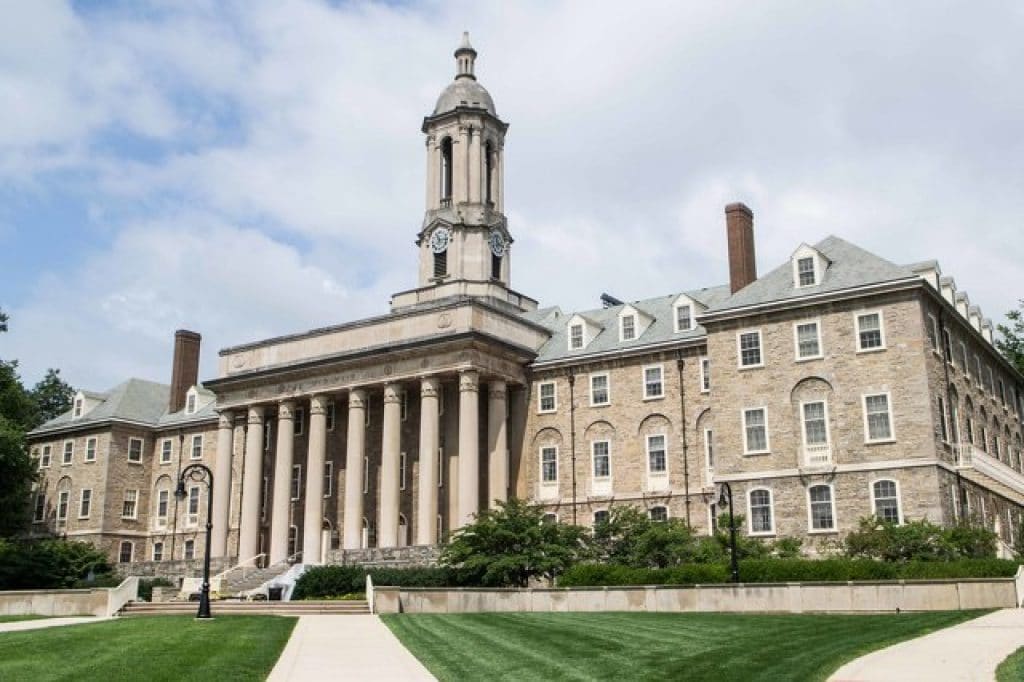
Penn State’s community puts a top priority on safety. The safety crew at Penn State has extensive training in crime prevention and works collaboratively with local police. Thanks to this, police visibility is lower on campus, while campus security numbers are higher.
Going further than just crime prevention, all security members are trained in first aid and CPR. This results in very consistently low crime rates across campuses, making each location some of the safest colleges we’ve observed.
According to reported crime data, UNH had just 7 reported crime incidents in the last calendar year. Impressively, none of these incidents involved violent crime. The Manchester and Concord campuses, however, are not included in this consideration, nor do we include them with Durham as one of the safest college towns in America.
As a city, Durham holds a respectable 1.09 crimes per thousand residents. The University of New Hampshire has an unwavering commitment to personal responsibility and safety, while also providing resources to students and strong support to victims.
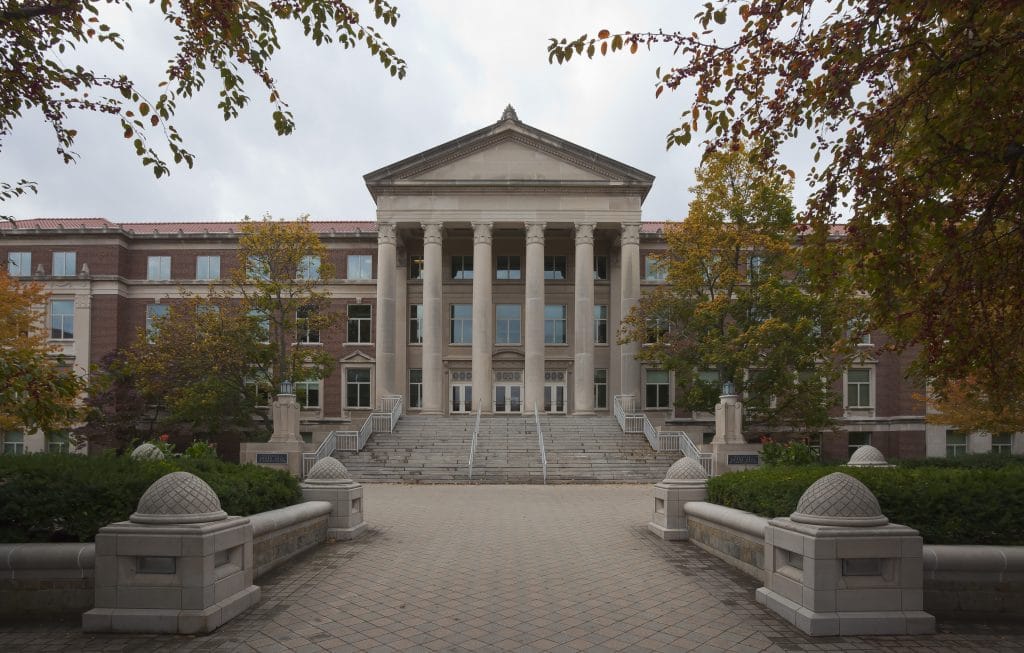
The home of the Boilermakers begins to round out our top 10 safest schools in America. West Lafayette is a fantastic college town with a strong but non-invasive police presence with just 515 reported crimes over the last year.
Purdue, along with providing a great education at a competitive price tag, has a very low crime rate at .08 per thousand students.
Additionally, the school provides support and resources to students, and it has healthy security expenditures.
Despite the surrounding area performing poorly in safety tests, UMD is one of the safest universities available, and the university’s crime stats are quite low. They had just 63 reported incidences of crime over the past year. Campus and local police are very visible and effective deterrents of crime on school grounds.
What is the safest college in Oregon? From providing roadside assistance to safety escorts, the private Christian university is unwavering in its efforts to provide a safe college environment. They had under a dozen crime reports, the majority of which were related to alcohol.
We initially had this school even higher on our ranking before realizing we needed to adjust the methodology for colleges in states with marijuana prohibition. Rest assured, Corban University is one of the true safe colleges out there.
While the total crime numbers—coming in at just under 1,200 reported incidents—may be alarming, given the university’s size at over 50,000 students, the crime rate is a respectable 1.8%.
Michigan State, being one of the safest states, has a helpful student program to ensure nobody walks alone if they don’t choose to. All pathways are well-lit, and the campus and local police presence is substantial. MSU is one of the safest colleges in Michigan, as well as the US.
Some smaller universities and community colleges that didn’t qualify for this list have lower crime numbers, but Michigan State has set an example for big universities on crime attention and prevention.
Unlike their University of California contemporaries in Los Angeles, Santa Barbara, and Berkeley, all of which are considered among the most dangerous college campuses, UC Irvine has incredible statistics for both total crime and crime prevention.
Despite rising enrollment numbers, crime rates have not risen. There have only been two incidents in campus housing and about a dozen total incidents. Irvine as a city has over 250,000 residents and has maintained an impressive crime rate of 1.3 per thousand residents. UC Irvine has set an example that the rest of the University of California would do well to follow.
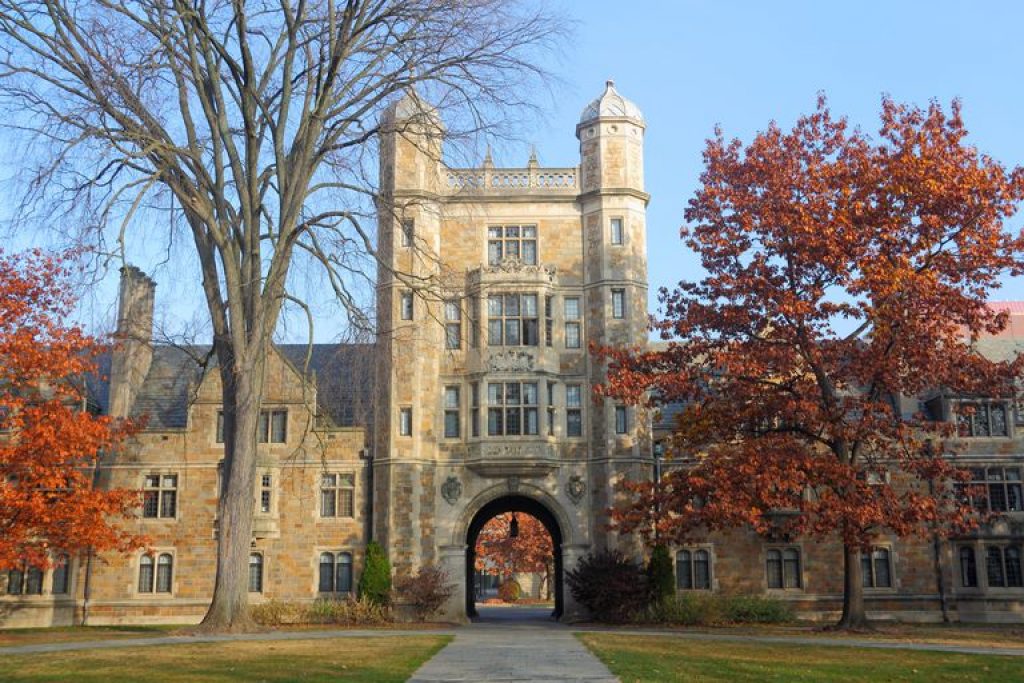
Nestled within the safe community of Ann Arbor, which holds a crime rate of 1.9 per thousand residents, the home of the Wolverines has been one of the safest college campuses in America. Not far behind its athletic rival Michigan State, the school has plenty of safety resources for its students and a visible police presence. All members of the security team are trained in CPR and first aid.
NYIT is one of the few members of this list with less than five total reported crimes in the past calendar year. Old Westbury is a small college town, with a population of less than 5,000.
The town had less than 50 reported crimes in total for the same time span. Also, the school offers undergraduate and postgraduate programs and has locations all over the world.
The Old Westbury location is one of the safest college campuses, so it’s a sound choice for any tech-minded student.
San Marcos is one of the safest cities in California with an impressively low crime rate given the surrounding cities. At just 1.3 per thousand residents, San Marcos provides an ideal community for a safe college.
The university itself has had less than two dozen incidents of crime over the past year. They have a fully staffed and trained security team that works in tandem with local police, creating a strong but hands-off police presence on and around campus.
Though this is another relatively small university on our list, that doesn’t diminish the school’s accomplishments. Still, we aren’t trying to answer the question, What are the best small colleges? We just want to find the safest.
Galloway Township is located in Pomona, New Jersey. Pomona has a relatively high crime rate relative to some of the other college towns on this list. Data specifically on Galloway’s crime rate wasn’t readily available, but reports have the township contributing to just 8% of Pomona’s total crime. From talking to New Jersey residents and state police officials, they’ve affirmed this figure to be accurate.
Nashville has consistently been ranked as one of the best cities in America. Using crime data from these big cities is a bit problematic, but looking at the district TSU resides in paints a clearer picture.
One of the safest colleges in America by the numbers, Tennessee State University has had just 26 campus crime incidents, placing the college’s crime rate at just .0037. TSU has an unwavering dedication to campus and student security, making it a great college choice for safety.
We’re back to the big schools with Iowa State University, a relatively inexpensive university. However, we aren’t concerned with the question, What is the cheapest college in the US? We care whether it has performed well in key crime stats.
The school has a strong police presence, and while they had over 500 incidents on campus, school safety statistics show that over 350 of those were alcohol and minor marijuana offenses. Ames itself has an impressive crime record, with just under 1,500 reports in the last calendar year even though it’s home to over 60,000 people—and this helps make Iowa State one of the safest colleges in the US.
Found within the safe, cozy community of Claremore, Rogers State University has provided a secure environment since even before they began offering bachelor degree programs.
Being a small but growing school, its careful attention to safety has paid off, with less than 10 total crime incidents on campus. This focus on safety will surely see the school grow into a bigger and more influential institution.
A private liberal arts school found in Elon, North Carolina rounds out our top 20 safest colleges in America. Elon’s crime numbers are just as impressive as any other city on this list. They had only 58 total incidents in the last year.
The school’s security team is so attentive, students only need to worry about their studies. Additionally, this university is located between Raleigh and Greensboro, two of the safest cities in North Carolina.
On top of having phenomenal graduate and freshman retention rates, coming in at 87% and 96% respectively, Lehigh has created a positive atmosphere for learning and student safety.
The city of Bethlehem performs well for safety as a whole, having just 19 incidents per thousand residents.
And the university takes that security performance further with very few incidents recorded in the past few years, most of them being minor alcohol charges.
ASU had just 35 total reports of crime on campus or in campus housing for the past calendar year. Clearly, Arkansas State has some of the best college safety practices of the schools we’ve studied.
While Jonesboro city crime occurs at a much higher rate than that of Beebe, the external city’s crime seems to have little effect on the campus.
Beebe has much better safety stats, having just 410 total reported crimes in the past year. Jonesboro is a much larger city, with a crime rate of 3.1 per thousand residents.
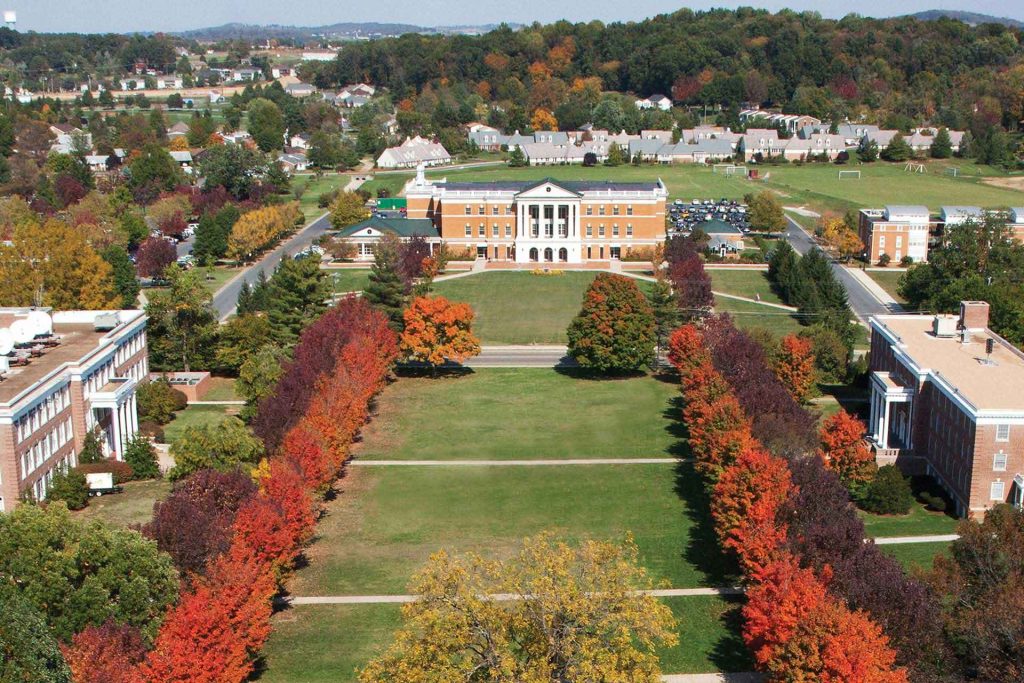
Founded in 1880, Bridgewater was the first liberal arts college in Virginia to admit both men and women. The school has provided a safe and nurturing environment for learning and student growth ever since. The private school has very little on-campus crime coming from its 1,800 students and scored very high on our college safety ratings.
The town of Bridgewater is a lovely little college town with incredible crime rates. The police department doesn’t have much on its plate, as there were only 13 reported crimes for the past calendar year. If you’re looking for a small, safe community, then Bridgewater College is a great choice.
Back-to-back Virginia schools round out the top 25 safest colleges in the US. This school barely surpassed our 1,000-student threshold. They had no reported incidents of crime on campus, giving them a perfect crime rate.
Perhaps even more impressive is the city of Emory’s crime rate of just .009. It’s one thing for a contained community like a university to have this sort of number, but as a city-wide total, that’s impressive. At zero reported crimes, it would be easy to place them as the best choice in a college crime rankings list.
While the Columbus campus failed to make this list, the Newark location has a much more impressive record.
With significantly less enrollment, perhaps the security team has the opportunity to work more efficiently.
When a university grows to a certain size it becomes a much more difficult task to ensure the safety of every student. The Newark branch of OSU is one of the safest colleges in Ohio.
In the heart of Silicon Valley, we find the first of two community colleges on the list. De Anza has been a high-ranking community college since opening in 1967. Their UC transfer program allows students to transfer to any of the top University of California locations.
Cupertino scores out well for crime, having just over 1,000 incidents for a crime rate of .9 per thousand residents. De Anza serves over 23,000 community colleges, making it one of the highest enrolled colleges of its stature in California.
Our two community college inclusions come back to back on our list of the safest colleges in the US. Just a short drive down highway 1 from Santa Cruz, Aptos is a small town with a great crime rate of .13 per thousand residents.
The college has a unique relationship with its neighboring University of California Santa Cruz. They offer a transfer admission guarantee program (TAG) for many of the top UC’s. Thanks to a light but visible police presence on campus and a great campus security team, most of the 22 crimes committed on campus were related to alcohol. Like DeAnza, potential South Bay Area college students can find a safe alternative to a four-year school.
Next on the list of the safest college campuses, the home of Big Blue and the Aggies performed incredibly well in our analysis. With just 18 incidents on campus, they are amongst the lowest of all colleges, not even mentioning the fact that they enroll over 20,000 students.
The city of Logan’s crime rate of .14 per thousand residents shows an equal commitment to safety between the college and the town.
Rounding out our top 30 safest colleges in America is George Washington University. Despite DC’s tremendously high crime rates, the university has an on-campus crime rate of .0044 per thousand students.
This is a testament to the school’s commitment to safety. There’s a strong police presence on campus, a usual deterrent of crime, and a robust security system and team in place.
The greatest safety concern a parent should have about sending their child to this school should lie in their confidence in DC, not their confidence in the school’s safety.
Arizona is known for its desert climate, with mild winters and hot summers, and one of the coolest flags ever. This is the place to be for those tired of shoveling snow and spending their summers in high humidity. As for the safest cities in Arizona, this information, and many others, will be laid out in this article.
With this information, you can determine the level of home security you need in Arizona, depending on which city you want to move into. Every city listed has its crime rates per 100,000 inhabitants listed in parenthesis next to it. Further down, you’ll find information on population, median income and age, house prices, and more detailed crime data.
Keep in mind that the national average for property crime is 2,110 per 100,000 people, while for violent crime, it’s 379. Regarding Arizona’s averages, property crime sits at 2,441, while violent crime is at 455 instances per 100,000 people.
Top 15 Safest Cities in Arizona in 2021
Florence
(Property: 280; Violent: 167)
Population: 28,474
Median age: 39.1
Median household income: $49,534
Median house value: $216,200
With more than 25 buildings listed on the National Register of Historic Places, Florence is not only one of the safest, but also one of the oldest towns in Arizona. That’s why it’s regarded as a National Historic District. Interestingly enough, being one of the safest places to live in Arizona, Florence is also home to multiple state, federal, county, and private prisons.
Nowadays, 28,474 people make up the town’s population. Its median household income is $49,534, while the median age is 39.1 years. According to recent real estate data, a median home in Florence is valued at $216,200.
Residents have a lot to enjoy in a town with more than 25 historic buildings — from the high schools to the bridges, everyone’s interests are covered. Those who decide to stay here permanently are drawn by the reasonable cost of living, which is 4.1% lower than the US average.
What city has the lowest crime rate in Arizona? Well, according to crime data from 2019, the answer is Florence. That year, 74 property crimes (58 thefts, 9 burglaries, 7 vehicle thefts) and 44 violent crimes (37 assaults, 1 robbery, 5 rapes, 1 murder) were reported.
However, the number of violent crimes in this small town has more than doubled from 2018’s figures.
Even the safest cities have some negative sides. For Florence, those negatives include the whopping unemployment rate of 10.8%, which is way higher than the US average of 5.9%, and its low public education investments (44.4% lower than the rest of America’s average spending per student).
This means that it’s probably not the best place to live in Arizona for families.
Somerton
(Property: 769; Violent: 215)
Population: 16,752
Median age: 27.5
Median household income: $38,315
Median house value: $144,100
Located in Yuma County, Somerton is a remarkable little city with an economy that’s primarily based on agriculture, medical services, and tourism.
Somerton has 16,752 residents and a median household income of $38,315. Also, it has one of the youngest populations in Arizona, as the median age sits at 27.5 years. A median house in this city will set you back only $144,100, making Somerton one of the cheapest places to live in Arizona.
Despite being a city, it still has a small-town feel, with a historic downtown and tons of special events throughout the year. These things bring visitors in from all over Yuma County. Casinos, a golf course, and many other amenities centered around the Cocopah heritage are available to tourists and residents. However, Somerton’s population has increased by 113.43% since 2000, mostly due to the low cost of living (10.8% below average) and the exemplary crime rates that this city shows year after year.
According to the 2019 data, Somerton is the safest city in Arizona. That year, 129 property crimes (80 thefts, 25 burglaries, 24 vehicle thefts) and 36 violent crimes (25 assaults, 4 robberies, 1 rape, 6 murders) were reported in the city.
Unfortunately, Somerton shares its low unemployment rate with Yuma County. For this city, it sits at 8.7% and represents one of the biggest issues with living in Somerton.
Paradise Valley
(Property: 1,093; Violent: 68)
Population: 15,003
Median age: 53.6
Median household income: $211,393
Median house value: $1,858,900
Paradise Valley is a dream destination for those looking to retire or move somewhere nice with their family. This is probably the most desirable town in the state and one of the best places to live in Arizona. According to data published in 2018, it is the wealthiest municipality in the state.
Nowadays, 15,003 people are lucky enough to call Paradise Valley their home. Their median household income is $211,393, the median age is 53.6 years, and a median home in the city is valued at a whopping $1,858,900.
Golf courses and luxury resorts surrounded by endless trails and nature are what bring visitors to this gorgeous town. The unemployment rate of 2.1% and low crime rates are what make people choose Paradise valley as their permanent residence.
Compared to the Arizona crime rate, Paradise Valley has a relatively low number. In 2019, 161 property crimes (119 thefts, 35 burglaries, 7 vehicle thefts) and just 10 violent ones (3 assaults, 2 robberies, 5 rapes) were reported in the city.
As evident by the median home value, it costs a lot to move to Paradise Valley. Additionally, the cost of living in this town is 218.5% higher than the US average, which is probably why its population has only increased by 2.2% since 2000.
Moreover, public schools are funded 17.2% lower than the US average. Luxury-wise, Paradise Valley is one of the best places to live in AZ, but not for those who can’t afford it.
Sahuarita
(Property: 1,115; Violent: 139)
Population: 33,155
Median age: 38.5
Median household income: $80,525
Median house value: $207,200
You’ll find this next town on our list 15 miles south of Tucson. The area in which it is located was inhabited as early as 200 AD. However, it took until 1994 for Sahuarita to become officially incorporated.
Today, it has a population of 33,155. Their median household income is $80,525, the median age is 38.5 years, and the median home price is estimated at around $207,200.
Aside from being one of the safest places to live in Arizona, it’s also a perfect spot for tourists who come here to see the Titan Missile Museum, the remnants of a top-secret missile silo from the Cold War. Gamblers also gladly come to Sahuarita, as the town has one of the best casinos in the area. The unemployment rate of just 3.6%, the cost of living that’s 4% lower than the US average, and low crime rates are what bring new inhabitants to Sahuarita.
In 2019, 345 property crimes (272 thefts, 44 burglaries, 29 vehicle thefts) and 43 violent crimes (25 assaults, 6 robberies, 11 rapes, 1 murder) were reported in the town. Also, violent crime in Sahuarita is 69.5% lower than in the state, making it one of the best small towns in Arizona for families.
Sahuarita shares the same public education funding issues as the rest of Arizona — the only thing those moving here will have to settle for.
Gilbert
(Property: 1,203; Violent: 97)
Population: 262,514
Median age: 34.1
Median household income: $96,857
Median house value: $332,800
Gilbert was once a farming town that made its way to becoming the “Hay Shipping Capital of the World”during the early 1900s. The town was incorporated in 1920, and today, it places sixth on the list of largest cities in Arizona.
It has a population of 262,514, a median household income of $96,857, and a median age of 34.1 years. Buying a house here costs around $332,800, median home prices show.
Water parks, historic grain containers, and outdoor recreation areas are what bring people to Gilbert. The proximity to downtown Phoenix is its main upside and the main reason behind the 111.7% population spike in the last two decades. Gilbert also has an unemployment rate of just 4.1%, which appeals to those searching for work.
The Gilbert, AZ crime rate is another major contributor to this town’s popularity. In 2019, 3,050 property crimes (2,493 thefts, 403 burglaries, 154 vehicle thefts) and 245 violent crimes (151 assaults, 45 robberies, 48 rapes, 1 murder) were reported. It may seem like a lot, but it is relatively low if you consider the town’s large population.
The downside of living in Gilbert is its poorly funded public education (44.4% lower than the US average funding), as well as the cost of living, which is 16.3% higher than the national average. It’s definitely not the cheapest place to live in Arizona.
San Luis
(Property: 1,228; Violent: 97)
Population: 37,488
Median age: 30
Median household income: $37,255
Median house value: $139,300
San Luis was established in 1930, and it was the second fastest-growing city in the state from 1990 to 2000. The city owes its prominence to the border-crossing station that was established at the same time as the city itself. Can it be your answer to the question: what is the best city to live in Arizona?
Today, the city has 37,488 inhabitants, a median household income of $37,255, and low median age of 30 years. A median home in San Luis can be acquired for $139,300.
There’s not much to do in San Luis, and its border location is mostly responsible for the visitor traffic it gets. People move here because it is one of the cheapest cities to live in Arizona, with a cost of living that’s 9.6% below the US average and some of the lowest real estate prices in the country. It’s also among the cities in Arizona with the lowest crime rates.
Reports show that San Luis had 420 property crimes (262 thefts, 53 burglaries, 105 vehicle thefts) and 33 violent crimes (31 assaults, 2 robberies) reported in 2019.
Despite being one of the safest cities in Arizona, San Luis still has its negatives. Currently, the city has one of the highest unemployment rates in the US, with 14.2% of the work-ready population being unemployed.
Oro Valley
(Property: 1,279; Violent: 48)
Population: 47,502
Median age: 54
Median household income: $83,341
Median house value: $301,600
Located just outside of Tucson, Oro Valley was incorporated in 1974. The town has been referred to as the state’s “Upscale Tech Mecca,” since it has more than 10 high-tech firms — not to mention a household income almost 50% higher than the US median. It’s also one of the main golfing centers in the country and one of the best places to retire in Arizona.
The town has a population of 47,502, a median income of $83,341, and a median age of 54 years, driven up by the retirees moving here to enjoy their golden years. A median home in Oro Valley is priced at $301,600.
Beautiful nature and 10 golf courses and resorts are Oro Valley’s main attractions. Even though most of the newcomers are already retired, Oro Valley is still one of the best places in Arizona for younger people, with its low unemployment rate of 5.7% and low crime rates.
The report in 2019 shows that 588 property crimes (515 thefts, 49 burglaries, 24 vehicle thefts) were reported in Oro Valley, along with 22 violent crimes (10 assaults, 3 robberies, 8 rapes, 1 murder).
On the other hand, Oro Valley has some negatives, including a high cost of living (9.1% above the US average) and a poorly funded education system (21.8% lower than the US average).
Maricopa
(Property: 1,187; Violent: 167)
Population: 56,325
Median age: 35.7
Median household income: $74,515
Median house value: $216,700
The next item on our safest cities in AZ list is Maricopa, which is the 21st most populous city in the state. It consists of three cities that grew together to become one of the main relay stations on the regional train route during the late 1800s.
Nowadays, there are 56,325 people living in Maricopa. Their median household income is $74,515, and the median age is 35.7 years. A median home in the city costs around $216,700.
Although it was deemed one of the best cities to live in in Arizona, Maricopa is not the most interesting city. However, it does have a few things to keep visitors occupied. The Dwarf Car Museumis one of them, and aside from the nature that surrounds it, it’s the most amusing destination in Maricopa. The city has had a population growth of 4,346.9% since 2000, mostly due to its affordability, low unemployment rate, and low crime rates. Additionally, the city’s cost of living matches that of the US average.
In 2019, the Maricopa, AZ crime rate looked like this: 604 property crimes (491 thefts, 58 burglaries, 55 vehicle thefts) and 85 violent crimes (69 assaults, 4 robberies, 11 rapes, 1 murder) were reported, which is pretty impressive for a city of this population.
The only downside to moving to Maricopa is that the public schools receive 40% less funding than the national average.
Surprise
(Property: 1,478; Violent: 98)
Population: 149,558
Median age: 41.4
Median household income: $69,076
Median house value: $260,500
The city of Surprise was founded in 1938 by Flora Mae Statler, who gave the city its name because she “would be surprised if the town ever amounted to much.” She’d certainly be surprised today, as it has become one of the fastest-growing and biggest cities in Arizona, with a population increase of 320% since 2000.
Today, Surprise has 149,558 residents, a median household income of $69,076, and a median age of 41.4 years. A median home is priced at $260,500.
Its location right next to Phoenix makes Surprise one of the most interesting places to visit and live in. All of the amenities of a big city are at your disposal, while you’re just steps away from nature, where you can take long walks and clear your head. The city has become a bedroom community for those working in Phoenix, as it is much safer and cheaper to live in.
In 2019, the Surprise, AZ crime rate looked like this: 2,083 property crimes (1,729 thefts, 217 burglaries, 137 vehicle thefts), and 138 violent crimes (60 assaults, 46 robberies, 28 rapes, 4 murders) were reported.
Despite this, the city has two main flaws: its unemployment rate and its public schools. The city’s unemployment rate is 5.8%, which is below the state average but way above its neighboring cities. For families with children, it may not be the best city to live in Arizona, as public schools spend 45.2% less money per student than the US average.
Buckeye
(Property: 1,624; Violent: 137)
Population: 90,182
Median age: 34.3
Median household income: $71,707
Median house value: $225,200
Buckeye is another Phoenix suburb and the second fastest-growing city in America, according to data in 2019. The city was first named Sidney but was renamed in 1910. Today, it’s one of the safest cities in Arizona.
According to recent data, 90,182 people live in Buckeye. Their median household income is $71,707, the median age is 34.3 years, and a median home is valued at $225,200.
The city has a zoo and all other amenities for a comfortable life while surrounded by some of the prettiest sights on Earth, notably the White Tank Mountain Regional Park. Its proximity to Phoenix is Buckeye’s greatest advantage, together with its low crime rates.
The Buckeye, AZ, crime rate report for 2019 shows that the city had 1,152 property crimes (940 thefts, 148 burglaries, 64 vehicle thefts) and 32 violent crimes (10 assaults, 15 robberies, 3 rapes, 4 murders).
The downside of living in this city is the unemployment rate of 5.1% (the state average is 4.7%) and the slightly increased cost of living sitting at 13% above the national average. Lastly, public education in Buckeye is severely underfunded.
Prescott
(Property: 1,562; Violent: 489)
Population: 46,331
Median age: 58.3
Median household income: $55,734
Median house value: $366,600
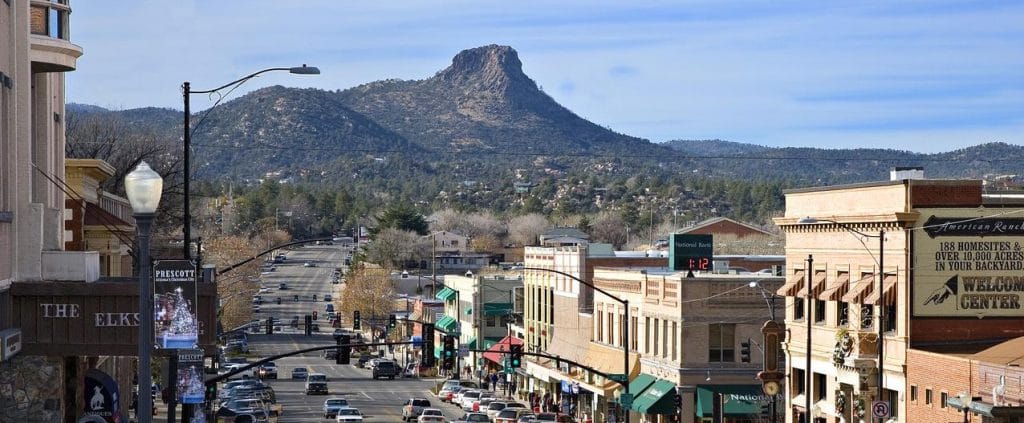
Prescott is one of the safest places to live in Arizona when it comes to crime but one of the most dangerous when it comes to flood risk. The first flood in the area was recorded when the first gold mining camps were swept away in 1863, and the most recent one occurred this year, which devastated residents.
Still, 46,331 people live in Prescott. Their median household income is $55,734, the median age is 58.3 years, and a median house costs $366,600.
Prescott is the best place to live in AZ for nature enthusiasts. Lynx, Goldwater, and WatsonLakes are located near the city, and they are all great for fishing, boating, hiking, and camping. Visitors are advised not to miss seeing Whiskey Row, a city block where all saloons were once located. Apart from the history and nature that Prescott is famous for, the city’s crime rates are what make it a great choice for anyone searching for a new home.
The Prescott, AZ crime rate data in 2019 shows that the city had 684 property crimes (518 thefts, 134 burglaries, 32 vehicle thefts) and 214 violent crimes (182 assaults, 11 robberies, 20 rapes, 1 murder).
This city is a popular place for retirement, so the unemployment rate of 5.9% doesn’t mean much to most new residents, but it still represents a negative side to Prescott.
Additionally, the cost of living is 15.7% higher than the national average, so it might not be one of the best places to retire in Arizona on a tight budget.
Peoria
(Property: 1,875; Violent: 233)
Population: 183,357
Median age: 39.8
Median household income: $75,323
Median house value: $285,000
One of the major Phoenix suburbs and the ninth-largest city in Arizona by population, Peoria is a place where teams, such as the San Diego Padresand Seattle Mariners,hold their spring training.
The city has a population of 183,357, a median household income of $75,323, and a median age of 39.8 years. Lastly, the market value of a median home is $285,000.
What makes this one of the best cities in Arizona is that it is surrounded by nature, and it doesn’t feel like you’re just miles away from downtown Phoenix. This is what brings visitors and new residents to Peoria. Moreover, the nearby Lake Pleasant and the park that surrounds it provide a large recreation area for those who like to spend their time outdoors.
Despite being one of the largest cities in the state, Peoria is one of the top places to live in Arizona. It has pleasant weather during the winter, which is more than enough to bring people over. In addition, searching for a job won’t be as challenging, as the unemployment rate is only 5.1%.
When it comes to crime, Peoria shows impressive numbers for a city of its size. It had 3,273 property crimes in 2019 (2,592 thefts, 438 burglaries, 243 vehicle thefts) and 407 violent ones (250 assaults, 83 robberies, 70 rapes, 4 murders). Although it’s not the safest place to live in Arizona, it’s pretty high up on the list.
However, one of the downsides is that the cost of living is 10.5% higher than the national average.
Mesa
(Property: 1,869; Violent: 377)
Population: 538,146
Median age: 35.9
Median household income: $58,181
Median house value: $251,200
The next item on our list is the third-largest city in Arizona, after Phoenix and Tucson. Because of its population size, you might wonder, Is Mesa, AZ safe?Well, you’ll be happy to know that this massive city has managed to maintain low crime rates over the years, which is pretty impressive.
Mesa has 538,146 people living in it, a median household income of $58,181, and a median age of 35.9 years. The median home in the city costs $251,200.
The Arizona Museum of Natural History, the Mesa Country Club, and the Fort McDowell Casinoare just some of the interesting destinations you can visit in Mesa. Moreover, the Arizona State University’s Polytechnic campus is the reason more and more young people come to this city. Additionally, the unemployment rate of 4.9% and the city’s low crime rate also convince people to stay.
In 2019, the Mesa, AZ crime rate looked like this: 9,683 property crimes (7,326 thefts, 1,518 burglaries, 839 vehicle thefts) and 1,953 violent ones (1,266 assaults, 390 robberies, 286 rapes, 11 murders) were reported. It’s also important to note that the city’s crime rates have continually dropped despite its increasing population.
Chandler
(Property: 2,071; Violent: 228)
Population: 269,123
Median age: 36.3
Median household income: $82,925
Median house value: $319,200
Chandler is another Phoenix suburb that you can live in to avoid the Phoenix crime rate. It’s also the place where Intel built its first factory. These days, the company has four locations in the city and employs more than 11,000 of its residents.
There are 269,123 Chandlerites. Their median household income is $82,925, the median age is 36.3 years, and a median home in the city is valued at $319,200.
What makes Chandler one of the best areas to live in Arizona is the combination of peacefulness that the surrounding nature provides and the convenience of living just outside one of the largest cities in the US. Museums and restaurants are just minutes away from Veterans Oasis Park, one of the best outdoor recreation areas in the region. Those who decide to move to Chandler will find the unemployment rate of 3.7% a great advantage, and the city’s crime rate isn’t that bad either.
The Chandler, AZ crime rate report for 2019 tells us that 5,382 property crimes (4,458 thefts, 547 burglaries, 377 vehicle thefts) and 593 violent crimes (353 assaults, 102 robberies, 134 rapes, 4 murders) were reported.
Those new to the city will have to keep up with the cost of living. Chandler is 13% more costly to live in than an average city in the US.
Nogales
(Property: 3,023; Violent: 204)
Population: 20,031
Median age: 35.2
Median household income: $29,339
Median house value: $123,000
What are safe areas to live in Arizona? This next item is not high up on the list, but it’s still considered safe. Nogales is the largest border community in Arizona. A city with the same name can be found on the Mexican side of the border, but it has nearly 10 times the population.
Nowadays, the city has 20,031 residents. Their median household income is $29,339, the median age is 35.2 years, and a median home is valued at $123,000.
Nogales may not be the best area to live in Arizona for those who need a wide selection of amenities as there’s not much to do except visit the local museum. Additionally, most of the city’s traffic comes from people crossing the border. Luckily, it’s just an hour away from Tucson, which is this city’s biggest advantage. Another advantage is the cost of living, which is 22.8% lower than the US average.
The Nogales, AZ crime rate is the third reason why people choose to move to this city. In 2019, 608 property crimes (409 thefts, 66 burglaries, 133 vehicle thefts) and 41 violent crimes, all of which were assaults, were reported. These numbers are impressive for a border town, as they are notorious for their high crime rates.
Another issue that many border towns share is a high unemployment rate. Nogales is not an exception, with 9.6% of the work-ready residents unable to find a job.
The 5 Most Popular Cities in Arizona Ranked by Safety
Scottsdale
(Property: 1,958; Violent: 159)
Population: 265,249
Median age: 47.7
Median household income: $88,213
Median house value: $469,400
Once referred to as “a desert version of Miami’s South Beach” by The New York Times, Scottsdale is one of Arizona’s most attractive cities for young people. The city is famous for its nightlife and cultural events held throughout the year.
Scottsdale has a population of 265,249, a median household income of $88,213, a median age of 47.7 years, and a median home value of $469,400.
Is Arizona a good place to live in for the younger crowds? Well, Scottsdale is. With numerous nightclubs and resorts in the city, you’ll always have somewhere entertaining to visit. However, aside from nightlife and parties, ballet and other cultural events are a source of entertainment too. Those who feel drawn to this city and decide to make it their home will find the unemployment rate of 3.3%, decent public schools, and low crime rates to be Scottsdale’s positives.
The Scottsdale, AZ crime rate for 2019 included the following numbers: 5,099 property crimes (4,173 thefts, 662 burglaries, 264 vehicle thefts) and 415 violent crimes (166 assaults, 110 robberies, 136 rapes, 3 murders).
Living in a city with this much to offer comes at a price. The cost of living in Scottsdale is 33.2% higher than the US average.
Yuma
(Property: 2,331; Violent: 381)
Population: 99,559
Median age: 31.8
Median household income: $47,998
Median house value: $156,300
Yuma is a city located in the southwest corner of Arizona, and it’s only fair to say it’s a military city and one of the cheapest places to live in Arizona. The largest employers in the area are the Marine Air Station and the Yuma Proving Ground, one of the largest military installations in the world.
It is a city of 99,559 people. Their median household income is $47,998, the median age sits at 31.8 years, and a median home is estimated to cost only around $156,300.
The Yuma Territorial Prisonis the place that visitors shouldn’t miss seeing when in Yuma. The local art center is also worth paying a visit. Besides these two spots, there’s not much to do in the city. However, this is the best place to live in Arizona because of its proximity to military institutions and its low cost of living (11.8% below average).
The Yuma, AZ, crime rate is a common cause for dilemma among those considering the place. In 2019, 2,302 property crimes (1,586 thefts, 483 burglaries, 233 vehicle thefts) and 376 violent crimes (309 assaults, 29 robberies, 27 rapes, 11 murders) were reported in the city. Crimes in Yuma are lower compared to the crime rate in Arizona but higher than the national numbers.
The main negative to living in Yuma, aside from the high crime rates, is difficulty finding work outside the military; the unemployment rate in the city is 9.9%.
Avondale
(Property: 3,553; Violent: 288)
Population: 92,363
Median age: 30.8
Median household income: $61,825
Median house value: $232,900
Avondale is the best place in Arizona to live in for those who thrive in warm summers. This city was once a farming center for cotton and alfalfa, but it turned into a bedroom community for Phoenix during the last few decades.
Avondale has 92,363 residents, a median household income of $61,825, and a median age of 30.8 years. Those planning to buy a home in this city should spend a median cost of $232,900.
Avondale is not one of the best cities in Arizona to visit, as there simply aren’t many amenities in the area. This is because a majority of the city’s population spends most of their days in Phoenix. What gets them to live in Avondale is the slightly lower cost of living and the significantly lower crime rate.
In 2019, 3,095 property crimes (2,467 thefts, 381 burglaries, 247 vehicle thefts) and 251 violent crimes (147 assaults, 82 robberies, 21 rapes, 1 murder) were reported. That year, the Avondale, AZ crime rate showed that violent crime is below the national and state statistics.
On the other hand, property crime is a downside to living in this city. Still, people tend to prefer Avondale to Phoenix, which has significantly higher violent crime numbers.
Tucson
(Property: 3,272; Violent: 688)
Population: 554,503
Median age: 33.7
Median household income: $43,425
Median house value: $185,800
Is Tucson safe? For this question, we’ll have to let the numbers do the talking. Tucson is home to the University of Arizona, one of the top 50 public schools in the country. The city has a population of 554,503, a median household income of $43,425, and a median age of 33.7 years. Lastly, houses in Tucson have a median value of $185,800.
Saguaro National Park, the Desert Museum, and Mission San Xavier del Bacare must-see destinations in Tucson. Even though it is one of the most popular and largest cities in the state, Tucson is still one of the most affordable places to live in Arizona, with a cost of living that’s 8.4% lower than the US average.
When it comes to the unemployment rate of 7.8%, it can either be good or bad. However, we’re leaning more towards it being good while considering the city’s size and population. Public schools in the city receive the same funding as most others in the US. All of these factors bring new residents to Tucson.
On the other hand, what keeps them on their toes is the Tucson crime rate. In 2019, the city had 17,943 property crimes (13,196 thefts, 2,497 burglaries, 2,250 vehicle thefts), which was 55% over the national numbers. Violent crime in the city also exceeded the national figures by a high margin (81%), with 3,775 reported crimes (2,103 assaults, 1,105 robberies, 527 rapes, 40 murders) that same year.
The city isn’t even close to being considered safe, but if you want to move here, look into Saguaro Miraflores, Tucson Park West, and Houghton — some of the safest neighborhoods in Tucson.
Phoenix
(Property: 3,315; Violent: 699)
Population: 1,733,630
Median age: 33.8
Median household income: $57,459
Median house value: $239,400
Phoenix is the capital city of Arizona. It also has the largest population in the state and the fifth-largest in the US. The city started its journey in 1867 as a farming community, and today, it is the only state capital in the US with more than a million residents. With that, it’s highly unlikely to be among the safest cities in America.
The city has a population of 1,733,630. The median household income is $57,459, the median age is 33.8 years, and a median home is valued at $239,400.
Those visiting Phoenix shouldn’t miss out on seeing the museums, such as the Heard Museum, the Phoenix Art Museum, and the Arizona Science Center. The Desert Botanical Gardenand the Phoenix Zooare also places that tourists and locals regularly visit. Phoenix has an unemployment rate of 7.8% and a reasonable cost of living for a city of its size (3.7% higher than average).
So, is Phoenix safe? The answer would have to be a resounding no. In 2019, the city reported 55,974 property crimes (39,427 thefts, 9,471 burglaries, 7,076 vehicle thefts) and 11,803 violent crimes (7,336 assaults, 3,197 robberies, 1,139 rapes, 131 murders).
Choosing Phoenix as your home would be much easier if it were a bit safer. Property and violent crimes are the city’s main flaws, with both of these figures being higher than the national and state numbers.
Is Arizona Safe — The Conclusion
The beautiful state of Arizona draws you in with its low cost of living, warm winters, and lovely historical places. Before moving there, remember that those warm winters come with hot summers.
For those who can handle Arizona’s heat, this state will make for a lovely new home. That being said, we hope that this list of the safest cities in Arizona makes the challenging task of choosing the right city a little bit easier.
Are you looking for the safest cities in North Carolina? Before moving to this great state, read this detailed article to know more.
North Carolina has something to offer everyone—from the sea to the mountains and from small towns to cities with close to a million residents. There are numerous reasons to move to North Carolina, but one of them is Forbes giving it the number one ranking on the Best States for Business list for several years in a row.
Below, you’ll find our list of the safest places to live in North Carolina, ranked by 2019 crime rates. Every city listed has its annual property (P) and violent (V) crime rate per 100,000 inhabitants presented next to it, while more detailed crime data is available in the text. You’ll also find some interesting information about each city, including population and median property value data.
Keep in mind that the state average for property crime is 2,357 reported crimes per 100,000 people and 372 for violent crime. The national average for property crime is 2,110, while the average number of violent crimes per 100,000 people is 379.
Part 1: The 12 Safest Cities in North Carolina
Holly Springs
(Property: 664; Violent: 65)
Population: 40,050
Median age: 35.5
Median household income: $112,029
Median house value: $306,200
As the name suggests, Holly Springs started as a settlement near a freshwater spring. By 1800, a village with a church, a general store, and multiple businesses formed there. Today, Holly Springs is one of the top 10 best places to live in North Carolina.
Holly Springs has 40,050 residents. Their median household income is $112,029, while the median age is 35.5 years. Buying a house has a median cost of $306,200.
This city mostly attracts young people, as it has restaurants, breweries, and other conveniences an average person needs for a comfortable life. The American Tobacco Trail also runs through the town, and it is open for cyclists, pedestrians, and all other non-motorized uses. What helps make Holly Springs one of the fastest-growing cities in North Carolina is the unemployment rate of just 3.7%.
The Holly Springs, NC crime rate is the city’s major upside. In 2019, there were only 256 property crimes (225 thefts, 22 burglaries, 9 vehicle thefts), and 25 violent crimes (16 assaults, 1 robbery, 7 rapes, 1 murder) reported in the city.
On the other hand, life isn’t perfect in Holly Springs; the cost of living is 7.7% above the national average. The investment in public education is $4,000 below the national average, and the population has increased by over 246.3% since 2000.
Pinehurst
(Property: 684; Violent: 67)
Population: 17,224
Median age: 59.4
Median household income: $82,081
Median house value: $288,000
Pinehurst might be the best place to retire in North Carolina, especially for golf enthusiasts. The village developed from what was imagined as a “health resort for people of modest means,” as described by the founder, James Walker Tufts. First named Tuftstown, Pinehurst got its first golf course in 1897. Since then, the historic Pinehurst Resort has hosted numerous prestigious golf tournaments.
Today, 17,224 people are living in Pinehurst. The median household income is $82,081, and the median age is 59.4. The median property value is $288,000. But apart from golf, what makes Pinehurst one of the best places to live in North Carolina?
Even though Pinehurst mostly attracts retired golf aficionados, people of all ages choose to live in this village permanently. History buffs can enjoy Tufts Archives, and for nature lovers, there’s the Sandhills Nature Preserve with miles of hiking trails.
However, the biggest reason why people move to Pinehurst is that it isn’t too far from having the lowest crime rate in North Carolina. In 2019, Pinehurst only had 113 property crimes (87 thefts, 22 burglaries, 4 vehicle thefts) and 11 violent crimes (6 assaults, 4 robberies, 1 murder).
The main downside of living in Pinehurst is that there’s not much to do unless you like golf and hiking. The town is hours away from major cities in the area, and it is not for those who like having the amenities of a big city at their disposal at all times.
Wake Forest
(Property: 852; Violent: 52)
Population: 48,841
Median age: 36.7
Median household income: $92,210
Median house value: $313,300
If you’re wondering, what is the safest small town in North Carolina? Then, you should check out Wake Forest. As the name suggests, this small town was once a forested area of 615 acres, purchased for $2,000 by the North Carolina Baptist Convention. They opened a Labor Institute that later grew into Wake Forest College. The college was moved to a bigger city in 1956, and the entire campus was then converted into a Baptist Theological Seminary.
The town has 48,841 residents today. The median household income is $92,210, the median age is 36.7 years, and the median home costs $313,300. Being one of the best places to live in North Carolina for families, Wake Forest has a lot to offer. With more than 110 acres, E. Carroll Joyner Parkis there for your runs, hikes, and strolls through beautiful North Carolina nature. Additionally, there’s a farm-themed park for the kids and a wide selection of museums and breweries for the parents.
Those looking for work will find the low unemployment rate of just 3.9% a breath of fresh air, while the low crime rates make it one of the best towns in North Carolina. In 2019, 393 property crimes (344 thefts, 33 burglaries, 16 vehicle thefts) were reported, together with 24 violent crimes (16 assaults, 4 robberies, 3 rapes, 1 murder).
We have learned by now that cities with low unemployment rates, lots of amenities, and low crime rates come with a high cost of living. This applies to Wake Forest, where the cost of living is 9.5% higher than in most of the US. The cost of living is expected to keep rising, together with the city’s population, which has increased by 205.6% since 2000.
It’s just a matter of perspective whether Wake Forest is one of the worst or best places to live in NC.
Cary
(Property: 904; Violent: 66)
Population: 174,762
Median age: 59.9
Median household income: $104,669
Median house value: $370,600
Known as Bradford’s Ordinary during the 18th century, the transformation from a small village into a bustling town began for Cary when the railroad was constructed, linking it to a major transport network.
Where is it safe to live in North Carolina? Cary is definitely one of the answers. Today, 174,762 people live in Cary. The median household income in this large town is $104,669, the median age is 59.9 years, and homes are listed with the median price of $370,600.
Surrounded by gorgeous nature, lakes, and parks, Cary is the place to be for people with an active lifestyle. It is also the largest town on this list so far, which means that there are always things to do. Moreover, this town has a low unemployment rate, sitting at just 3.2%. When it comes to safety, the Cary, NC crime rate data shows that it is the safest town with a population of over 100,000 in the state.
Crime stats for 2019 show that there were 1,560 property crimes (1,298 thefts, 185 burglaries, 77 vehicle thefts) and 114 violent crimes (67 assaults, 34 robberies, 12 rapes, 1 murder) committed in Cary.
Having big-city amenities and being one of the safest towns in North Carolina comes with a price. The cost of living is 15% higher than the US average. Still, that doesn’t stop people from moving to Cary; the population has increased by 69% in less than 20 years.
Davidson
(Property: 917; Violent: 61)
Population: 13,404
Median age: 37.2
Median household income: $124,853
Median house value: $375,300
If you’re wondering, where is the best place to live in North Carolina? John Davidson tried to find it 300 years ago, moving his family to the area. The town of Davidson shows its appreciation for its founder in multiple ways, including naming a college after him. Davidson Collegeelevates this town above similar railroad towns, making it the center of the region when it was established in 1837.
Davidson is home to 13,404 people, with a median household income of $124,853 and a median age of 37.2 years. Additionally, a median home costs $375,300.
Davidson is the safest place to live in North Carolina with the lowest unemployment rate of 2.8%. So, finding work in this town shouldn’t be too hard. Nature lovers will have plenty to do here; Fisher Farm and Davidson’s numerous parks are there to keep your Vitamin D levels high. Students joining Davidson College will have a blast on the historic campus, all while gaining an education from one of the top colleges in the country.
Being one of the safest places to live in North Carolina, crime in Davidson looked like this in 2019: 121 property crimes (94 thefts, 17 burglaries, 10 vehicle thefts) and 8 violent crimes (5 assaults, 1 robbery, 2 rapes) were reported. Thankfully, no murders were reported that year.
The downside of living in Davidson is the cost of living, which is 18.3% higher than the national average. Moreover, the town is becoming crowded, with a population increase of 72.6% since 2000, causing prices to go up.
Apex
(Property: 936; Violent: 94)
Population: 70,182
Median age: 37.1
Median household income: $111,435
Median house value: $351,800
The next item on our list is one of the best towns to live in North Carolina. Officially incorporated in 1873, Apex was once a tobacco farming community. Due to its proximity to the state capital, Apex quickly became an important trading hub for tobacco, lumber, and tar. During the 1960s, the focus switched from farming to technology.
There are 70,182 people living in Apex today. Their median household income is $111,435, while the median age is 37.1 years. Houses cost a median price of $351,800.
Low crime rates are another major reason behind this city’s popularity. In 2019, the residents reported 527 property crimes (432 thefts, 79 burglaries, 16 vehicle thefts) and 53 violent crimes (37 assaults, 3 robberies, 13 rapes). Fortunately, no murders were reported that year.
Even though it’s considered one of the best places to raise a family in North Carolina, Apex has its downsides. Firstly, it is a crowded city. Its reputation has brought in a population increase of 127.1% since 2000, which led to inflated property prices and a cost of living that is 13.1% higher than the national average.
Fuquay-Varina
(Property: 952; Violent: 84)
Population: 32,698
Median age: 35.8
Median household income: $79,000
Median house value: $252,500
The next item on this list of safest cities in NC is actually composed of two towns that merged in 1963. Fuquay Springs and Varina joined to create a city whose popularity and population grew primarily due to the tobacco trade. The city’s proximity to the Research Triangle Park has opened up real estate development opportunities and created a new population boom.
32,698 people have chosen to live in Fuquay-Varina. The median household income in the city is $79,000, the median age is 35.8 years, and a median house costs around $252,500.
This town is one of the best places to visit in North Carolina as there are many things you can do here. Hiking and running trails, as well as picnic spots, can be found in Carroll Howard Johnson Park. It also has a historic mineral spring park. What makes people move to Fuquay-Varina permanently are the tolerable cost of living (only 1.6% above the national average), the low unemployment rate (4.4%), and the city’s safety.
Crime numbers for 2019 looked like this: 295 property crimes (234 thefts, 48 burglaries, 13 vehicle thefts) accompanied by 26 crimes that were violent (13 assaults, 10 robberies, 3 rapes) were reported during the year. That may look like a lot, but it’s relatively lower than the North Carolina crime rate.
However, there’s a catch. The city’s population has increased by 208.6% in the last 20 years, leading to an average one-way commute time of 31.4 minutes. Keep in mind that the national average is 26.4 minutes.
Morrisville
(Property: 1,316; Violent: 42)
Population: 31,670
Median age: 33.8
Median household income: $101,738
Median house value: $323,600
Named after Jeremiah Morris, who donated land for the railroad, Morrisville played a major role in the civil war. The largest Confederate force of the war was forced to surrender here while retreating towards Durham County. Morrisville’s days of cavalry fights are long gone; these days, it’s a tech city, with giants such as Lenovo having their headquarters here.
What are the safest counties in NC? Wake County, which Morrisville is a part of, is certainly one of them. Nowadays, Morrisville has 31,670 inhabitants. The town’s median household income is $101,738, while the median age is 33.8 years. Property prices have been on the rise lately, with the median value reaching $323,600.
Lake Crabtreeand a county park with the same name are located on the outskirts of the town, offering boating, hiking, and biking for sports and nature enthusiasts. The Morrisville History Center is there for those interested in the city’s role in the Civil War. Morrisville is certainly one of the best places in North Carolina with the combination of fun things to do, the below-average unemployment rate (3.5%), and the fairly low crime rates.
379 property crimes (324 thefts, 39 burglaries, 16 vehicle thefts) and 12 violent ones (9 assaults, 2 robberies, 1 rape) were reported in 2019. Thankfully, no murders were reported that year.
Back in 2000, Morrisville had only 5,208 residents. Since then, the population has grown by more than 358.4%, causing an increase in real estate prices, creating crowds, and increasing commute times.
However, its average one-way commute time of 21.9 minutes is still lower than the national average. That said, if you’re looking for peaceful and quiet good places to live in North Carolina, moving to Morrisville might not be the way to go.
Huntersville
(Property: 1,764; Violent: 108)
Population: 59,870
Median age: 37.4
Median household income: $102,016
Median house value: $309,000
Located just 14 miles north of Charlotte, Huntersville is a place of great debate. Some residents think the town was named in honor of a minister named Rev. Humphrey Hunter. Another faction believes it was after a local cotton farmer, Robert Hunter.
Finally, a third group of residents believe their town is most likely named after Elizabeth and Travis Hunter, a local teacher and crossing guard pair who parented the first baby boy in what is now one of the safest places to live in North Carolina.
Huntersville is a city of 59,870 people, with a median household income of $102,016, a median age of 37.4, and a median home value of $309,000.
Those traveling to this town must visit Latta Place, a plantation house turned into a museum. It’s difficult to get bored in Huntersville, as there are so many things to do. Also, with an unemployment rate (3.4%) that’s relatively lower than the national average, Huntersville is considered one of the best places to work in North Carolina.
Another upside to living in Huntersville is its lower-than-average crime rate. In 2019, 948 property crimes (769 thefts, 114 burglaries, 65 vehicle thefts) and 79 instances of violent crime (51 assaults, 23 robberies, 4 rapes, 1 murder) were reported.
Huntersville has a cost of living that is 10.4 higher than the US average. However, this doesn’t stop people from flooding into town, as evident in the 113.6% increase in population since 2000.
Concord
(Property: 1,650; Violent: 122)
Population: 100,639
Median age: 36.8
Median household income: $67,984
Median house value: $203,500
Concord is the 10th largest city in North Carolina and one of the most interesting places for tourists. Initially inhabited by German and Irish immigrants, the city is part of the Charlotte metropolitan area. It is officially recognized as an “old town,” as it was incorporated in 1806.
There are 100,639 people currently living in Concord. The median household income in the city is $67,984, and the median age is 36.8. Homebuyers should prepare $203,500, according to median real estate prices.
What makes this one of the best cities in North Carolina for tourists is the fact that it’s home to the Charlotte Motor Speedway and Concord Mills, a 1.4-million-square-foot shopping mall.
On the other hand, tourists who prefer nature over rumbling engines and mall crowds have plenty of options, too. Additionally, Concord is a great place to live in, with an unemployment rate of just 5.3% and a cost of living that’s 6.7% below the national average.
In 2019, 1,586 property crimes (1,338 thefts, 149 burglaries, 99 vehicle thefts) and 117 violent crimes (84 assaults, 28 robberies, 1 rape, 4 murders) were reported, according to the Concord, NC crime rate.
The only thing that can be taken as a flaw in this city is the population increase of 56.5% over the last 20 years, which is still not as severe as most cities on this list.
Knightdale
(Property: 1,776; Violent: 229)
Population: 18,761
Median age: 36
Median household income: $69,684
Median house value: $205,000
Much like most of North Carolina, Knightdale started as a tobacco and cotton farming town. As evident in the unmarked grave plots throughout the city, Knightdale carries a shameful history of slave ownership. Today, these plots are an important part of the landscape of a place that is now deemed one of the best small towns to live in North Carolina.
Knightdale has a population of 18,761, a median household income of $69,684, and a median age of 36 years. Additionally, the median house value is $205,000.
This small town offers a fairly extensive list of amenities and close proximity to Raleigh, the second-largest city in NC. The town’s economy is looking good, with an unemployment rate of 4.7% and positive job growth over the last year. Also, with a cost of living that’s 5.3% lower than the national average, Knightdale is among the cheapest cities with the lowest crime rate in North Carolina.
Crime statistics show 326 property crimes (285 thefts, 23 burglaries, 18 vehicle thefts) and 42 violent crimes (23 assaults, 9 robberies, 10 rapes) reported in Knightdale in 2019. Fortunately, no murders were recorded that year.
It shouldn’t be surprising that this town’s population has increased by 141.1% since 2000. Knightdale had just 1,884 residents in 1990, and this rapid increase won’t slow down anytime soon. Despite being one of the best affordable places to live in North Carolina, it might not be the most peaceful town conducive to raising a family.
Clayton
(Property: 2,085; Violent: 168)
Population: 28,843
Median age: 34.4
Median household income: $62,676
Median house value: $219,500
Incorporated in 1869, Clayton was once known as Stallings Station, after Sarah Stallings, whose home served as a depot for the North Carolina Railroad. The Civil War had a heavy impact on the city, deteriorating its already crumbling economy and causing a high percentage of the population to move out.
Nowadays, it’s considered one of the best places to retire in North Carolina, with a low cost of living and a lower population than most other cities in the state.
The town’s population is estimated at 28,843. The median household income in the town is $62,676, and the median age is 34.4 years. You can buy a home in this town for the median price of $219,500.
This city appears to have it all. In fact, Clayton may represent the most compelling argument if you’re wondering, is North Carolina a good place to live? Clayton will keep you busy and entertain you with countless things to do, but what gets people to stay is the positive job growth, an unemployment rate of 3.4%, a cost of living that’s 4.2% below the US average, and exemplary crime rates.
The annual crime data for Clayton shows that 497 property (434 thefts, 49 burglaries, 14 vehicle thefts) and 40 violent crimes (24 assaults, 8 robberies, 7 rapes, 1 murder) were reported during 2019. We have yet to look into the North Carolina crime rate in 2020.
The only possible drawback to living in Clayton is that it attracts a lot of people. In 2000, Clayton was a town of fewer than 7,000 people. Since then, the population has increased by 176.9%. Even though some might enjoy the rumble of an expanding city, others might find it to be one of the worst places to live in North Carolina.
Part 2: The 8 Most Popular Cities in North Carolina Sorted by Crime Rate
Raleigh
(Property: 1,783; Violent: 256)
Population: 483,579
Median age: 33.6
Median household income: $67,266
Median house value: $273,900
Is Raleigh, NC safe? Despite being the state’s capital and second-largest city, Raleigh is relatively safe. The city was chosen as the state capital in 1788. It is also one of the first examples of a planned city in the US, with a grid pattern and a State Capitol at the center of the grid.
These days, 483,579 people are living in Raleigh. Its median household income is $67,266, the median age is 33.6 years, and the median house value is $273,900.
Raleigh is the best city in North Carolina for tourists, with so many places to visit, such as the North Carolina Museum of Natural Sciences, the State Capitol, and others. Those who decide to move here will find the unemployment rate of 4.1% an encouraging number.
In 2019, 8,520 property crimes (6,572 thefts, 1,200 burglaries, 748 vehicle thefts) and 1,222 violent crimes (731 assaults, 322 robberies, 164 rapes, 5 murders) were committed in the city. Although the Raleigh, NC crime rate seems high, the city’s violent crime rate is 33% lower than the national average, and its total crime rate is 18% lower.
The main negative side of living in Raleigh is its population growth rate. Since 2000, the population has increased by 62.8%. Particularly, the city has been gaining 70,000 new residents every 10 years ever since the 1990s.
Moreover, if you’re looking for the safest cities in North Carolina from hurricanes, you might want to think twice about moving to Raleigh.
Wilmington
(Property: 2,880; Violent: 608)
Population: 126,000
Median age: 36
Median household income: $47,580
Median house value: $230,500
Situated on the coast of the Atlantic, Wilmington has always been an important port. It was first settled by the English and became the main supply point for the Confederate forces. In 2003, the city was designated as a Coast Guard City. In 2014, the city’s riverfront was ranked the Best American Riverfrontby USA Today readers.
Nowadays, 126,000 people live in Wilmington, who regard it as one of the best places to live in North Carolina near the beach, despite its flaws. The city’s median household income is $47,580, the median age sits at 36 years, and the median home price is $230,500.
Going to Wilmington and not seeing the Battleship North Carolina is like visiting Paris and never seeing the Eiffel Tower. Its historic downtown area should also be on your itinerary, as well as numerous other spots worth a visit. New residents will find comfort in knowing that the unemployment rate is 5.7%, and the cost of living is 2.5% lower than the US average. The city’s crime rates, however, are a whole different story.
The crime rate in Wilmington, NC for 2019 shows 3,593 property crimes (2,564 thefts, 771 burglaries, 258 vehicle thefts) and 759 violent crimes (551 assaults, 127 robberies, 74 rapes, 7 murders) reported.
Violence and crime are this city’s biggest flaws. The violent crime rate, which is over 60% above the state and national averages, easily outweighs all of the positives that Wilmington has to offer.
Jacksonville
(Property: 2,357; Violent: 372)
Population: 71,758
Median age: 23.1
Median household income: $44,956
Median house value: $135,500
The next item on the list is one of the best cities to live in North Carolina for beachgoers. Jacksonville was once a quaint lumber and tobacco town. Then, the US army decided that it would be the perfect spot for a military base. More than 700 families had to be relocated when the building began in 1941. From water pollution to land claim lawsuits, Jacksonville is a turbulent place.
The city has a population of 71,758 and a median household income of $44,956. The median age of 23.1 is among the youngest in the country, mainly due to the military presence. If you’re looking for affordable places to live in North Carolina, Jacksonville might just be the answer. Houses in the city can be bought for a median price of $135,500.
Because it’s situated on the New River and close to the Atlantic coast, water sports are the most common activity in Jacksonville. The city is fairly isolated from major centers, and yet, it’s considered one of the best places to retire in North Carolina near the beach. This is mostly due to the low cost of living (15.7% below the national average), even though the city’s median age suggests otherwise.
Crime data for Jacksonville have not yet been released yet, but estimates for 2019 show that there were 3,041 property crimes and 480 violent crimes reported.
Jacksonville’s unemployment rate is quite high at 11.2%. The economy is far from diverse, as the military is the only major employer in the area. On top of that, the Jacksonville, NC crime rate is another major point against moving to this city.
Fayetteville
(Property: 3,526; Violent: 875)
Population: 213,475
Median age: 30
Median household income: $45,024
Median house value: $103,500
Once a Scottish settlement and the state capital, Fayetteville is a city that relies on Fort Bragg and Pope Air Force Base for most of its employment needs. Multiple revitalization programs have brought the younger population to this part of North Carolina, even though it was always regarded as one of the best cities to retire in North Carolina.
There are 213,475 people living in Fayetteville, and their median household income is $45,024. The city’s median age is 30 years, while the median house listed for sale will cost you $103,500. The relatively low median home value in this city is the main advantage for those looking to move here. You’re unlikely to find cheaper houses in NC.
Moreover, the cost of living is 19.1% lower than the national average. The city doesn’t offer many recreational activities, but this is something that city officials are working hard on. The same applies to the economy of the city, which is primarily dependent on the military.
When it comes to the Fayetteville, NC crime rate, the numbers are far from impressive: 7,391 property crimes (5,641 thefts, 1,365 burglaries, 385 vehicle thefts) and 1,835 violent crimes (1,413 assaults, 281 robberies, 117 rapes, 24 murders) occurred in 2019.
Issues such as the crime rate and one-sided economy are only exacerbated by the unemployment rate of 9.1%, which is higher than the US average, and the overall lack of entertainment.
Greensboro
(Property: 3,689; Violent: 819)
Population: 301,094
Median age: 35.1
Median household income: $48,964
Median house value: $143,800
Despite being the third-largest city in terms of population, Greensboro remains among the affordable places to live in North Carolina. Greensboro honors Nathanael Greene, commander of the Continental Army in the Revolutionary War. The city has always relied on the textile industry, even as the 21st century began. Companies such as The North Face are based here.
The city has 301,094 occupants, with a median household income of $48,964, a median age of 35.1, and a median home price of $143,800.
Greensboro is a major freight and passenger hub, with four Amtrak trains stopping in the city every day. This means that getting to and from Greensboro is not a difficult task, and even a daily excursion can easily be arranged. Living here is not expensive, as the cost of living is 16.1% below the national average.
The Greensboro, NC crime rate tells us that it isn’t a particularly safe city. In 2019, 10,994 property crimes (7,792 thefts, 2,215 burglaries, 987 vehicle thefts) were reported, alongside 2,440 violent crimes (1,663 assaults, 621 robberies, 113 rapes, 43 murders).
In addition to increased crime rates, Greensboro has an unemployment rate of 6.1% and a declining industry. Nevertheless, the population is increasing at a steady pace of around 25% every 15 years.
Durham
(Property: 3,808; Violent: 730)
Population: 287,865
Median age: 33.9
Median household income: $58,905
Median house value: $231,400
Although Durham is not one of the safest cities in North Carolina, it’s a good city for students. It’s a part of the Research Triangle, with multiple prestigious universities located in it.
With a population of 287,865, Durham belongs to the top five most populated cities in North Carolina. The median household income is $58,905, the median age is 33.9 years, and a median home will run you $231,400.
Even though it’s one of the biggest cities in NC, Durham still has a college-town feel to it. Being the best city to live in North Carolina for students, Durham is home to Duke University and North Carolina Central University, both highly regarded institutions.Also, the city doesn’t lack museums, sights, and recreational areas. Those who decide to move here and look for a job will have an easier time finding one than in most of the US, as the unemployment rate is just 4.6%.
However, the Durham, NC crime rate does not make the city look too good. In 2019, 10,672 property crimes (7,942 thefts, 1,972 burglaries, 758 vehicle thefts) and 2,046 violent crimes (1,262 assaults, 626 robberies, 121 rapes, 37 murders) were reported.
Violence and crime are the most obvious setbacks to living in Durham, and this might be what discourages most people from moving to this otherwise beautiful city.
Charlotte
(Property: 3,926; Violent: 739)
Population: 912,096
Median age: 34.2
Median household income: $62,817
Median house value: $228,800
The next city on the list is one of the safest cities in North Carolina from natural disasters. It’s also the fastest-growing metro area in the US for 10 years in a row and one of the largest cities in North Carolina. Charlotte carries the name of a German princess in order to honor its European heritage. It is home to Bank of America, Wells Fargo (east coast operations), and sports teams such as the Hornets and the Panthers.
Charlotte is a city of 912,096 people despite not being the safest city in North Carolina. The median household income is $62,817, the median age is 34.2 years, and a median house costs $228,800.
Thousands of people visit Charlotte just for sporting events. NBA, NFL, AHL, USL, and NASCARevents are held in the city, providing entertainment for millions. On the other hand, visitors who are not into sports can still find other things to do. Charlotte has a diverse and developed economy, with an unemployment rate of 5% and a cost of living that’s 1.1% lower than the national average.
The Charlotte, NC crime rate is what turns most people away. In 2019, 37,070 property crimes (28,304 thefts, 5,426 burglaries, 3,340 vehicle thefts) and 6,982 violent crimes (4,587 assaults, 1,975 robberies, 317 rapes, 103 murders) were reported.
Regardless of the high crime rate, Charlotte still manages to attract new residents. Since 2000, the population has increased by nearly 400,000, or 52.7%, causing more issues, such as overcrowding, property value spikes, and more crime.
Asheville
(Property: 6,325; Violent: 742)
Population: 93,350
Median age: 39
Median household income: $49,930
Median house value: $286,900
Is North Carolina safe? We’d say probably not in this next city on the list. Asheville’s most prosperous times were the 1910s and 1920s when the president’s son bought land and became interested in developing the city further. It was the third biggest city in North Carolina, but its luck soon ran out. The city was severely affected by floods and hurricanes throughout the 20th century.
Nonetheless, this city of 93,350 people is still considered one of the best places to live in Western North Carolina. Also, the city’s median household income is $49,930, the median age is 39 years, and a median home costs $286,900.
Châteaus, forests, and gorgeous nature are what characterize Asheville. Those who like the outdoors will never get bored here. Moving here permanently without a job lined up won’t be an issue, as the unemployment rate is just 2.8%, way lower than the national average. However, the Asheville, NC crime rate might be a problem.
It shows the highest numbers on this list: 5,923 property crimes (4,552 thefts, 833 burglaries, 538 vehicle thefts), accompanied by 695 violent crimes (467 assaults, 163 robberies, 59 rapes, 6 murders) are numbers that a city with less than 100,000 inhabitants shouldn’t show.
Regardless of the high crime rate, the population of Asheville is constantly increasing. Since 2000, the number has gone up by 28.5%. The city is showing some progress in crime reduction, according to North Carolina crime statistics, so it might move up this list in a few years. However, at the moment, it is far from being considered safe.
Conclusion
Home to beautiful beaches, gorgeous mountains, and ski resorts, a land of contrast in every aspect, North Carolina is a place to be, rather than to seem (to be), as the state’s motto says.
From small towns with low pollution and low crime rates to busy cities with hundreds of thousands of people roaming the streets, there’s a place for everyone to be themselves.
Whether you’re looking for a place to retire to, raise a family in, or just go for a short vacation, we hope that this list of the safest cities in North Carolina comes in handy.