Category: State Security

  • Safest Cities in North Carolina

    Safest Cities in North Carolina

    Are you looking for the safest cities in North Carolina? Before moving to this great state, read this detailed article to know more.

    North Carolina has something to offer everyone—from the sea to the mountains and from small towns to cities with close to a million residents. There are numerous reasons to move to North Carolina, but one of them is Forbes giving it the number one ranking on the Best States for Business list for several years in a row.

    Below, you’ll find our list of the safest places to live in North Carolina, ranked by 2019 crime rates. Every city listed has its annual property (P) and violent (V) crime rate per 100,000 inhabitants presented next to it, while more detailed crime data is available in the text. You’ll also find some interesting information about each city, including population and median property value data.

    Keep in mind that the state average for property crime is 2,357 reported crimes per 100,000 people and 372 for violent crime. The national average for property crime is 2,110, while the average number of violent crimes per 100,000 people is 379.

    Part 1: The 12 Safest Cities in North Carolina

    Holly Springs

    (Property: 664; Violent: 65)

    • Population: 40,050
    • Median age: 35.5
    • Median household income: $112,029
    • Median house value: $306,200

    As the name suggests, Holly Springs started as a settlement near a freshwater spring. By 1800, a village with a church, a general store, and multiple businesses formed there. Today, Holly Springs is one of the top 10 best places to live in North Carolina.

    Holly Springs has 40,050 residents. Their median household income is $112,029, while the median age is 35.5 years. Buying a house has a median cost of $306,200.

    This city mostly attracts young people, as it has restaurants, breweries, and other conveniences an average person needs for a comfortable life. The American Tobacco Trail also runs through the town, and it is open for cyclists, pedestrians, and all other non-motorized uses. What helps make Holly Springs one of the fastest-growing cities in North Carolina is the unemployment rate of just 3.7%.

    The Holly Springs, NC crime rate is the city’s major upside. In 2019, there were only 256 property crimes (225 thefts, 22 burglaries, 9 vehicle thefts), and 25 violent crimes (16 assaults, 1 robbery, 7 rapes, 1 murder) reported in the city.

    On the other hand, life isn’t perfect in Holly Springs; the cost of living is 7.7% above the national average. The investment in public education is $4,000 below the national average, and the population has increased by over 246.3% since 2000.
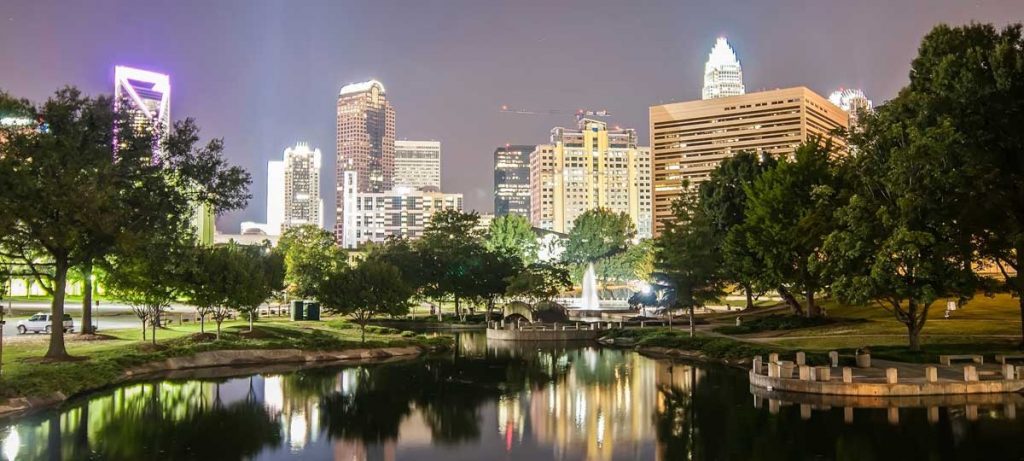
    Holly Springs

    Pinehurst

    (Property: 684; Violent: 67)

    • Population: 17,224
    • Median age: 59.4
    • Median household income: $82,081
    • Median house value: $288,000

    Pinehurst might be the best place to retire in North Carolina, especially for golf enthusiasts. The village developed from what was imagined as a “health resort for people of modest means,” as described by the founder, James Walker Tufts. First named Tuftstown, Pinehurst got its first golf course in 1897. Since then, the historic Pinehurst Resort has hosted numerous prestigious golf tournaments.

    Today, 17,224 people are living in Pinehurst. The median household income is $82,081, and the median age is 59.4. The median property value is $288,000. But apart from golf, what makes Pinehurst one of the best places to live in North Carolina?

    Even though Pinehurst mostly attracts retired golf aficionados, people of all ages choose to live in this village permanently. History buffs can enjoy Tufts Archives, and for nature lovers, there’s the Sandhills Nature Preserve with miles of hiking trails. 

    However, the biggest reason why people move to Pinehurst is that it isn’t too far from having the lowest crime rate in North Carolina. In 2019, Pinehurst only had 113 property crimes (87 thefts, 22 burglaries, 4 vehicle thefts) and 11 violent crimes (6 assaults, 4 robberies, 1 murder).

    The main downside of living in Pinehurst is that there’s not much to do unless you like golf and hiking. The town is hours away from major cities in the area, and it is not for those who like having the amenities of a big city at their disposal at all times.
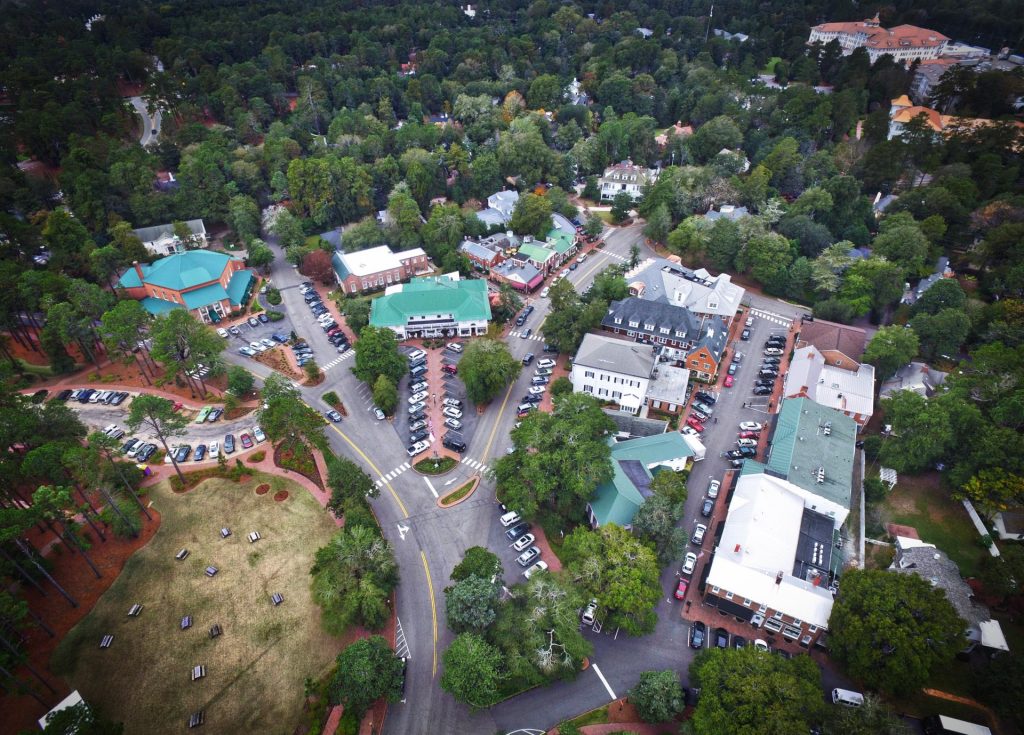
    Pinehurst, North Carolina - Safest cities in North Carolina

    Wake Forest

    (Property: 852; Violent: 52)

    • Population: 48,841
    • Median age: 36.7
    • Median household income: $92,210
    • Median house value: $313,300

    If you’re wondering, what is the safest small town in North Carolina? Then, you should check out Wake Forest. As the name suggests, this small town was once a forested area of 615 acres, purchased for $2,000 by the North Carolina Baptist Convention. They opened a Labor Institute that later grew into Wake Forest College. The college was moved to a bigger city in 1956, and the entire campus was then converted into a Baptist Theological Seminary.

    The town has 48,841 residents today. The median household income is $92,210, the median age is 36.7 years, and the median home costs $313,300. Being one of the best places to live in North Carolina for families, Wake Forest has a lot to offer. With more than 110 acres, E. Carroll Joyner Park is there for your runs, hikes, and strolls through beautiful North Carolina nature. Additionally, there’s a farm-themed park for the kids and a wide selection of museums and breweries for the parents. 

    Those looking for work will find the low unemployment rate of just 3.9% a breath of fresh air, while the low crime rates make it one of the best towns in North Carolina. In 2019, 393 property crimes (344 thefts, 33 burglaries, 16 vehicle thefts) were reported, together with 24 violent crimes (16 assaults, 4 robberies, 3 rapes, 1 murder). 

    We have learned by now that cities with low unemployment rates, lots of amenities, and low crime rates come with a high cost of living. This applies to Wake Forest, where the cost of living is 9.5% higher than in most of the US. The cost of living is expected to keep rising, together with the city’s population, which has increased by 205.6% since 2000.

    It’s just a matter of perspective whether Wake Forest is one of the worst or best places to live in NC.

    Wake Forest, North Carolina - Safest cities in North Carolina

    Cary

    (Property: 904; Violent: 66)

    • Population: 174,762
    • Median age: 59.9
    • Median household income: $104,669
    • Median house value: $370,600

    Known as Bradford’s Ordinary during the 18th century, the transformation from a small village into a bustling town began for Cary when the railroad was constructed, linking it to a major transport network. 

    Where is it safe to live in North Carolina? Cary is definitely one of the answers. Today, 174,762 people live in Cary. The median household income in this large town is $104,669, the median age is 59.9 years, and homes are listed with the median price of $370,600.

    Surrounded by gorgeous nature, lakes, and parks, Cary is the place to be for people with an active lifestyle. It is also the largest town on this list so far, which means that there are always things to do. Moreover, this town has a low unemployment rate, sitting at just 3.2%. When it comes to safety, the Cary, NC crime rate data shows that it is the safest town with a population of over 100,000 in the state.

    Crime stats for 2019 show that there were 1,560 property crimes (1,298 thefts, 185 burglaries, 77 vehicle thefts) and 114 violent crimes (67 assaults, 34 robberies, 12 rapes, 1 murder) committed in Cary.

    Having big-city amenities and being one of the safest towns in North Carolina comes with a price. The cost of living is 15% higher than the US average. Still, that doesn’t stop people from moving to Cary; the population has increased by 69% in less than 20 years.
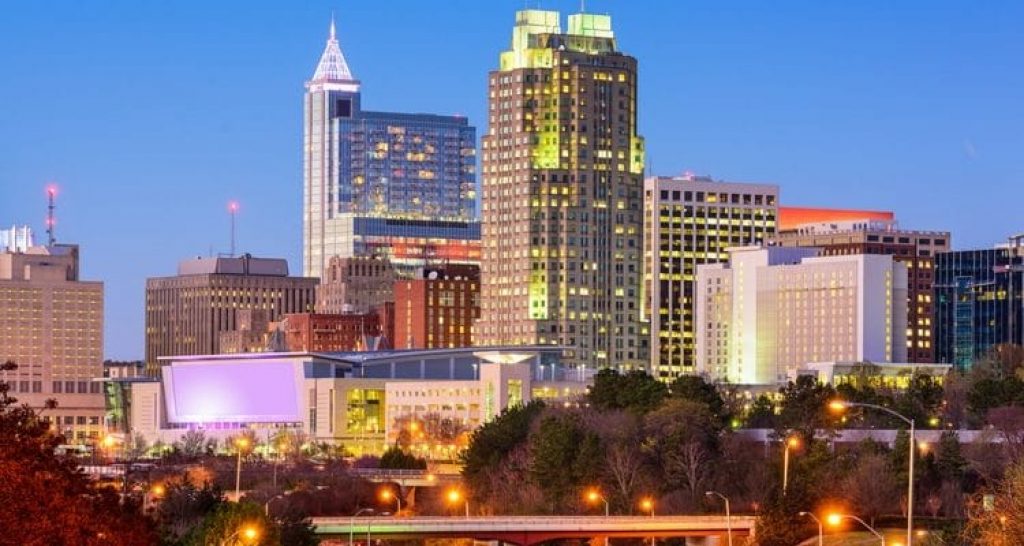
    Cary

    Davidson

    (Property: 917; Violent: 61)

    • Population: 13,404
    • Median age: 37.2
    • Median household income: $124,853
    • Median house value: $375,300

    If you’re wondering, where is the best place to live in North Carolina? John Davidson tried to find it 300 years ago, moving his family to the area. The town of Davidson shows its appreciation for its founder in multiple ways, including naming a college after him. Davidson College elevates this town above similar railroad towns, making it the center of the region when it was established in 1837.

    Davidson is home to 13,404 people, with a median household income of $124,853 and a median age of 37.2 years. Additionally, a median home costs $375,300. 

    Davidson is the safest place to live in North Carolina with the lowest unemployment rate of 2.8%. So, finding work in this town shouldn’t be too hard. Nature lovers will have plenty to do here; Fisher Farm and Davidson’s numerous parks are there to keep your Vitamin D levels high. Students joining Davidson College will have a blast on the historic campus, all while gaining an education from one of the top colleges in the country

    Being one of the safest places to live in North Carolina, crime in Davidson looked like this in 2019: 121 property crimes (94 thefts, 17 burglaries, 10 vehicle thefts) and 8 violent crimes (5 assaults, 1 robbery, 2 rapes) were reported. Thankfully, no murders were reported that year. 

    The downside of living in Davidson is the cost of living, which is 18.3% higher than the national average. Moreover, the town is becoming crowded, with a population increase of 72.6% since 2000, causing prices to go up.
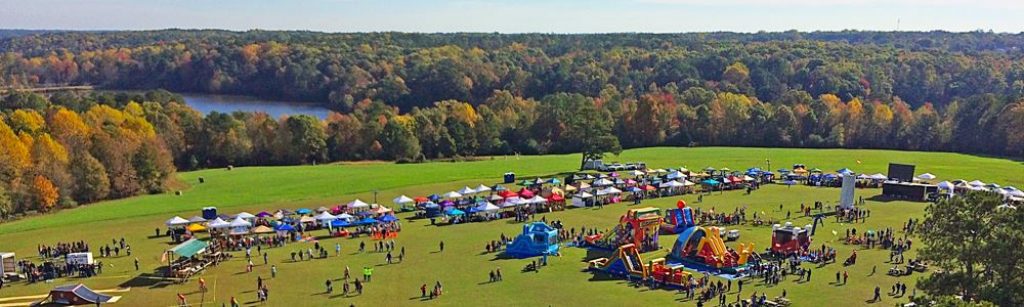
    Davidson

    Apex

    (Property: 936; Violent: 94)

    • Population: 70,182
    • Median age: 37.1
    • Median household income: $111,435
    • Median house value: $351,800

    The next item on our list is one of the best towns to live in North Carolina. Officially incorporated in 1873, Apex was once a tobacco farming community. Due to its proximity to the state capital, Apex quickly became an important trading hub for tobacco, lumber, and tar. During the 1960s, the focus switched from farming to technology.

    There are 70,182 people living in Apex today. Their median household income is $111,435, while the median age is 37.1 years. Houses cost a median price of $351,800.

    Apex Nature Park, the Farmers Market, several breweries, and an overall pleasant atmosphere have contributed to Apex being proclaimed the best place to live in North Carolina in 2015. The unemployment rate of just 3% also contributes to keeping Apex near the top of this list today. 

    Low crime rates are another major reason behind this city’s popularity. In 2019, the residents reported 527 property crimes (432 thefts, 79 burglaries, 16 vehicle thefts) and 53 violent crimes (37 assaults, 3 robberies, 13 rapes). Fortunately, no murders were reported that year.

    Even though it’s considered one of the best places to raise a family in North Carolina, Apex has its downsides. Firstly, it is a crowded city. Its reputation has brought in a population increase of 127.1% since 2000, which led to inflated property prices and a cost of living that is 13.1% higher than the national average.
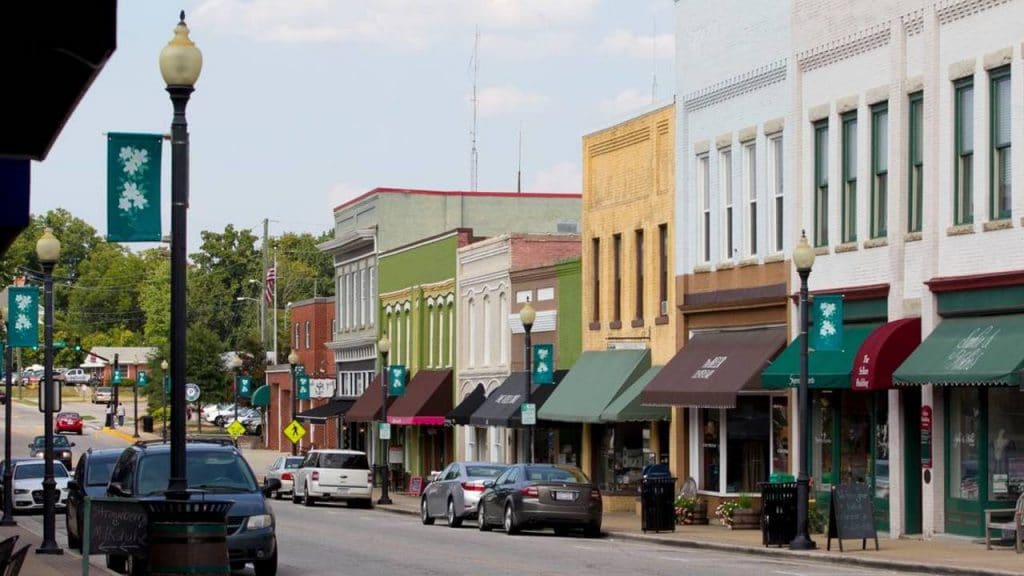
    Apex

    Fuquay-Varina

    (Property: 952; Violent: 84)

    • Population: 32,698
    • Median age: 35.8
    • Median household income: $79,000
    • Median house value: $252,500

    The next item on this list of safest cities in NC is actually composed of two towns that merged in 1963. Fuquay Springs and Varina joined to create a city whose popularity and population grew primarily due to the tobacco trade. The city’s proximity to the Research Triangle Park has opened up real estate development opportunities and created a new population boom.

    32,698 people have chosen to live in Fuquay-Varina. The median household income in the city is $79,000, the median age is 35.8 years, and a median house costs around $252,500. 

    This town is one of the best places to visit in North Carolina as there are many things you can do here. Hiking and running trails, as well as picnic spots, can be found in Carroll Howard Johnson Park. It also has a historic mineral spring park. What makes people move to Fuquay-Varina permanently are the tolerable cost of living (only 1.6% above the national average), the low unemployment rate (4.4%), and the city’s safety.

    Crime numbers for 2019 looked like this: 295 property crimes (234 thefts, 48 burglaries, 13 vehicle thefts) accompanied by 26 crimes that were violent (13 assaults, 10 robberies, 3 rapes) were reported during the year. That may look like a lot, but it’s relatively lower than the North Carolina crime rate.

    However, there’s a catch. The city’s population has increased by 208.6% in the last 20 years, leading to an average one-way commute time of 31.4 minutes. Keep in mind that the national average is 26.4 minutes.

    Fuquay Varnia, North Carolina - Safest cities in North Carolina

    Morrisville

    (Property: 1,316; Violent: 42)

    • Population: 31,670
    • Median age: 33.8
    • Median household income: $101,738
    • Median house value: $323,600

    Named after Jeremiah Morris, who donated land for the railroad, Morrisville played a major role in the civil war. The largest Confederate force of the war was forced to surrender here while retreating towards Durham County. Morrisville’s days of cavalry fights are long gone; these days, it’s a tech city, with giants such as Lenovo having their headquarters here. 

    What are the safest counties in NC? Wake County, which Morrisville is a part of, is certainly one of them. Nowadays, Morrisville has 31,670 inhabitants. The town’s median household income is $101,738, while the median age is 33.8 years. Property prices have been on the rise lately, with the median value reaching $323,600.

    Lake Crabtree and a county park with the same name are located on the outskirts of the town, offering boating, hiking, and biking for sports and nature enthusiasts. The Morrisville History Center is there for those interested in the city’s role in the Civil War. Morrisville is certainly one of the best places in North Carolina with the combination of fun things to do, the below-average unemployment rate (3.5%), and the fairly low crime rates

    379 property crimes (324 thefts, 39 burglaries, 16 vehicle thefts) and 12 violent ones (9 assaults, 2 robberies, 1 rape) were reported in 2019. Thankfully, no murders were reported that year.

    Back in 2000, Morrisville had only 5,208 residents. Since then, the population has grown by more than 358.4%, causing an increase in real estate prices, creating crowds, and increasing commute times.

    However, its average one-way commute time of 21.9 minutes is still lower than the national average. That said, if you’re looking for peaceful and quiet good places to live in North Carolina, moving to Morrisville might not be the way to go.
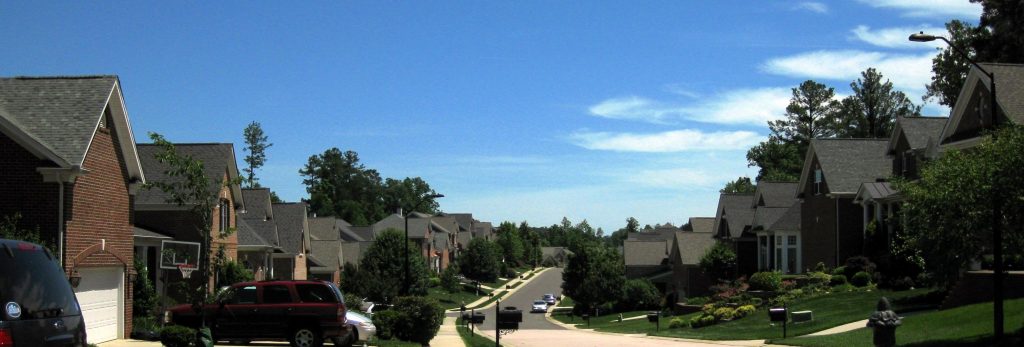
    Morrisville, North Carolina - Safest cities in North Carolina

    Huntersville

    (Property: 1,764; Violent: 108)

    • Population: 59,870
    • Median age: 37.4
    • Median household income: $102,016
    • Median house value: $309,000

    Located just 14 miles north of Charlotte, Huntersville is a place of great debate. Some residents think the town was named in honor of a minister named Rev. Humphrey Hunter. Another faction believes it was after a local cotton farmer, Robert Hunter.

    Finally, a third group of residents believe their town is most likely named after Elizabeth and Travis Hunter, a local teacher and crossing guard pair who parented the first baby boy in what is now one of the safest places to live in North Carolina. 

    Huntersville is a city of 59,870 people, with a median household income of $102,016, a median age of 37.4, and a median home value of $309,000.

    Those traveling to this town must visit Latta Place, a plantation house turned into a museum. It’s difficult to get bored in Huntersville, as there are so many things to do. Also, with an unemployment rate (3.4%) that’s relatively lower than the national average, Huntersville is considered one of the best places to work in North Carolina.

    Another upside to living in Huntersville is its lower-than-average crime rate. In 2019, 948 property crimes (769 thefts, 114 burglaries, 65 vehicle thefts) and 79 instances of violent crime (51 assaults, 23 robberies, 4 rapes, 1 murder) were reported. 

    Huntersville has a cost of living that is 10.4 higher than the US average. However, this doesn’t stop people from flooding into town, as evident in the 113.6% increase in population since 2000.

    Huntersville, North Carolina - Safest cities in North Carolina

    Concord

    (Property: 1,650; Violent: 122)

    • Population: 100,639
    • Median age: 36.8
    • Median household income: $67,984
    • Median house value: $203,500

    Concord is the 10th largest city in North Carolina and one of the most interesting places for tourists. Initially inhabited by German and Irish immigrants, the city is part of the Charlotte metropolitan area. It is officially recognized as an “old town,” as it was incorporated in 1806.

    There are 100,639 people currently living in Concord. The median household income in the city is $67,984, and the median age is 36.8. Homebuyers should prepare $203,500, according to median real estate prices.

    What makes this one of the best cities in North Carolina for tourists is the fact that it’s home to the Charlotte Motor Speedway and Concord Mills, a 1.4-million-square-foot shopping mall.

    On the other hand, tourists who prefer nature over rumbling engines and mall crowds have plenty of options, too. Additionally, Concord is a great place to live in, with an unemployment rate of just 5.3% and a cost of living that’s 6.7% below the national average.

    In 2019, 1,586 property crimes (1,338 thefts, 149 burglaries, 99 vehicle thefts) and 117 violent crimes (84 assaults, 28 robberies, 1 rape, 4 murders) were reported, according to the Concord, NC crime rate.

    The only thing that can be taken as a flaw in this city is the population increase of 56.5% over the last 20 years, which is still not as severe as most cities on this list.
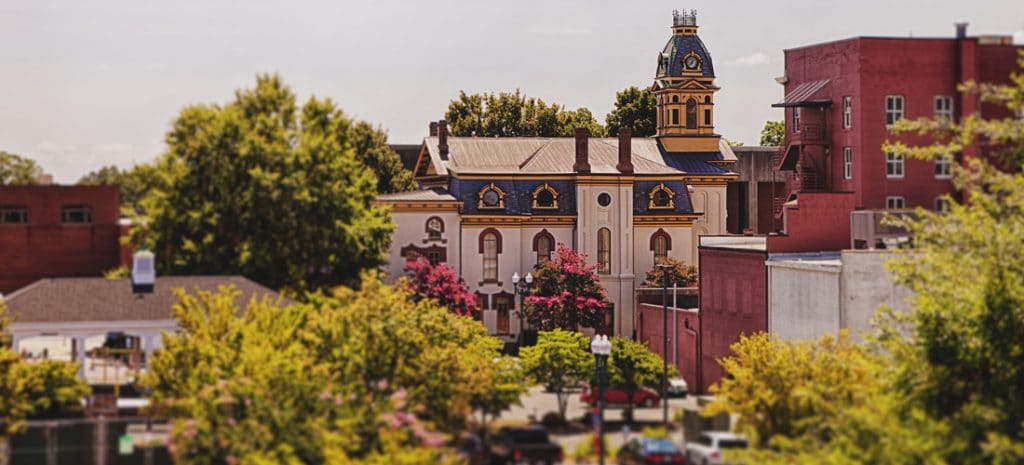
    Concord, North Carolina - Safest cities in North Carolina

    Knightdale

    (Property: 1,776; Violent: 229)

    • Population: 18,761
    • Median age: 36
    • Median household income: $69,684
    • Median house value: $205,000

    Much like most of North Carolina, Knightdale started as a tobacco and cotton farming town. As evident in the unmarked grave plots throughout the city, Knightdale carries a shameful history of slave ownership. Today, these plots are an important part of the landscape of a place that is now deemed one of the best small towns to live in North Carolina.

    Knightdale has a population of 18,761, a median household income of $69,684, and a median age of 36 years. Additionally, the median house value is $205,000.

    This small town offers a fairly extensive list of amenities and close proximity to Raleigh, the second-largest city in NC. The town’s economy is looking good, with an unemployment rate of 4.7% and positive job growth over the last year. Also, with a cost of living that’s 5.3% lower than the national average, Knightdale is among the cheapest cities with the lowest crime rate in North Carolina. 

    Crime statistics show 326 property crimes (285 thefts, 23 burglaries, 18 vehicle thefts) and 42 violent crimes (23 assaults, 9 robberies, 10 rapes) reported in Knightdale in 2019. Fortunately, no murders were recorded that year.

    It shouldn’t be surprising that this town’s population has increased by 141.1% since 2000. Knightdale had just 1,884 residents in 1990, and this rapid increase won’t slow down anytime soon. Despite being one of the best affordable places to live in North Carolina, it might not be the most peaceful town conducive to raising a family.
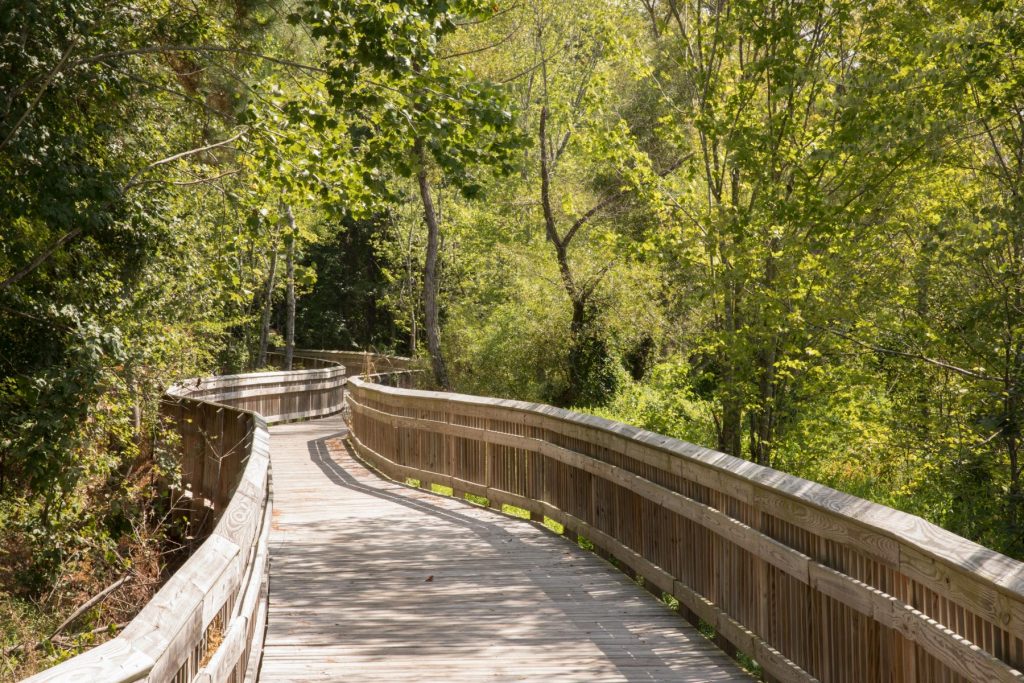
    Knightdale, North Carolina - Safest cities in North Carolina

    Clayton

    (Property: 2,085; Violent: 168)

    • Population: 28,843
    • Median age: 34.4
    • Median household income: $62,676
    • Median house value: $219,500

    Incorporated in 1869, Clayton was once known as Stallings Station, after Sarah Stallings, whose home served as a depot for the North Carolina Railroad. The Civil War had a heavy impact on the city, deteriorating its already crumbling economy and causing a high percentage of the population to move out.

    Nowadays, it’s considered one of the best places to retire in North Carolina, with a low cost of living and a lower population than most other cities in the state.

    The town’s population is estimated at 28,843. The median household income in the town is $62,676, and the median age is 34.4 years. You can buy a home in this town for the median price of $219,500. 

    This city appears to have it all. In fact, Clayton may represent the most compelling argument if you’re wondering, is North Carolina a good place to live? Clayton will keep you busy and entertain you with countless things to do, but what gets people to stay is the positive job growth, an unemployment rate of 3.4%, a cost of living that’s 4.2% below the US average, and exemplary crime rates. 

    The annual crime data for Clayton shows that 497 property (434 thefts, 49 burglaries, 14 vehicle thefts) and 40 violent crimes (24 assaults, 8 robberies, 7 rapes, 1 murder) were reported during 2019. We have yet to look into the North Carolina crime rate in 2020.

    The only possible drawback to living in Clayton is that it attracts a lot of people. In 2000, Clayton was a town of fewer than 7,000 people. Since then, the population has increased by 176.9%. Even though some might enjoy the rumble of an expanding city, others might find it to be one of the worst places to live in North Carolina.
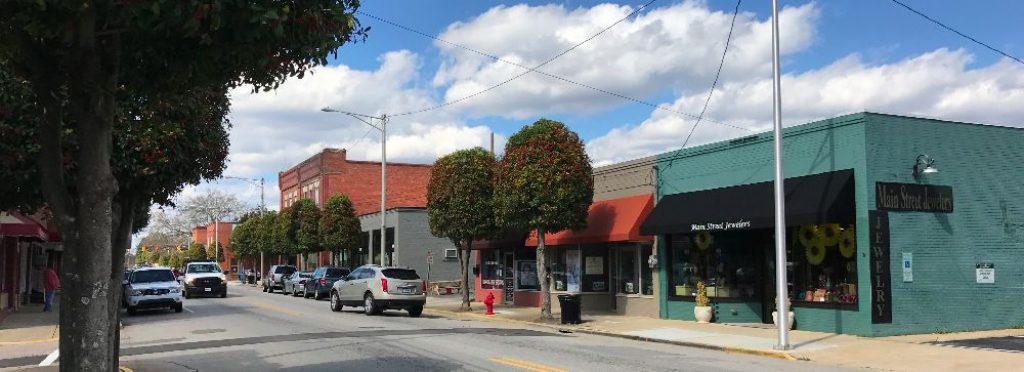
    Clayton, North Carolina - Safest cities in North Carolina

    Part 2: The 8 Most Popular Cities in North Carolina Sorted by Crime Rate

    Raleigh

    (Property: 1,783; Violent: 256)

    • Population: 483,579
    • Median age: 33.6
    • Median household income: $67,266
    • Median house value: $273,900

    Is Raleigh, NC safe? Despite being the state’s capital and second-largest city, Raleigh is relatively safe. The city was chosen as the state capital in 1788. It is also one of the first examples of a planned city in the US, with a grid pattern and a State Capitol at the center of the grid.

    These days, 483,579 people are living in Raleigh. Its median household income is $67,266, the median age is 33.6 years, and the median house value is $273,900.

    Raleigh is the best city in North Carolina for tourists, with so many places to visit, such as the North Carolina Museum of Natural Sciences, the State Capitol, and others. Those who decide to move here will find the unemployment rate of 4.1% an encouraging number.

    In 2019, 8,520 property crimes (6,572 thefts, 1,200 burglaries, 748 vehicle thefts) and 1,222 violent crimes (731 assaults, 322 robberies, 164 rapes, 5 murders) were committed in the city. Although the Raleigh, NC crime rate seems high, the city’s violent crime rate is 33% lower than the national average, and its total crime rate is 18% lower.

    The main negative side of living in Raleigh is its population growth rate. Since 2000, the population has increased by 62.8%. Particularly, the city has been gaining 70,000 new residents every 10 years ever since the 1990s.

    Moreover, if you’re looking for the safest cities in North Carolina from hurricanes, you might want to think twice about moving to Raleigh.
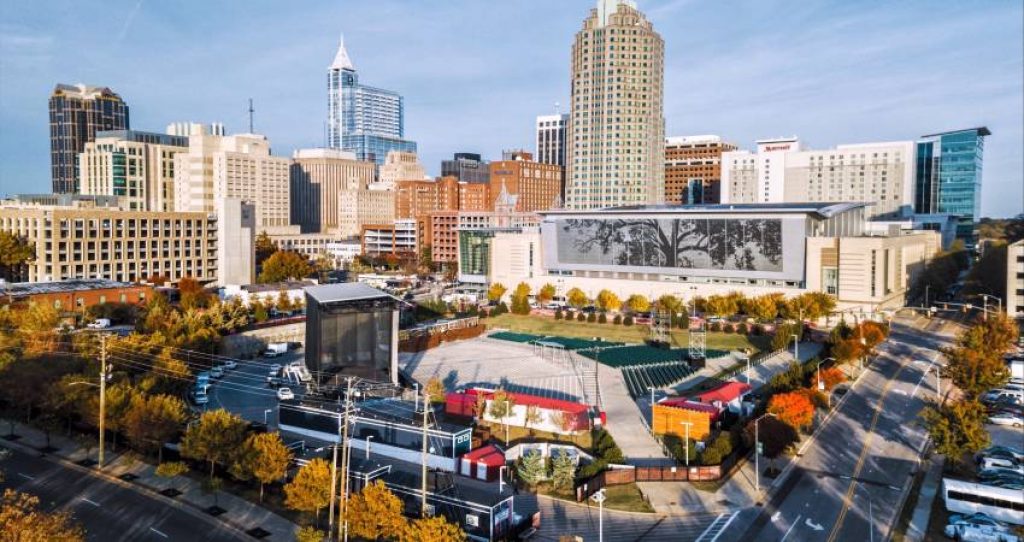
    Raleigh, North Carolina - Safest cities in North Carolina

    Wilmington

    (Property: 2,880; Violent: 608)

    • Population: 126,000
    • Median age: 36
    • Median household income: $47,580
    • Median house value: $230,500

    Situated on the coast of the Atlantic, Wilmington has always been an important port. It was first settled by the English and became the main supply point for the Confederate forces. In 2003, the city was designated as a Coast Guard City. In 2014, the city’s riverfront was ranked the Best American Riverfront by USA Today readers.

    Nowadays, 126,000 people live in Wilmington, who regard it as one of the best places to live in North Carolina near the beach, despite its flaws. The city’s median household income is $47,580, the median age sits at 36 years, and the median home price is $230,500.

    Going to Wilmington and not seeing the Battleship North Carolina is like visiting Paris and never seeing the Eiffel Tower. Its historic downtown area should also be on your itinerary, as well as numerous other spots worth a visit. New residents will find comfort in knowing that the unemployment rate is 5.7%, and the cost of living is 2.5% lower than the US average. The city’s crime rates, however, are a whole different story.

    The crime rate in Wilmington, NC for 2019 shows 3,593 property crimes (2,564 thefts, 771 burglaries, 258 vehicle thefts) and 759 violent crimes (551 assaults, 127 robberies, 74 rapes, 7 murders) reported. 

    Violence and crime are this city’s biggest flaws. The violent crime rate, which is over 60% above the state and national averages, easily outweighs all of the positives that Wilmington has to offer.

    Wilmington, North Carolina - Safest cities in North Carolina

    Jacksonville

    (Property: 2,357; Violent: 372)

    • Population: 71,758
    • Median age: 23.1
    • Median household income: $44,956
    • Median house value: $135,500

    The next item on the list is one of the best cities to live in North Carolina for beachgoers. Jacksonville was once a quaint lumber and tobacco town. Then, the US army decided that it would be the perfect spot for a military base. More than 700 families had to be relocated when the building began in 1941. From water pollution to land claim lawsuits, Jacksonville is a turbulent place. 

    The city has a population of 71,758 and a median household income of $44,956. The median age of 23.1 is among the youngest in the country, mainly due to the military presence. If you’re looking for affordable places to live in North Carolina, Jacksonville might just be the answer. Houses in the city can be bought for a median price of $135,500.

    Because it’s situated on the New River and close to the Atlantic coast, water sports are the most common activity in Jacksonville. The city is fairly isolated from major centers, and yet, it’s considered one of the best places to retire in North Carolina near the beach. This is mostly due to the low cost of living (15.7% below the national average), even though the city’s median age suggests otherwise. 

    Crime data for Jacksonville have not yet been released yet, but estimates for 2019 show that there were 3,041 property crimes and 480 violent crimes reported.

    Jacksonville’s unemployment rate is quite high at 11.2%. The economy is far from diverse, as the military is the only major employer in the area. On top of that, the Jacksonville, NC crime rate is another major point against moving to this city.
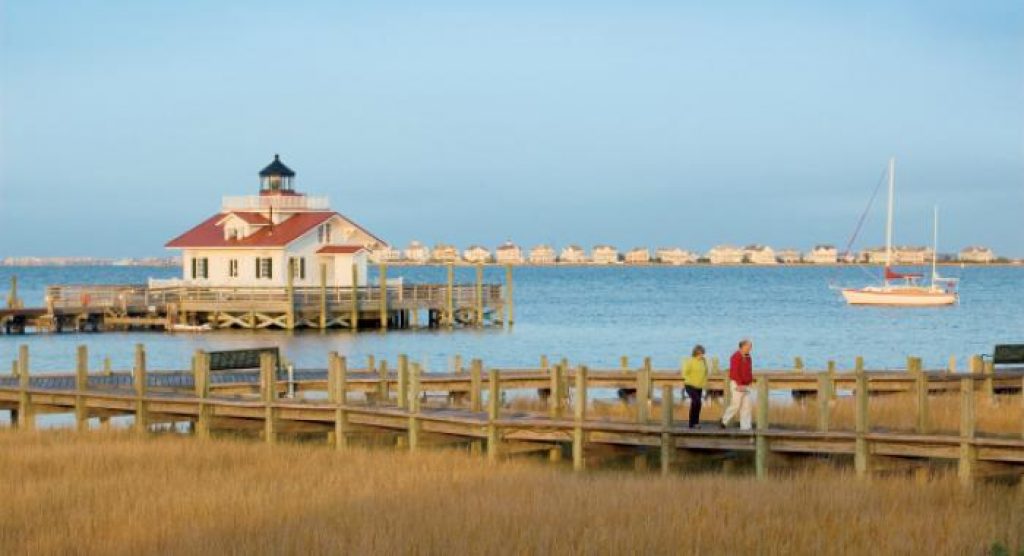
    Jacksonville, North Carolina - Safest cities in North Carolina

    Fayetteville

    (Property: 3,526; Violent: 875)

    • Population: 213,475
    • Median age: 30
    • Median household income: $45,024
    • Median house value: $103,500

    Once a Scottish settlement and the state capital, Fayetteville is a city that relies on Fort Bragg and Pope Air Force Base for most of its employment needs. Multiple revitalization programs have brought the younger population to this part of North Carolina, even though it was always regarded as one of the best cities to retire in North Carolina.

    There are 213,475 people living in Fayetteville, and their median household income is $45,024. The city’s median age is 30 years, while the median house listed for sale will cost you $103,500. The relatively low median home value in this city is the main advantage for those looking to move here. You’re unlikely to find cheaper houses in NC. 

    Moreover, the cost of living is 19.1% lower than the national average. The city doesn’t offer many recreational activities, but this is something that city officials are working hard on. The same applies to the economy of the city, which is primarily dependent on the military.

    When it comes to the Fayetteville, NC crime rate, the numbers are far from impressive: 7,391 property crimes (5,641 thefts, 1,365 burglaries, 385 vehicle thefts) and 1,835 violent crimes (1,413 assaults, 281 robberies, 117 rapes, 24 murders) occurred in 2019.

    Issues such as the crime rate and one-sided economy are only exacerbated by the unemployment rate of 9.1%, which is higher than the US average, and the overall lack of entertainment.

    Fayetteville, North Carolina - Safest cities in North Carolina

    Greensboro

    (Property: 3,689; Violent: 819)

    • Population: 301,094
    • Median age: 35.1
    • Median household income: $48,964
    • Median house value: $143,800

    Despite being the third-largest city in terms of population, Greensboro remains among the affordable places to live in North Carolina. Greensboro honors Nathanael Greene, commander of the Continental Army in the Revolutionary War. The city has always relied on the textile industry, even as the 21st century began. Companies such as The North Face are based here.

    The city has 301,094 occupants, with a median household income of $48,964, a median age of 35.1, and a median home price of $143,800.

    Greensboro is a major freight and passenger hub, with four Amtrak trains stopping in the city every day. This means that getting to and from Greensboro is not a difficult task, and even a daily excursion can easily be arranged. Living here is not expensive, as the cost of living is 16.1% below the national average.

    The Greensboro, NC crime rate tells us that it isn’t a particularly safe city. In 2019, 10,994 property crimes (7,792 thefts, 2,215 burglaries, 987 vehicle thefts) were reported, alongside 2,440 violent crimes (1,663 assaults, 621 robberies, 113 rapes, 43 murders).

    In addition to increased crime rates, Greensboro has an unemployment rate of 6.1% and a declining industry. Nevertheless, the population is increasing at a steady pace of around 25% every 15 years.

    Greensboro, North Carolina - Safest cities in North Carolina

    Durham

    (Property: 3,808; Violent: 730)

    • Population: 287,865
    • Median age: 33.9
    • Median household income: $58,905
    • Median house value: $231,400

    Although Durham is not one of the safest cities in North Carolina, it’s a good city for students. It’s a part of the Research Triangle, with multiple prestigious universities located in it.

    With a population of 287,865, Durham belongs to the top five most populated cities in North Carolina. The median household income is $58,905, the median age is 33.9 years, and a median home will run you $231,400.

    Even though it’s one of the biggest cities in NC, Durham still has a college-town feel to it. Being the best city to live in North Carolina for students, Durham is home to Duke University and North Carolina Central University, both highly regarded institutions. Also, the city doesn’t lack museums, sights, and recreational areas. Those who decide to move here and look for a job will have an easier time finding one than in most of the US, as the unemployment rate is just 4.6%.

    However, the Durham, NC crime rate does not make the city look too good. In 2019, 10,672 property crimes (7,942 thefts, 1,972 burglaries, 758 vehicle thefts) and 2,046 violent crimes (1,262 assaults, 626 robberies, 121 rapes, 37 murders) were reported. 

    Violence and crime are the most obvious setbacks to living in Durham, and this might be what discourages most people from moving to this otherwise beautiful city.

    Durham, North Carolina - Safest cities in North Carolina

    Charlotte

    (Property: 3,926; Violent: 739)

    • Population: 912,096
    • Median age: 34.2
    • Median household income: $62,817
    • Median house value: $228,800

    The next city on the list is one of the safest cities in North Carolina from natural disasters. It’s also the fastest-growing metro area in the US for 10 years in a row and one of the largest cities in North Carolina. Charlotte carries the name of a German princess in order to honor its European heritage. It is home to Bank of America, Wells Fargo (east coast operations), and sports teams such as the Hornets and the Panthers

    Charlotte is a city of 912,096 people despite not being the safest city in North Carolina. The median household income is $62,817, the median age is 34.2 years, and a median house costs $228,800.

    Thousands of people visit Charlotte just for sporting events. NBA, NFL, AHL, USL, and NASCAR events are held in the city, providing entertainment for millions. On the other hand, visitors who are not into sports can still find other things to do. Charlotte has a diverse and developed economy, with an unemployment rate of 5% and a cost of living that’s 1.1% lower than the national average.

    The Charlotte, NC crime rate is what turns most people away. In 2019, 37,070 property crimes (28,304 thefts, 5,426 burglaries, 3,340 vehicle thefts) and 6,982 violent crimes (4,587 assaults, 1,975 robberies, 317 rapes, 103 murders) were reported.

    Regardless of the high crime rate, Charlotte still manages to attract new residents. Since 2000, the population has increased by nearly 400,000, or 52.7%, causing more issues, such as overcrowding, property value spikes, and more crime.

    Charlotte, North Carolina - Safest cities in North Carolina

    Asheville

    (Property: 6,325; Violent: 742)

    • Population: 93,350
    • Median age: 39
    • Median household income: $49,930
    • Median house value: $286,900

    Is North Carolina safe? We’d say probably not in this next city on the list. Asheville’s most prosperous times were the 1910s and 1920s when the president’s son bought land and became interested in developing the city further. It was the third biggest city in North Carolina, but its luck soon ran out. The city was severely affected by floods and hurricanes throughout the 20th century.

    Nonetheless, this city of 93,350 people is still considered one of the best places to live in Western North Carolina. Also, the city’s median household income is $49,930, the median age is 39 years, and a median home costs $286,900.

    Châteaus, forests, and gorgeous nature are what characterize Asheville. Those who like the outdoors will never get bored here. Moving here permanently without a job lined up won’t be an issue, as the unemployment rate is just 2.8%, way lower than the national average. However, the Asheville, NC crime rate might be a problem. 

    It shows the highest numbers on this list: 5,923 property crimes (4,552 thefts, 833 burglaries, 538 vehicle thefts), accompanied by 695 violent crimes (467 assaults, 163 robberies, 59 rapes, 6 murders) are numbers that a city with less than 100,000 inhabitants shouldn’t show.

    Regardless of the high crime rate, the population of Asheville is constantly increasing. Since 2000, the number has gone up by 28.5%. The city is showing some progress in crime reduction, according to North Carolina crime statistics, so it might move up this list in a few years. However, at the moment, it is far from being considered safe.

    Asheville, North Carolina - Safest cities in North Carolina

    Conclusion

    Home to beautiful beaches, gorgeous mountains, and ski resorts, a land of contrast in every aspect, North Carolina is a place to be, rather than to seem (to be), as the state’s motto says.

    From small towns with low pollution and low crime rates to busy cities with hundreds of thousands of people roaming the streets, there’s a place for everyone to be themselves.

    Whether you’re looking for a place to retire to, raise a family in, or just go for a short vacation, we hope that this list of the safest cities in North Carolina comes in handy.

  • Safest Cities in Texas

    Safest Cities in Texas

    Everyone knows about Texas, no matter where they live. We’ve all seen the westerns like The Good, the Bad, and the Ugly and pretended to ride through the desert, looking for the next town to rob. Aside from going there to live as an outlaw, the time to consider actually moving to Texas may have arrived.

    In case everything you know about Texas starts and ends with Clint Eastwood’s films, you might find this list of the safest cities in Texas useful. In the first part, we’ve listed the safest cities with a population of below 100,000. The second part features the most popular cities in Texas ranked by safety. 

    Every city on this list includes property and violent crimes per 100,000 inhabitants. Keep in mind that the average property crime rate is 2,391 per 100,000 people, and the violent crime rate is 419 per 100,000 people. In total, the Texas crime rate is 2,810 per 100,000 people. Additionally, the national average for property crime is 2,110 per 100,000 people and 379 for violent crimes.

    If you find yourself asking these questions: “How much will buying a house in Texas cost me? What’s the traffic like? How old are the inhabitants usually? Are the schools decent?” Read on and find out more.

    Safest Cities in Texas in 2021

    Kermit

    (Property: 2,136; Violent: 348)

    • Population: 6,856
    • Median age: 32.2
    • Median household income: $54,267
    • Median house value: $63,600

    Kermit has always played a key role in its region. During the late 19th century, it was the region’s supply center. The city got its name to honor Theodore Roosevelt and his son, Kermit Roosevelt after the president visited the city. Oil is the main economic driver in Kermit.

    This small Texas city has a population of just 6,856. Median household earnings amount to $54,267, and the population’s median age is 32.2 years. What helps make Kermit one of the best cities in Texas is that buying a house is not an expensive ordeal, as the median asking price is $63,600.

    Life in Kermit is fairly inexpensive, as the cost of living is 29.4% lower than the national average. The home prices and higher-than-average education investments are also a giant plus, but the biggest upside of living here is the crime rate. In 2019, 135 property crimes were reported, consisting of 61 thefts, 58 burglaries, and 16 vehicle thefts. When it comes to violent crimes, there were only 22 recorded, consisting of 20 assaults, 1 robbery, and 1 murder.

    Moreover, it’s definitely one of the safest places to live in Texas, as there were no rapes reported in the city that year.

    Even though it has plenty to offer new settlers, living in Kermit has some downsides. The unemployment rate is 3.9%, which is lower than the US average. A common complaint among residents is also the city’s insufficient entertainment opportunities.

    Young people won’t have much to do in Kermit, as there’s basically no nightlife, but it might be one of the best places to live in Texas for families looking to live a quiet life.

    Kermit, Texas - Safest Cities in Texas

    Fair Oaks Ranch

    (Property: 276; Violent: 59)

    • Population: 10,756
    • Median age: 46.3
    • Median household income: $128,398
    • Median house value: $484,900

    Fair Oaks Ranch is a city shared by two counties: Bexar and Kendall. The land, owned by oil industry families, was turned into residential lots and incorporated as a town in 1988. 

    Today, this city has 10,756 residents. The median household income is $128,398, while the population’s median age is 46.3 years old. Buying a house in Fair Oaks Ranch usually costs a whopping $484,900.

    What makes Fair Oaks Ranch one of the best and safest cities in Texas is its strong economy, unemployment rate of 1.8%, numerous activities aimed at both young people and seniors, and good weather year-round. 

    The crime rates happen to be another upside of living in Fair Oaks Ranch. In 2019, only 28 property and 6 violent crimes were reported. The majority of property crimes were thefts, and only 20 cases were recorded that year. There were also 4 burglaries and 4 vehicle thefts reported. As for violent crimes, with just 3 assaults and 3 rapes, Fair Oaks Ranch definitely belongs to the safest cities in America. Thankfully, no robberies and murders were reported that year. 

    On the other hand, going against the city’s favor is its cost of living, which is 34.6% higher than average, and its rapid population growth (298%).

    Fair Oaks Ranch, Texas - Safest Cities in Texas

    Colleyville

    (Property: 615; Violent: 18)

    • Population: 27,489
    • Median age: 48.6
    • Median household income: $163,509
    • Median house value: $518,700

    One of the most prominent Dallas suburbs, Colleyville is the place to be in Tarrant County. The city was first named Bransford, but it was renamed in 1914 to honor Dr. Lilburn Howard Colley, the first person who settled in the area.

    If you’re looking for safe cities in Texas, this city with a population of 27,489 is one of them. Its median household income is $163,509, while the median age is 48.6. In this part of Texas, the median cost of a house is around $518,700.

    The city is a dream location for families due to its top-notch public schools and well-developed economy that makes it one of the richest cities in the country. 

    Public safety is another factor that makes Colleyville one of the best places to live in Texas. In 2019, 169 property crimes were reported—137 of them being thefts, 22 burglaries, and 10 vehicle thefts. Just 5 violent crimes were reported in Colleyville, all of which were assaults.

    Living in the city of Colleyville, unfortunately, comes with some negatives. Firstly, the cost of living in Colleyville is 43.5% more expensive than the US average. Secondly, even though it has a developed economy and low unemployment rates, it is fairly rural. Lastly, because it is one of the safest cities in Texas, thousands of people are drawn to Colleyville, leading to overcrowding.

    Colleyville, Texas - Safest cities in Texas

    Fairview

    (Property: 449; Violent: 128)

    • Population: 9,241
    • Median age: 48
    • Median household income: $94,507
    • Median house value: $444,200

    Situated in Collin County, Fairview represents one of the most expensive small towns in Texas and was officially incorporated in 1958. 

    Home to 9,241 people, this is one of the best towns to live in Texas. The town has a median household income of $94,507, a median age of 48 years old, and a median home price of $444,200.

    Fairview does not base its entire economy on oil, as most other small Texas towns do. Its diverse economy led to its incredibly low unemployment rate of just 1.7%. The town also has one of the largest public school investments in the country. 

    If you’re looking for the town with the lowest crime rate in Texas, Fairview could be appealing to you. In 2019, there were 42 property crimes in Fairview: 9 burglaries, 28 thefts, and 5 vehicle thefts. When it comes to violent crime, there were 12 reported: 10 assaults and 2 robberies. 

    The cons of living in Fairview include a cost of living that’s 26.4% higher than in the rest of the US, not to mention the insanely high population growth. During the last 18 years, Fairview saw a population growth of 443%, making it the fastest-growing city in Texas.

    Fairview

    Murphy

    (Property: 501; Violent: 43)

    • Population: 20,204
    • Median age: 37.9
    • Median household income: $126,196
    • Median house value: $394,700

    Another Collin County city is next on our list of the safest places to live in Texas. Murphy received its first settlers in 1846, and the city was named in honor of William Murphy, who provided the land for the railway tracks that reached the city in 1888. The oldest building in town is the First Baptist Church of Murphy, which was built in 1901 and is definitely worth a visit.

    Murphy houses 20,204 residents. This fairly rich city has a median household income of $126,196 and a median age of 37.9 years old. A house in this area costs a median price of around $394,700.

    What makes this city the best place to live in Texas are the many benefits it offers to visitors and residents. The city has a diverse economy and an unemployment rate of just 4.9%. It offers numerous entertainment options, making it appealing to young people. Art and culture are a big part of Murphy.

    Crime rates in Murphy during 2019 looked like this: 105 property crimes were reported, consisting of 92 thefts, 9 burglaries, and 4 vehicle thefts. Moreover, violent crimes totaled to 9 incidents, consisting of 5 assaults, 2 robberies, and 2 rapes. Thankfully, no murders were reported that year, so Murphy just might be the safest city in Texas with a higher median income. 

    Murphy’s cons include below-average education investments, high population growth, and a high cost of living, which is 19.9% higher than the rest of the country.

    Murphy, Texas - Safest cities in Texas

    Keller

    (Property: 721; Violent: 52)

    • Population: 47,123
    • Median age: 41.4
    • Median household income: $141,364
    • Median house value: $411,900

    A part of Tarrant County, Keller is by far the largest city on this list of the safest cities in Texas. The town originated from the 1850s when it became one of the stops on the Texas and Pacific Railway. Its location on the Trinity River made it perfect for farming, thereby drawing in more settlers. Keller took almost 100 years to become incorporated, finally doing so in 1955.

    The city has a population of 47,123, with a median household income of $141,364. The median age is 41.4 years old, and a home has a median price of around $411,900.

    Where is the most beautiful place to live in Texas? Well, Keller has the perfect mix of infrastructure and amenities aimed to entertain and educate. There are 11 parks and over 26 miles of biking trails. Moreover, Keller Independent School District has nearly 40 campuses that educate 35,000 students.

    When it comes to crime rates in Keller, there were 349 property crimes reported during 2019— 302 of them being thefts, 33 were burglaries, and 14 were vehicle thefts. Moreover, there were 25 violent crimes, consisting of 18 assaults, 3 robberies, and 4 rapes. According to Texas criminal statistics that year, no murders were reported in Keller. 

    Keller is one of the more expensive Texas towns to live in, with the cost of living being 29.5% higher than the national average. The city is crowded, which commonly leads to traffic jams and sets the average commute time to 30.3 minutes. This is almost 4 minutes longer than in most of the US.

    Keller, Texas - Safest cities in Texas

    Horizon City

    (Property: 502; Violent: 35)

    • Population: 19,288
    • Median age: 28.4
    • Median household income: $60,431
    • Median house value: $126,400

    Although Horizon City isn’t the safest place to live in Texas, it definitely comes close. Even though planning for the community started during the early 1960s, this Texas city wasn’t officially incorporated until 1988. Moreover, the city was named after the corporation in charge of the original planning—Horizon Corporation. 

    Horizon City has a population of 19,288 and a median household income of $60,431. The median age is 28.4 years old, while the median price of houses listed for sale in the city is $126,400.

    Where is the cheapest and safest place to live in Texas? Well, Horizon City is a strong contender with a combination of below-average cost of living (17.3% lower than the US average) and numerous entertainment options, ranging from escape rooms to golf and ATV adventures. Its proximity to the El Paso city center is a huge plus, especially when it comes to the choice of schools and hospitals.

    The crime rates in Horizon City for 2019 looked like this: 101 property crimes and 7 violent crimes. In particular, this consists of 85 thefts, 12 burglaries, and 4 vehicle thefts, as well as 6 assaults and 1 robbery.

    Even though it’s one of the safest cities in Texas in 2020, life in Horizon City has its drawbacks. The unemployment rate is 5.9%, one of the highest ones so far on this list. More importantly, schools in this city don’t receive enough funding, which is why parents from Horizon City send their children to schools in El Paso.

    Horizon city Texas - Safest cities in Texas

    West University Place

    (Property: 784; Violent: 38)

    • Population: 15,523
    • Median age: 42.1
    • Median household income: $250,000
    • Median house value: $954,100

    Commonly called West U, West University Place is located in Harris County. The city was officially incorporated in 1924. In addition to being one of the safe cities in Texas, it has an interesting tradition of naming its streets after famous authors and universities.

    West University Place has a population of 15,523 with a median household income of $250,000 and a median age of 42.1. Most of those who own a property in the city are likely to be multi-millionaires, as the median cost of a house reaches $954,100.

    Most consider this city to be the most desirable part of the Houston metropolitan area and the best place to live in Texas for those who can afford it. West U has an average commute time of 20.1 minutes (6.3 minutes below the US average). It also has numerous parks, making it an ideal place to raise a family.

    Crime data and statistics show that there were 124 property and 6 violent crimes reported in 2019. The property crimes consisted of 68 thefts, 49 burglaries, and 7 vehicle thefts. On the other hand, the violent crimes consisted of 1 assault, 4 robberies, and 1 rape.

    Although West U is one of the safest cities in Texas, living here has some disadvantages. For one, the cost of living is 97.6% higher than the national average, making this city even more expensive to live in than New York. Additionally, the median home price is $954,100, making West University Place an unattainable dream for most of us.

    West University Place, Texas - Safest cities in Texas

    Flower Mound

    (Property: 923; Violent: 54)

    • Population: 82,281
    • Median age: 39.7
    • Median household income: $137,285
    • Median house value: $382,700

    Flower Mound is a town shared by two Texas counties: Denton and Tarrant. It originated from Presbyterian religious settlements established during the 1840s. If you’re looking for the best places to live in Texas, Flower Mound could be the answer. In 1974, the Dallas-Fort Worth International Airport was completed, which more than tripled the city’s population. 

    Almost 45 years later, Flower Mound is now a town with a population of 82,281, a median household income of $137,285, and a median age of 39.7. Settling here will cost you $382,700, according to median home price statistics.

    Flower Mound has some stunning views to offer, making it one of the best towns to live in Texas for nature admirers. It shares the LLELA Nature Preserve with Highland Village, and it has access to Grapevine Lake. The town has 54 public parks and recreation facilities and an unemployment rate of just 3.8%. 

    When it comes to crime rates, Flower Mound is doing fairly well, considering its size. 730 property crimes were reported in 2019, composed of 624 thefts, 83 burglaries, and 23 vehicle thefts. When it comes to violent crimes reported, Flower Mound stays way below the average Texas crime rate with 25 assaults, 5 robberies, and 13 rapes, all totaling 43 violent crimes. Thankfully, no murders were reported that year. 

    Beautiful and safe areas that have thriving economies come with a high cost of living, as is evident in Flower Mound. The town’s cost of living is 19% higher than the national average. Although it is already overcrowded, the population growth of 361% from 1990 to 2019 has yet to slow down.

    Flower Mound, Texas - Safest cities in Texas

    Highland Village

    (Property: 646; Violent: 48)

    • Population: 16,806
    • Median age: 43.1
    • Median household income: $147,222
    • Median house value: $378,600

    Located in Denton County on the outskirts of Dallas, Highland Village was a town of just 517 people back in the 1970s, far from being one of the best cities in Texas. By the time the 1980s came, the population had exceeded 3,000, and the city started to transform from a purely residential suburb to a more business-oriented one. 

    Today, Highland Village is a city with 16,806 people and a median household income of $147,222—well above the national figure. The median age is 43.1 years, and the median home value is $378,600.

    The city offers dozens of entertainment options, especially for nature enthusiasts. The LLELA Nature Preserve, for example, has numerous trails for walking and running, as well as rivers and streams for fishing and kayaking. The unemployment rate in Highland Village is just 4.3%, and its crime rates make it one of the safest towns in Texas.

    Highland Village had 108 property crimes reported during 2019. As in most cities, most of the crimes reported were thefts (96), with just 9 burglaries and 3 vehicle thefts. Additionally, 8 violent crimes were reported, consisting of 3 assaults and 5 rapes.

    In addition to the high real estate prices, the cost of living in Highland Village is 19.6% higher than the US average. That said, it might not be everyone’s first choice for the best place to live in Texas. Its population growth of nearly 14.31% over the last decade makes it one of Texas’s most crowded small cities.

    Highland Village, Texas - Safest cities in Texas

    Euless

    (Property: 2,040; Violent: 184)

    • Population: 57,109
    • Median age: 35.3
    • Median household income: $65,921
    • Median house value: $242,400

    Euless is a city in Tarrant County, named after Elisha Adam Euless. Once he moved to these parts of Texas, others followed. Elisha was a prominent community figure, investing money into building a community center and other facilities that made Euless one of the best places to live in Texas. As a sign of appreciation, the city was named after him.

    Today, 57,109 people live in Euless, with a median household income of $65,921. The city’s median age is 35.3, and houses cost a median price of $242,400.

    What makes Euless the best place to retire is its plethora of golf courses and over 300 acres of parks. Additionally, the city can be a good home for those seeking work, as the unemployment rate is only 3.4%. Euless and Tarrant County also invest a lot in education.

    The Euless, TX crime rate in 2019 was below the national and state rates. 1,186 property and 107 violent crimes were reported. Property crime data tells us that there were 924 thefts, 126 burglaries, and 136 vehicle thefts, while 49 assaults, 45 robberies, 12 rapes, and 1 murder were the violent crimes reported that year.

    Although the city’s cost of living is only 5.1% higher than the US average, the scorching summer heat might be a disadvantage for some people who think about moving here.

    Euless, Texas - Safest cities in Texas

    Safest Big Cities in Texas with Over 100,000 in Population

    McKinney

    (Property: 993; Violent: 143)

    • Population: 214,035
    • Median age: 36.2
    • Median household income: $93,354
    • Median house value: $315,700

    Once the fastest-growing city in the US from 2000 to 2003, McKinney is the county seat of Collin County. The city was incorporated in 1859 after a local landowner donated a portion of his land for the townsite. Moreover, McKinney has always been the economic center of Collin County.

    The city has a population of 214,035 and a median household income of $93,354. The median age of the residents is 36.2 years, and the median home price is $315,700.

    Aside from being one of the safest large cities in Texas, McKinney offers a historic downtown full of entertainment options, recreation areas, such as Towne Lake, and enough restaurant choices to satisfy your food cravings. The Heard Natural Science Museum & Wildlife Sanctuary is a place for nature lovers to visit. The unemployment rate in McKinney is low, at just 3.2%, and investments in education are above average for the state of Texas. 

    However, what makes this city undesirable for raising a family are the crime rates. The McKinney, TX crime rate for 2019 shows 1,993 property and 287 violent crimes reported. The property crimes consisted of 1,572 thefts, 255 burglaries, and 166 vehicle thefts, while the violent crimes involved 182 assaults, 42 robberies, 61 rapes, and 2 murders.

    Even though crime rates in McKinney are below the national and state averages, this city is not commonly included on lists of Texas cities worth moving to. As with most major cities in Texas, the crime rate in this city is expected to keep increasing over the years.

    McKinney, Texas - Safest cities in Texas

    Frisco

    (Property: 1,198; Violent: 80)

    • Population: 224,566
    • Median age: 37.1
    • Median household income: $127,055
    • Median house value: $404,500

    Shared between counties Collin and Denton, Frisco belongs to the top 10 safest cities in Texas with a population of over 100,000. It is one of the most popular commuter towns in the Dallas metro area. First called Emerson, this town’s name was later changed to Frisco City after the St. Louis–San Francisco Railway. The name was eventually shortened to just Frisco.

    Frisco has a population of 224,566, with a median household income of $127,055 and a median age of 37.1. Those interested in buying a house in one of the safest cities in Texas from natural disasters will need to prepare a median cost of $404,500.

    The unemployment rate in Frisco is just 3.6%, one of the lowest in the country, showing the strength of the city’s diverse economy. The city’s proximity to Dallas offers all of the commodities that a big city has to offer.

    Crime rates in the city are impressive once its size and population are taken into account. According to Frisco, TX crime rate public data, 2,390 property crimes and 160 violent crimes were reported in 2019. Property crimes consisted of 2,037 thefts, 249 burglaries, and 104 vehicle thefts. Meanwhile, 83 assaults, 30 robberies, 46 rapes, and 1 murder contributed to the violent crime numbers. 

    A strong economy and a low crime rate are the most common parameters for choosing a new town to live in. This is why Frisco has experienced a 566% increase in population since 2000. The increase in population pushed real estate prices up and raised the cost of living to 20% higher than the national average.

    Frisco, Texas - Safest cities in Texas

    Plano

    (Property: 1,683; Violent: 148)

    • Population: 285,537
    • Median age: 38.7
    • Median household income: $95,602
    • Median house value: $331,900

    What is the safest city in Texas? Well, located mostly in Collin County, with a part of it in Denton, Plano is considered to be the safest large city in America. The area was first inhabited in 1840, and the city began its rapid growth in 1872 when the railway was completed. During the 1980s, dozens of corporations, including J. C. Penney and Frito-Lay, decided to move their headquarters to Plano, which started another major population growth spurt.

    One of the safest big cities in Texas, Plano has 285,537 residents. The median household income is $95,602, the median age is 38.7 years, and a house in this part of Texas costs a median price of $331,900. Living in Plano comes with all the benefits of living in a large city, such as numerous options for entertainment, rich culture, and plenty of schools to choose between. 

    Plano has one major benefit that not many cities of its size have. The Plano, Texas crime rate is the city’s most enticing quality. In 2019, there were 4,908 property crimes, consisting of 3,831 thefts, 630 burglaries, and 447 vehicle thefts, and 431 violent crimes, comprising 194 assaults, 144 robberies, 90 rapes, and 3 murders.

    The disadvantages of living in Plano include the slightly higher cost of living (9.3% higher than the US average) and the insane population growth. However, despite these issues, it’s still one of the best places to live in Texas.

    Plano, Texas - Safest cities in Texas

    El Paso

    (Property: 1,511; Violent: 353)

    • Population: 685,434
    • Median age: 32.9
    • Median household income: $47,568
    • Median house value: $130,700

    Situated right on the border with Mexico, the city of El Paso shows signs of settlements set up 10,000–12,000 years ago. The historic first meeting between a US and a Mexican president was held here in 1909. El Paso is considered the center of the region. 

    El Paso city is one of the safest places to live in Texas, with a population of 685,434 and a median household income of $47,568. The median age in the city is 32.9 years, while a median home is priced at $130,700.

    This city has a lot to offer its visitors and residents, and it can be great for both singles and families alike. El Paso has dozens of parks, a zoo, and a state park. The El Paso Museum of Art’s five galleries are more than enough to interest any art enthusiast, as it is the only accredited art museum within a 250-mile radius.

    According to Texas crime rate by city, El Paso had 10,378 property crimes in 2019, which consisted of 8,479 thefts, 1,048 burglaries, and 851 vehicle thefts. Additionally, there were 2,422 violent crimes, 1,734 of them being assaults, 338 robberies, 310 rapes, and 40 murders.

    Overall, El Paso is a safe city, as most of these numbers are still below the state and national averages. However, the murder rate is higher than the national and state averages, and rape and assault rates are higher than the national average.

    The El Paso crime rate is just one of the things that might turn some people away from moving to this city. Its higher education is not great either, with the University of Texas at El Paso ranking within the 800–1,000 slot on the World University Rankings 2021 list. The investment in public schools is, on average, $3,000 lower than the national standard.

    El Paso, Texas - Safest cities in Texas

    College Station

    (Property: 1,759; Violent: 189)

    • Population: 121,663
    • Median age: 23
    • Median household income: $45,820
    • Median house value: $245,600

    College Station is a city in Brazos County in East Central Texas. The city is located along a railway, which is the main driving factor behind its development. Home to Texas A&M University, College Station is one of the best cities in Texas for college students.

    Today, 121,663 people live here, with a median household income of just over $45,820 and a median age of 23. The median price of a house in this city is around $245,600.

    This city offers top-level education and dozens of bars and restaurants. The city is also home to thousands of people who are not college students. They can have their fun at the George H. W. Bush Presidential Library and Museum.

    The College Station crime rate for 2019 is represented by the following numbers: 2,098 property crimes (1,529 thefts, 391 burglaries, 178 vehicle thefts) and 225 violent crimes (133 assaults, 43 robberies, 48 rapes, 1 murder).

    Although the crime rate in this city is still well under the national average, it can still be a downside for some people. Additionally, the cost of living is expected to skyrocket in the next few years as its population keeps rising.

    College Station, Texas - Safest cities in Texas

    Carrollton

    (Property: 2,093; Violent: 367)

    • Population: 143,718
    • Median age: 37.3
    • Median household income: $78,306
    • Median house value: $285,800

    Carrollton may not be the safest city in Texas, but it’s definitely one of the best cities to visit. It’s also another city on this list that’s shared by two counties: Denton and Collin. 

    Carrollton was first settled in 1842, and it was an agricultural town until the railroad came through near the end of the 19th century. By the 1900s, the city had two churches, a school, and multiple buildings of industrial significance for the region. It was officially incorporated in 1913.

    Today, Carrollton has a population of 143,718, making it one of the safest large cities in Texas. The median household income is $78,306, and the median age is 37.3. When it comes to tourist spots, the LLELA Nature Preserve and Arbor Hills Nature Preserve are two spots that everyone should see at least once in their lifetime.

    There is no exact data for crimes recorded in 2019, but here are the estimations per 100,000 people: 2,093 property crimes and 367 violent crimes. Moreover, the Carrollton, TX crime rate is only slightly below the state and national averages.

    Carrollton doesn’t invest enough in elementary education, so it isn’t recommended for families with school-aged children. The cost of living is 5.1% higher than the US average, and it keeps increasing every year as more people flood in.

    Carrollton, Texas - Safest cities in Texas

    Fort Worth

    (Property: 2,688; Violent: 444)

    • Population: 942,323
    • Median age: 32.6
    • Median household income: $62,187
    • Median house value: $197,700

    The fifth-largest city in Texas, Fort Worth is the county seat of Tarrant County and one of the safest big cities in Texas. Established first as a military outpost, the city was incorporated in 1873. 

    Nowadays, 942,323 people live in Fort Worth, with a median household income of $62,187 and a median age of 32.6 years. Additionally, the median home price in the city sits at $197,700.

    Fort Worth is the place to be for art and architecture lovers. For example, the Kimbell Art Museum hosts one of the finest collections in Texas. Additionally, the building itself is regarded as one of the best works of modern architecture. History buffs will also have fun in Fort Worth, as it was one of the key points in the Mexican-American war.

    The Fort Worth crime rate for 2019 shows 24,605 property crimes reported, 17,301 of them being thefts, 3,969 being burglaries, and 3,335 being vehicle thefts. Meanwhile, the 2,557 assaults, 972 robberies, 470 rapes, and 69 murders added up to 4,068 violent crimes during the year.

    Fort Worth doesn’t spend enough on education as it is 24% below the national average. It also has a high population growth rate of 56.2% since 2000, and it gets extremely hot during the summer. It might not also be among the safest places to live in Texas as its crime rate keeps rising year over year.

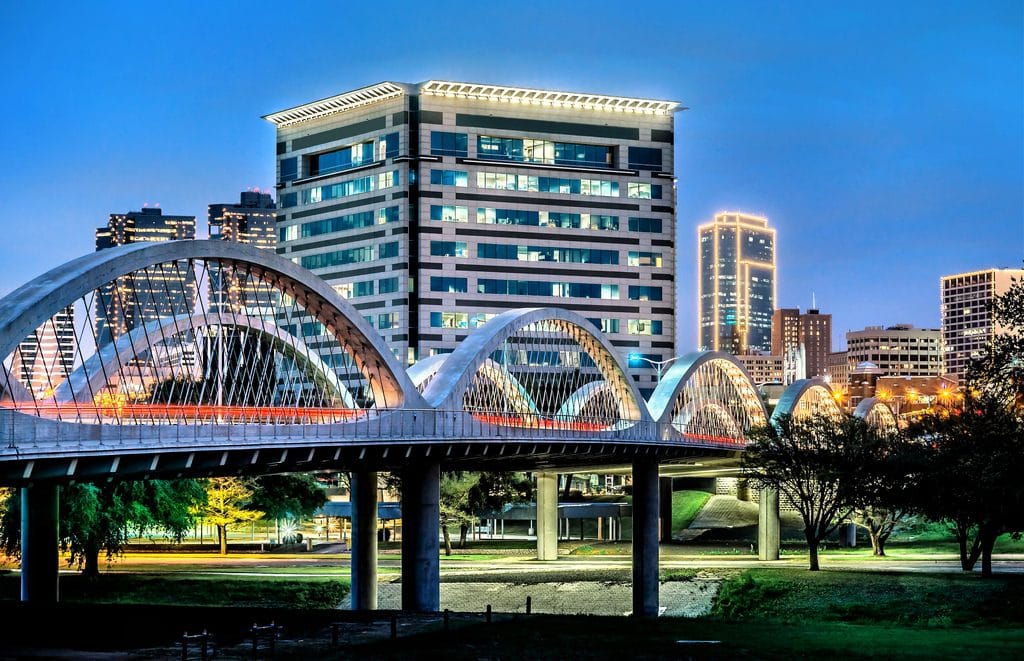
    Fort Worth, Texas, Safest cities in Texas

    Austin

    (Property: 3,711; Violent: 401)

    • Population: 1,011,790
    • Median age: 33.3
    • Median household income: $71,576
    • Median house value: $369,000

    Austin is the capital of Texas and the county seat of Travis County. 

    The city’s population of 1,011,790 earns a median household income of $71,576 and has a median age of 33.3. Moreover, the median house price in the area is $369,000, so it’s probably not one of the financially best places to live in Texas for families on a tight budget.

    Being the fastest-growing large city in the US, Austin has shown signs of human inhabitation since 9200 BC. Austin played a major role in the Mexican-American War, and it’s one of the cities in America that should not be skipped on a road trip.

    Accounting for how many cities there are in Texas and how similar they can be, what makes Austin one of the best places to live in Texas are the numerous sights for visitors, including architectural marvels, such as the Texas Capitol, and recreational ones, such as the Zilker Metropolitan Park

    Additionally, the unemployment rate in the city is just 3.7%, and there are excellent public schools available, as the investments in education are on par with the national standards. Austin College is ranked 102nd in National Liberal Arts Colleges, thereby providing above-average higher education.

    The Austin, Texas crime rate is, however, not in the city’s favor as 36,588 property crimes (29,216 thefts, 4,344 burglaries, 3,028 vehicle thefts) and 3,953 violent crimes (2,416 assaults, 971 robberies, 534 rapes, 32 murders) were reported in 2019.

    All the property crime rates are above the state and national averages. When it comes to violent crime, the number of rapes is above the national and state figures, according to Texas criminal statistics.

    In addition, the cost of living in Austin is 19.3% higher than the US average, making it the second biggest concern after the high crime rates.

    Austin, Texas - Safest cities in Texas

    Dallas

    (Property: 3,321; Violent: 863)

    • Population: 1,347,120
    • Median age: 32.7
    • Median household income: $52,580
    • Median house value: $214,700

    The third most populous city in Texas and ninth in America, Dallas is one of the most turbulent cities when it comes to history. In fact, the entire map of Texas has been an ever-changing variable until the late 18th century. 

    Dallas’s territory was first inhabited by the native Caddo people and then later claimed by both the Spanish and the French. In 1836, when the Republic of Texas was formed, the city started to flourish and transformed into one of the best cities in Texas that we see today. 

    Nowadays, Dallas has a population of 1,347,120, a median household income of $52,580, and a median age of 32.7 years. Meanwhile, the median home price is $214,700. 

    As a big city, Dallas has much to offer. It’s known as one of America’s “motor cities,” but its economy is diverse. The dominant sectors include defense, financial services, information technology, transportation, and more.

    Despite the increasing Dallas, Texas crime rates, many people still choose to move to Dallas due to its unemployment rate of only 4.7% and its cost of living that’s only 1.6% higher than the national average. Dallas offers numerous entertainment options. For those interested in art and culture, there are museums, such as the Sixth Floor Museum at Dealey Plaza or the Dallas Museum of Arts. On the other hand, younger folks might be more interested in paying a visit to the aquarium or the zoo.

    The Dallas, Texas, crime rate for 2019 looked like this: 45,279 property crimes and 11,764 violent crimes, both significantly above the state and national averages. 25,812 thefts, 9,210 burglaries, and 10,257 vehicle thefts made up the property crime numbers, while 6,369 assaults, 4,400 robberies, 797 rapes, and 198 murders formed the violent crime numbers.

    If you are looking to move to the safest cities in America, Dallas might not be on your list. Additionally, aside from the obvious problem with crime and violence, the high population growth also presents a major point against living in Dallas.

    Dallas, Texas - Safest cities in Texas

    Conclusion

    Texas is so much more than cowboys and desperados. It’s a state of farmers and astronauts, oil workers, and tech moguls. In ever sense, it is a state of diversity—from the careers of its occupants to the color of their skin. But most of all, as the state’s motto says, it is a land of friendship.

    No matter which one of the safest cities in Texas listed above you decide to visit or move to, Texans will welcome you and make you feel at home.

    In order to ensure you are safe, not only while walking down the street but also in your own home, we recommend you check out some of the best home security systems.

  • Safest Cities in Washington

    Safest Cities in Washington

    Familiarizing the safest cities in Washington can be helpful in many situations. One particular scenario we had in mind when we wrote this article is to provide information for people who are considering moving to Washington. Our goal is to choose the city that suits your needs and lifestyle.

    Before anything else, here’s a rundown of some basic data on the great state of Washington:

    • It has the 13th largest population in the US, at 7.69 million.
    • Olympia is the state capital.
    • The highest point is Mount Rainier.

    There are many places to visit in Washington, especially for those who love nature and fresh air. On the other hand, there are also top cities in Washington for those who prefer to immerse themselves in the sounds of the city. 

    Washington has always been a place of revolution and progress; there was the gold rush that moved the population north and then the grunge music rebellion. More recently, Washington has become the center of the tech industry. There’s no better place for those who are following their dream to move the world forward.

    Safest Cities in Washington State in 2021 – 1 to 5

    Note: The numbers listed next to the town and city names in parentheses indicate the number of property (P) and violent (V) crimes per 100,000 inhabitants. Keep in mind that the US averages are 2,110 property crimes and 379 violent crimes per 100,000 people.

    Moreover, Washington state averages are 2,682 property crimes and 294 violent crimes per 100,000 people. The official crime rate in Washington state in 2020 has not been released by the FBI yet, so we’re including 2019 crime rates in this article.

    Krupp

    (Property: 0; Violent: 0)

    • Population: 56
    • Median age: 37.5
    • Median household income: $31,250
    • Median house value: $103,300

    The Town of Krupp was first settled by John Marlin in 1871. To honor the first settler, some still call the town Marlin. 

    Aside from being one of the safest towns in Washington state, Krupp is the smallest town in Washington population-wise. Only 56 people live in Krupp, with a median income of $31,250 and a median age of 37.5 years. The median cost of a house in this tiny city is $103,300.

    Krupp can invest more in education, as there aren’t many students attending its schools. The public schools invest nearly $5,000 more per student than most of the US. If you’re looking for the best small towns in Washington to get away from the hustle and bustle of a big city, Krupp would be a fine choice. 

    There were no crimes reported in Krupp last year, which is hardly surprising, considering that the town only has 56 people living in it.

    Despite this, because Krupp is an isolated town, it might not be everyone’s cup of tea. Some might not even consider it one of the best places to live in Washington. It is located in the middle of the state with no major cities nearby, making it unsuitable for those who like the amenities that living in or near a big city provides.

    Krupp

    Duvall

    (Property: 558; Violent: 61)

    • Population: 8,267
    • Median age: 37
    • Median household income: $159,597
    • Median house value: $608,400

    Home to Native American tribes for hundreds of years, Duvall was inhabited by Civil War veterans after the Treaty of Point Elliott was signed. When the nearby town, Cherry Valley, and all its homes and industry were moved to Duvall in 1909, the town took off, attracting even more settlers. 

    What is the safest city in Washington? Duvall could be the answer. Today, this city has a population of 8,267, a median household income of $159,597, a median age of 37, and a median home value of $608,400. 

    The city offers everything that an average family requires, i.e., numerous parks, a beautiful country village, and countless sceneries, such as Cherry Creek Falls, that seem to come straight out of a fairytale. Duvall also has one of the first man-made lakes designed specifically for water sports, which attracts a younger audience to the city.

    However, what makes Duvall such a desirable city to live in are its year-after-year crime rates that are significantly much lower than the Washington state crime rate. In 2019, 46 property crimes (43 thefts, 3 vehicle thefts) and 5 violent crimes (1 assault, 4 rapes) were reported. Thankfully, no murders were reported that year.

    On the other hand, the city’s cost of living is 59.8% higher than the US average, and the rapid increase in population turned it into a constant traffic jam. Despite this, it’s still the best place to live in Washington for those looking for safety.

    Duvall, Washington - Safest cities in Washington

    Sammamish

    (Property: 605; Violent: 34)

    • Population: 66,686
    • Median age: 38.7
    • Median household income: $174,003
    • Median house value: $905,400

    Bordered by Lake Sammamish and the Snoqualmie Valley, the location of the city of Sammamish received its first settlers late in the 19th century. It took even longer for it to become incorporated—until the vote of 1998.

    Nowadays, Sammamish has 66,686 inhabitants, a median household income of $174,003, and a median age of 38.7 years. It is one of the 10 best places to live in Washington for those who can afford it, as a median home is valued at $905,400.

    Surrounded by lakes, nature preserves, and parks, Sammamish is the perfect city for nature lovers. It has a diverse economy and an unemployment rate of just 2.8%, making it attractive to the younger workforce. The city has a wide selection of art galleries and offers a variety of cultural happenings throughout the year. 

    What makes this a safe city is its crime rate that’s significantly lower than the overall crime rate in Washington state. In 2019, 404 property (312 thefts, 68 burglaries, 24 vehicle thefts) and 23 violent crimes (13 assaults, 3 robberies, 5 rapes, 2 murders) were reported in the city.

    Sammamish has more rainy days than any average US city, which is its second-biggest downside. The biggest one is the cost of living, which is 99.6% higher than the national average. On that note, it’s definitely not the cheapest place to live in Washington state.

    Sammamish, Washington - Safest cities in Washington

    West Richland

    (Property: 671; Violent: 98)

    • Population: 15,515
    • Median age: 36.6
    • Median household income: $99,817
    • Median house value: $369,000

    Even though the railroad went through the area in 1853, the settlement of West Richland only took off almost 20 years later. This area was originally inhabited by now almost extinct Native tribes, and it’s one of the areas that Lewis and Clark went through on their expedition.

    West Richland has a population of 15,515. It’s one of the best cities in Washington for young people due to the combination of a median household income of $99,817, a median age of 36.6 years, and a median home price of $369,000.

    Surrounded by gorgeous mountains, hiking trails, and vineyards, West Richland is a dream place for any nature and wine enthusiast. The economy is growing in the city, with the unemployment rate dropping to 4.4% in the last few years. 

    For years, West Richland has been one of the safest cities in Washington, attracting young people who want to start a family. In 2019, 103 property crimes (76 thefts, 23 burglaries, 4 vehicle thefts) were reported, together with 15 violent ones (9 assaults, 1 robbery, 5 rapes). Coincidentally, no murders were reported that year. 

    West Richland’s main flaw is that it is pretty isolated from the bigger cities, with more than 200 miles separating it from Seattle and Portland. Residents also commonly complain about the lack of entertainment in the city.

    West Richland, Washington - Safest cities in Washington

    Connell

    (Property: 676; Violent:191)

    • Population: 5,511
    • Median age: 35
    • Median household income: $51,154
    • Median house value: $160,700

    Once used as an open range for cattle, Connell started its journey to becoming one of the best places to live in Washington state in 1883, as a junction between the Northern Pacific Railroad and the Oregon Railroad. By the early 1900s, the city was thriving. Sadly, most of the business district was destroyed in a fire in 1905.

    These days, you’ll find 5,511 people living in Connell. They have a median household income of $51,154 and a median age of 35. Moreover, a median home in the town costs around $160,700.

    Despite its size, you can find everything you need in this city, from theaters and museums to markets and hiking trails. Connell is probably one of the cheapest places to live in Washington state, with a cost of living that’s 16.5% lower than the national average. Moreover, what makes it desirable for many are the low commute time, above-average education investments, and, most importantly, low crime rates.

    Last year, there were just 39 property crimes (24 thefts, 14 burglaries, 1 vehicle theft) and 11 violent crimes (8 assaults, 3 rapes) reported in Connell. Thankfully, not one murder was reported.

    Although it is one of the safest cities in Washington state, Connell may not be desirable for some due to its fairly harsh winters. It also has less than 200 sunny days per year on average, proving to be an issue for those who are not used to this type of climate.

    Connell, Washington - Safest cities in Washington

    Safest Washington Cities – 6 to 10

    Camas

    (Property: 906; Violent: 41)

    • Population: 25,630
    • Median age: 40.2
    • Median household income: $111,584
    • Median house value: $474,700

    The next item on our list of the safest cities in Washington is a paper-producing town. Camas has always been just that; the first paper mill was established back in 1883. The city is so centered around the papermaking industry that high school teams are named the Papermakers. In the last few years, some tech companies, such as Hewlett-Packard, established offices in Camas.

    The city has 25,630 inhabitants, a median household income of $111,584, and a median age of 40.2. Buying a house in Camas will run you $474,700, according to the median real estate prices.

    What makes it one of the best cities to live in Washington is that you’ll never run out of entertainment options. Apart from lakes and all the fun that comes with them, Camas residents often praise the efforts that the city puts into its arts and culture scene. The major plus for the city is that it is just minutes away from Portland (20 miles).

    Especially when its proximity to Portland is considered, Camas is definitely one of the safest places to live in Washington. In 2019, 221 property (180 thefts, 30 burglaries, 11 vehicle thefts) and 10 violent crimes (3 assaults, 2 robberies, 4 rapes, 1 murder) were reported.

    The cost of living in Camas is 35.9% higher than the US average, the property market is inflated, and investments in education are lower than the national average. In addition, since 2000, there’s been a 76.2% increase in the city’s population, with no signs of slowing down.

    Camas

    Maple Valley

    (Property: 1,123; Violent: 54)

    • Population: 27,542
    • Median age: 35.2
    • Median household income: $114,159
    • Median house value: $459,400

    Before becoming one of the best cities to live in Washington state, the Maple Valley area was first settled by three workers and their families in 1879. Soon enough, due to the coal present in the area, everybody wanted to move to the city. Once the population increased and the mining ceased in 1947, the city switched its focus to fishing and farming. Maple Valley was officially incorporated in 1997.

    Nowadays, the city has a population of 27,542. The median household income is high, sitting at $114,159, while the population median age is fairly young, at 35.2. So, it’s probably not one of the best places to retire in Washington state. Homeowners spend a median cost of $459,400 to acquire their property in Maple Valley.

    Maple Valley was proclaimed one of the top 10 family-oriented cities in the nation by Family Circle back in 2011. Moreover, it has two historical museums and numerous hiking trails and parks. The south side of the city, known as Four Corners, is being heavily invested in, with multiple restaurants, bars, and shops opening.

    Compared to the Washington crime rate, crime rates in Maple Valley are significantly lower. In 2019, 311 property crimes (208 thefts, 77 burglaries, 26 vehicle thefts) and 15 violent crimes (6 assaults, 4 robberies, 4 rapes, 1 murder) were reported.

    The cost of living in Maple Valley is 41.8% higher than average, representing one of the only negative points to living in this city.

    Maple Valley, Washington - Safest cities in Washington

    Colville

    (Property: 1,151; Violent: 84)

    • Population: 4,854
    • Median age: 43.5
    • Median household income: $42,869
    • Median house value: $184,600

    If you’re looking for the safest place to live in Washington state, you might want to consider Colville. The city was once the main trading center on the Upper Columbia River and was established by John Work in 1825. During the 1950s, Colville had an Air Force Station that is now used for paintball.

    Nowadays, 4,854 people live in the town. Their median household income is $42,869, and their median age is 43.5. If you want to buy a house in Colville, be prepared to spend a median price of $184,600. This low median home price is one of the reasons why Colville is the best city in Washington for some. 

    Sights such as the Colville National Forest and the Historical Museum should be a stop on every journey through northeastern Washington. Despite the city’s low cost of living, its population has decreased by 5.8% in the last two decades, so the town remains relatively peaceful. 

    In 2019, Colville had 55 property crimes (48 thefts, 5 burglaries, 2 vehicle thefts) and 4 violent crimes (2 assaults, 2 rapes). This city is definitely not too far from becoming the safest city in Washington.

    The unemployment rate in Colville is 4.7%, which is significantly lower than the US average of 5.5%. Adding to the cons of living here, the city’s northern position contributes to harsh winters and a lack of sunshine during the year, with just 172 sunny days.

    Colville, Washington - Safest cities in Washington

    Selah

    (Property: 1,566; Violent: 86)

    • Population: 8,269
    • Median age: 33.1
    • Median household income: $58,120
    • Median house value: $269,000

    The city of Selah was incorporated in 1903. Since then, it became one of the major fruit processing hubs, and the chances are your favorite apple juice came from this city. One of them was operated by the Yakama Tribe from 2004 to 2010.

    One of the best cities in Washington state, the city of Selah has a population of 8,269, a median household income of $58,120, a median age of 33.1, and a median property value of $269,000. Moreover, it is surrounded by hiking trails, parks, and endless, beautiful nature. It has a mild Mediterranean climate that suits most people, and it offers all the charms of living in a small, yet developed town. 

    The low crime rates in this small city are its most significant upside. 127 property crimes (90 thefts, 24 burglaries, 13 vehicle thefts) and just 7 violent crimes (3 assaults, 2 robberies, 2 rapes) were reported in 2019.

    Selah is the best place to live in Washington state due to its unemployment rate of only 3.6%. Residents commonly complain about the air quality, which has diminished because of the fruit processing industry in the area.

    Selah, Washington - Safest cities in Washington

    Lynden

    (Property: 1,740; Violent: 93)

    • Population: 16,219
    • Median age: 39.2
    • Median household income: $66,085
    • Median house value: $386,400

    Lynden was established in 1873. Moreover, it was favored by the Dutch settlers, and it shows signs of the heritage they brought today. There are buildings that resemble windmills as well as multiple Dutch restaurants.

    Being one of the safest cities in Washington state, Lynden is home to 16,219 people. They have a median household income of $66,085 and a median age of 39.2. Moreover, the median cost of a home in Lynden is $386,400.

    Lynden’s proximity to the Canadian border brings more companies to the city, which strengthens its economy. Additionally, the city has museums, parks, and art centers to keep you entertained. Lastly, its unemployment rate of only 3.7% is enough assurance that you won’t be out of a job if you live there. 

    The city is safer than most with its low crime rates. In 2019, 263 property (229 thefts, 30 burglaries, 4 vehicle thefts) and 14 violent crimes (8 assaults, 2 robberies, 4 rapes) were reported.

    Even though it’s considered one of the best places in Washington state to live in, it can also get quite depressing for those who dislike rain and having no sunlight.

    Lynden, Washington - Safest cities in Washington

    Safest Cities in Washington – 11 to 15

    Pasco

    (Property: 1,781; Violent: 223)

    • Population: 77,326
    • Median age: 29.5
    • Median household income: $62,775
    • Median house value: $247,500

    Once a campsite for the Lewis and Clark Expedition, the city of Pasco, like many others in the region, was brought to life once the railroad went through the area and brought settlers. The city was officially incorporated in 1891, and the major influx of new residents started in 1941 when the Grand Coulee Dam was completed.

    Now considered one of the best places to live in Washington state, Pasco is home to 77,326 people. The city’s median household income is $62,775, and the median age of the population is one of the lowest in the country at 29.5. Moreover, the median price for a home in this part of Washington is $247,500.

    As part of Washington’s Tri-Cities region, Pasco has all the conveniences of living in a big city. The vast choice of museums and exhibits, parks, and restaurants is more than enough to satisfy even the most demanding visitors. 

    What is the cheapest city to live in Washington state? Well, Pasco is one of the cheapest when it comes to mid-sized cities as the cost of living is 4.7% lower than the national average. 

    When it comes to Pasco’s crime rates, in 2019, there were 1,328 property crimes (936 thefts, 252 burglaries, 140 vehicle thefts) and 166 violent crimes (94 assaults, 34 robberies, 33 rapes, 5 murders) reported.

    The negatives of living in Pasco include the high inundation of new residents (120.2% since 2000) and insufficient investment in public education. In this case, it’s probably not the best city to live in Washington for families with children.

    Pasco, Washington - Safest cities in Washington

    Richland

    (Property: 2,049; Violent: 171)

    • Population: 59,609
    • Median age: 36.9
    • Median household income: $77,686
    • Median house value: $288,200

    Richland was just a small town on the Columbia River until the US Army acquired land in the area to house its Manhattan Project workers. The city’s population went from just 300 to over 25,000 by the time World War II ended. The population grew with every war threat, together with the city’s production of plutonium.

    Although there are now 59,609 people living in Richland, it is still considered one of the safest cities in Washington state. The city’s median household income is $77,686, the median age is 36.9 years, and the median cost of a home is $288,200.

    The city sits on two rivers, delivering an unforgettable experience for water sports enthusiasts. Richland has come a long way since WWII. Today, the city is heavily involved in the tech industry. Additionally, agriculture is becoming more prominent, providing job opportunities for all residents.

    Crime data for 2019 in Richland shows that there were 1,199 property crimes (949 thefts, 195 burglaries, 55 vehicle thefts) and 100 violent crimes (65 assaults, 9 robberies, 24 rapes, 2 murders) reported. 

    Being one of the top 12 cities in Washington with good home security, Richland is considered one of the best places to retire in Washington. Additionally, the city’s cost of living is 1.6% lower than the national average. 

    However, life in Richlandstill has its negatives: it is an isolated city—220 miles away from Portland and Seattle. Also, its population has increased by 39.5% since 2000, causing a significant increase in housing prices.

    Richland

    Bellevue

    (Property: 2,838; Violent: 123)

    • Population: 150,364
    • Median age: 37.7
    • Median household income: $120,456
    • Median house value: $905,400

    Bellevue was a rural area until the Lake Washington Floating Bridge opened in 1940. The opening of the bridge directly connected it to Seattle and brought many of the larger city’s residents who want to escape from the high Seattle crime rate and housing prices.

    Nowadays, 150,364 people live in Bellevue, with a median household income of $120,456, a median age of 37.7 years, and a median house price of $905,400.

    The name of the city originated from the French phrase “beautiful view,” and that is exactly what Bellevue offers. Lakes, national parks, and trails are everywhere, making you forget how close you are to Seattle, one of the busiest cities in the world.

    The Bellevue, WA crime rate in 2019 is as follows: 4,263 property crimes (3,498 thefts, 426 burglaries, 339 thefts) were reported during the year, along with 185 violent crimes (80 assaults, 76 robberies, 28 rapes, 1 murders).

    As one might expect, living right next to one of the most expensive cities in the US can significantly lighten your wallet. As a result, the cost of living in Bellevue is 96.5% higher than the national average. The traffic can also get quite congested.

    Bellevue, Washington - Safest cities in Washington

    Bellingham

    (Property: 2,926; Violent: 273)

    • Population: 96,014
    • Median age: 31.5
    • Median household income: $53,396
    • Median house value: $429,900

    One of the most popular cities in Washington among tourists, Bellingham is otherwise referred to as the City of Subdued Excitement. It was once driven by coal as its only resource. Today, most of the residents work in the health and education sectors.

    Bellingham has 96,014 occupants. The city’s median household income is $53,396, the median age of residents is 31.5, and the median home price is $429,900.

    Its relative proximity to Seattle and Vancouver BC is the biggest reason why Bellingham is one of the best cities to live in Washington. Tourists are constantly visiting the city, so you’ll never run out of new people to meet. It’s surrounded by water, with Lake Whatcom on one side and Bellingham Bay on the other, making it a perfect spot for water sports and fishing aficionados.

    In 2019, 2,689 property crimes (2,251 thefts, 323 burglaries, 115 vehicle thefts) and 251 violent crimes (158 assaults, 61 robberies, 28 rapes, 4 murders) were reported in the city, according to the Bellingham, WA crime rate data.

    The downside of living in Bellingham is the cost of living, which is 21.7% higher than the national average, and the subpar investments in education. Bellingham is not a place for those who dislike crowds and busy cities, as tourist activity heavily influences every aspect of life in this city, especially the crime rates.

    Bellingham, Washington - Safest cities in Washington

    Vancouver

    (Property: 3,242; Violent: 480)

    • Population: 187,615
    • Median age: 36.9
    • Median household income: $61,714
    • Median house value: $317,200

    One of the major cities in Washington today, the Vancouver area was once described by Lewis as the only desirable settlement area west of the Rocky Mountains. Nowadays, the best places to live in Vancouver, WA are Fisher’s Creek, Felida, Shumay, and Esther Short, to name a few. 

    The region was shared by the US and Britain until 1845 when the US gained sole custody.

    There are 187,615 inhabitants in Vancouver, with a median household income of $61,714 and a median age of 36.9 years. The median asking price of a house is $317,200.

    The city is overflowing with historical heritage, with places such as Fort Vancouver and the Historical Museum. As with most of Washington state, the nature that surrounds Vancouver is out of this world.

    The Vancouver, WA crime rate in 2019 has exceeded state and national averages. Property crimes were 54% higher than the national average, with 5,998 of them reported (4,302 thefts, 888 burglaries, 808 vehicle thefts). Moreover, violent crimes were 27% higher than the national average, with 889 of them reported (495 assaults, 185 robberies, 206 rapes, 3 murders).

    Increased crime rates aren’t Vancouver’s only negative point; the city has also seen a population increase of 19.4% in the last two decades, causing a slight housing crisis. Moreover, the cost of living is 14.3% higher than in most of the US, so it’s definitely not the cheapest place to live in Washington state.

    Vancouver, Washington - Safest cities in Washington

    Honorary Mentions

    Kent

    (Property: 3,969; Violent: 371)

    • Population: 133,489
    • Median age: 34.2
    • Median household income: $72,062
    • Median house value: $384,100

    First named Titusville after one of its early settlers, Kent got its present name after the County of Kent in England, honoring its hop-production heritage. Lastly, the city was, at one point, known as the Lettuce Capital of the World.

    Being one of the most popular cities in Washington, Kent has 133,489 inhabitants nowadays. Its median household income is $72,062, and the median age is 34.2 years. A median home is valued at $384,100.

    Saltwater Park, Flaming Geyser State Park, and Angle Lake are some of the wonders of nature that can be enjoyed just minutes away. Kent’s close proximity to Seattle is commonly the main motive behind moving there. Additionally, work can be found in Kent, as the unemployment rate is 5.5%, which is below the national average.

    The Kent, WA crime rate may dissuade some people from moving here. In 2019, 5,200 property crimes were reported (3,598 thefts, 754 burglaries, 848 vehicle thefts), along with 486 violent crimes (146 assaults, 242 robberies, 94 rapes, 4 murders).

    Its proximity to Seattle comes with a price, and that price is the cost of living, which is 30% higher than the average US numbers show. Public education investments are below the national standard as well.

    Kent, Washington - Safest cities in Washington

    Lakewood

    (Property: 3,769; Violent: 757)

    • Population: 62,089
    • Median age: 35.7
    • Median household income: $51,972
    • Median house value: $326,500

    Commonly considered one of the best places to retire in Washington state, Lakewood had its first Country and Golf Club established back in 1894, in order to attract the rich and famous to the area. In fact, it was the first golf club west of the Mississippi. The town also had the Oakes Pavilion built on Lake Steilacoom in 1923, offering boating, bathing, and water sports. It was later converted into the Lakewood Ice Arena.

    Lakewood has a population of 62,089, a median household income of $51,972, and a median age of 35.7 years. The median value of a home in this city is around $326,500.

    Lakewood is the best city in Washington for golfers, as golf still remains to be one of the most common pastime activities. Tourists can visit the museum or enjoy some of the islands and parks located nearby. The city’s population has increased by just 1.5% since 2000, allowing it to invest in education rather than in building new neighborhoods. Lakewood invests 50% more in education than the average US city.

    In 2019, the Lakewood, WA crime rate looked like this: 2,296 property (1,607 thefts, 385 burglaries, 304 vehicle thefts) and 461 violent crimes (309 assaults, 101 robberies, 49 rapes, 2 murders) were reported.

    The negatives of living in Lakewood include the cost of living, which is 15.3% higher than average, and the unemployment rate of 6.7%. For most, the low number of sunny days per year also presents a major issue.

    Lakewood

    Seattle

    (Property: 4,496; Violent: 585)

    • Population: 776,555
    • Median age: 35.3
    • Median household income: $92,263
    • Median house value: $714,400

    The safest neighborhoods in the Seattle area include Windermere, Lawton Park, and Madrona, to name a few. Like most cities with plenty of mineral resources, Seattle was a boom-and-bust city in the past. First, it was the timber that everyone came for, then the gold. Shipbuilding had the same fate, with a few years of extraordinary success followed by a downfall. 

    Today, Seattle is known as one of the most expensive cities in the US, mostly due to the tech industry boom that started during the 1990s.

    Seattle’s population is 776,555. The median household income is $92,263, and the median age is 35.3. Property prices are among the highest in the state, with the median price of a home being $714,400. 

    Although it’s not one of the safest cities in Washington, it’s definitely an interesting place to visit.

    Tourists can’t miss seeing the Space Needle, the city’s most known landmark. There’s also the Museum of Pop Culture and the Seattle Art Museum. One of the world’s most exciting cities has everything you need, from restaurants and bars to sports events. For those who decide to move to Seattle permanently, finding a job shouldn’t be a difficult task, as the unemployment rate is just 4.1%.

    During 2019, 34,333 property crimes (23,478 thefts, 7,210 burglaries, 3,645 vehicle thefts) were reported in Seattle, along with 4,471 violent crimes (2,746 assaults, 1,339 robberies, 358 rapes, 28 murders). The Seattle murder rate per 100,000 people is 3.7, which is below the national but above the state average.

    The sheer number of property crimes is what makes Seattle an unsafe city. Also, the number of assaults and robberies is concerning. Adding to the negatives of living there, the cost of living is 72.3% above the US average.

    Seattle

    Tacoma

    (Property: 5,221; Violent: 845)

    • Population: 221,259
    • Median age: 35.7
    • Median household income: $62,358
    • Median house value: $309,900

    Incorporated in 1875, Tacoma was a major point on the Northern Pacific Railroad and the center of the region, up until Seattle’s development was accelerated by the discovery of gold in the city’s vicinity. Today, according to Washington state crime statistics, it is one of the most dangerous cities in Washington.

    Nowadays, 221,259 people chose Tacoma as their home. The median household income is $62,358, the median age is 35.7 years, and the median home price is $309,900.

    The Museum of Glass and Point Defiance Park, with its zoo and aquarium, are the places to see in the city. Nearby, you’ll find Mount Rainier National Park for all your hiking needs. The city has a diverse economy, with healthcare, retail, and manufacturing being the most prominent industries. Jobs in Tacoma have decreased by 2.92% in the past year. This isn’t so bad when compared to jobs nationally declining by 6.18% during the same period.

    The Tacoma crime rate in 2019 is a cause for concern and a major downside of living in this city: 11,415 property crimes were reported (8,021 thefts, 1,768 burglaries, 1,626 vehicle thefts), as well as 1,848 violent crimes (1,250 assaults, 422 robberies, 160 rapes, 16 murders).

    The unemployment rate in Tacoma is relatively high at 5.2%, but it’s still lower than the national rate. Also, the cost of living is 13.3% higher than the US average.

    Tacoma, Washington - Safest cities in Washington

    Spokane

    (Property: 5,919; Violent: 690)

    • Population: 227,579
    • Median age: 36.2
    • Median household income: $50,306
    • Median house value: $217,900

    What is the sunniest city in Washington state? Spokane is the answer. This city shows evidence of human settlement from 13,000 years ago. The Spokane tribe, the city’s namesake, is considered their direct descendants. The area was always oriented towards natural resources and manufacturing, but today, it’s trying to transition to a more service-oriented economy.

    Spokane has a population of 227,579. The median household income is $50,306, the median age is 36.2 years, and the median home costs $217,900. 

    What makes Spokane one of the best places to live in Washington, despite all its flaws? The city’s redeeming quality is the nature that surrounds it: Riverfront Park, Spokane Falls, and Riverside State Park are all sights that will leave you breathless. The cost of living is 7.7% below the average numbers.

    However, it’s up to you to decide whether these points outweigh the negatives, the main of which is the crime rate. The Spokane crime rate is the highest on this list. In 2019, there were 13,048 property crimes (10,026 thefts, 1,743 burglaries, 1,279 vehicle thefts) and 1,520 violent crimes (973 assaults, 311 robberies, 230 rapes, 6 murders) in the city

    Aside from the high crime rate, Spokane’s high unemployment rate of 5.9% proves to be an issue as well. In the past year, there has been a decrease in job growth.

    Spokane, Washington - Safest cities in Washington

    Conclusion

    The Evergreen State can be a great home for anyone, whether you want to retire somewhere peaceful and golf every day or if you’re looking for a new start in a big city.

    Hopefully, this list of the safest cities in Washington can help guide you through the process of choosing the right spot for you—if nothing else, then even just for a short visit.

  • Safest Cities in Michigan

    Safest Cities in Michigan

    Michigan is a state located in the Great Lakes region of the upper Midwestern United States. Its highest point is Mount Arvon, which is 1,979 feet above sea level. Interestingly, if you want to know where you can find a floating post office, it is only in Michigan.

    If by any chance, you want to visit or perhaps move to Michigan, this article will take you on a trip through the most pleasant and safest cities in Michigan, including the most popular ones ranked by safety.

    We have included some general information for every city on this list, such as population, cost of living, and median household income. Then, we go into detail on the crime rates of each city. For some of these cities, a reliable home security system will really come in handy. Hopefully, our data will help you make a decision.

    Note: The numbers listed in parenthesis are the property (P) and violent (V) crime rates per 100,000 inhabitants. These are the basic criteria by which the cities are ranked.

    What Are the Top 10 Safest Cities in Michigan?

    South Lyon

    (Property: 277; Violent: 50)

    • Population: 11,829
    • Median age: 42
    • Median household income: $73,200
    • Median house value: $327,900

    Founded in 1832 and incorporated in 1930, South Lyon is a town that Detroit grew into, making it a part of its metro area. Despite being part of the Detroit metropolitan area, South Lyon is still isolated from the city. 

    You’ll find 11,829 people living in South Lyon. Their median household income is $73,200, their median age is 42 years, and a median home in the city is valued at $327,900. Can this city be your answer to the question, Which is the best city to live in Michigan?

    South Lyon is a typical suburban city, with not many activities to offer. Perhaps the most interesting thing about this city is the Witch’s Hat Depot, a museum and gathering place for the local Historical Society. In this city, the unemployment rate is low, at 3.2%. The population growth of 16.5% in the last 20 years is tolerable, with the city managing to stay peaceful.

    The low crime rates in South Lyon make it one of the best cities in Michigan for singles, young families, and those looking for a retirement spot. In 2019, there were only 33 property crimes (29 thefts, 4 burglaries) and 6 violent crimes (3 assaults, 3 rapes) in the city.

    The cost of living, which is 17.4% higher than the national average, is the most common complaint among South Lyon residents, in addition to the urban decay that comes with living near Detroit.

    South Lyon, Michigan - Safest cities in michigan

    Huntington Woods

    (Property: 364; Violent: 0)

    • Population: 6,193
    • Median age: 43.4
    • Median household income: $136,331
    • Median house value: $367,400

    If you’re wondering, What is the safest city in Michigan to live in? With no violent crimes reported in 2019, Huntington Woods might be the answer. 

    Huntington Woods is one of the places that got intertwined with Detroit and then became one of its suburbs. It is commonly referred to as the “City of Homes,” suggesting that its nature is primarily residential, with not much to do.

    The City of Homes has a population of 6,193. The median household income is $136,331, while the median age is 43.4 years. The median home price in Huntington Woods is $367,400. 

    What can the safest city in Michigan offer its residents? Cities like this one are commonly referred to as “sleeper cities,” as they are mostly used by commuters who travel to the larger city—Detroit in this case—on a daily basis. However, there are still things to do here, such as visiting the Detroit Zoo, which is mostly located in Huntington Woods. 

    Those looking for work will find the unemployment rate of 3.7% especially attractive. To compare and remind ourselves, the national average is 5.9%. Since 2000, the population in Huntington Woods has grown by just 3.2%, so it is potentially the best place to live in Michigan for those who dislike crowds. 

    If you want to move here, you can take solace in the low crime rates reported in the city. In 2019, just 23 property crimes (14 thefts, 7 burglaries, 2 vehicle thefts) were reported. Moreover, there were no violent crimes reported that year.

    However, living in Huntington Woods does come with some negatives. Urban decay, a common sight for the Detroit area, is a major complaint among residents. The cost of living is 22.1% higher than the US average, which is expected for one of the safest cities in America.

    Huntington Woods, Michigan - Safest cities in michigan

    Clawson

    (Property: 435; Violent: 59)

    • Population: 11,707
    • Median age: 40.6
    • Median household income: $67,717
    • Median house value: $201,700

    Incorporated as a city in 1940, Clawson is yet another part of the Detroit metropolitan area. The city was named after one of the early settlers, John Lawson, whose last name was unfortunately misspelled. It has since become one of the safest cities in Michigan.

    Clawson is home to 11,707 people. The median household income in the city is $67,717, and the median age is 40.6 years. Recent data shows that the city’s median home value is around $201,700.

    What brings people to this city is that it’s close to other major cities in the region, with plenty of parks and natural sights around to make you feel like you’re far away from the concrete jungle. What makes this city one of the best places in Michigan to live in is the mixture of the low unemployment rate (2.8%), reasonable cost of living (2.4% below average), and extraordinarily low crime rates. 

    Clawson had 52 property crimes (42 thefts, 8 burglaries, 2 vehicle thefts) and 7 violent crimes (4 assaults, 1 robbery, 2 rapes) reported in 2019. Thankfully, no murders were reported that year.

    There isn’t much to do in Clawson, which is this city’s only major setback. If you need a lot of amenities to keep you occupied, you’d probably do better living in one of the largest cities in Michigan instead of a small city like Clawson.

    Clawson, Michigan - Safest cities in michigan

    Birmingham

    (Property: 591; Violent: 47)

    • Population: 21,607
    • Median age: 42.4
    • Median household income: $122,804
    • Median house value: $509,900

    A city with more than 20 parks, Birmingham also belongs to Metro Detroit, and it’s also one of the most expensive cities in the area.

    Today, 21,607 people are living in Birmingham. The city’s median household income is $122,804, the median age is 42.4 years, and the median home value is around $509,900. What amenities come with this price?

    There are good reasons why Birmingham is considered one of the best cities to live in Michigan. As previously mentioned, the city has over 20 parks, in addition to tennis courts, golf courses, trails, and picnic areas available. Also, there’s a theater that was founded in 1928 and other numerous sources of entertainment. The unemployment rate is at 2.4%, making it easier to find work than in most of the US. If you love walking, you’ll love it here, as the city’s motto is “a walkable community.” 

    Also, if you’re looking for Michigan cities with the lowest crime rate, Birmingham will impress you. In 2019, the city reported 127 property crimes (100 thefts, 20 burglaries, 7 vehicle thefts) and 10 violent crimes (7 assaults, 1 robbery, 2 rapes). That year, no murder cases were reported. 

    It costs a lot to live in Birmingham; the cost of living is 39.6% above the US average, making it the most expensive city on this list so far.

    Birmingham

    Rochester Hills

    (Property: 613; Violent: 52)

    • Population: 74,460
    • Median age: 42.2
    • Median household income: $93,953
    • Median house value: $326,400

    The next item on our list of the safest cities in Michigan was a Native American settlement until the territories were divided in 1807. Like the four previous items on this list, Rochester Hills is part of the Metro Detroit area.

    The city has 74,460 residents, a median household income of $93,953, and a median age of 42.2 years. Recent real estate data shows a median home value of $326,400. Additionally, Rochester Hills comes 15th place on the list of top cities in Michigan by population. 

    Those who like spending their time outdoors will never run out of things to do in Rochester, as the city is surrounded by trails, parks, and recreation areas. Moreover, those who seek work here shouldn’t have too much difficulty, as the unemployment rate sits at 2.9%. 

    Rochester Hills’s biggest upside is its crime rate, which is impressive considering its size. In 2019, the city reported 461 property crimes (405 thefts, 42 burglaries, 14 vehicle thefts) and 39 violent crimes (31 assaults, 3 robberies, 5 rapes). Again, no murders were reported that year. With its overall crime rate, it’s not surprising that Rochester Hills is considered one of the safest places to live in Michigan.

    As with most safe cities, Rochester Hills is expensive to live in; the cost of living is 16.5% higher than the US average.

    Rochester Hills, Michigan - Safest cities in michigan

    Beverly Hills

    (Property: 748; Violent: 19)

    • Population: 10,272
    • Median age: 47.9
    • Median household income: $127,419
    • Median house value: $402,100

    The sixth spot holder on this list is technically a village and another Detroit suburb. Beverly Hills was established in 1958, and it was never incorporated as a city. To this day, it remains to be Michigan’s most populous village. It’s also one of the safest places to live in Michigan. 

    Today, 10,272 people live in Beverly Hills. The median household income is $127,419, the median age is 47.9 years, and the median home value is around $402,100.

    Galleries, parks, and a nature preserve are located close to the village, offering entertainment and recreation to residents and visitors alike. The mixture of a 2.4% unemployment rate, public education investments that are $4,500 higher than the US average, and low crime rates attracts people to Beverly Hills. 

    The Beverly Hills crime rate in 2019 shows 78 property crimes (60 thefts, 10 burglaries, 8 vehicle thefts) reported, together with 2 instances of violent crime, particularly assaults. Furthermore, no murders were reported that year.

    The cost of living, which is 26.5% higher than the US average, is one of the two main faults of this village. The other one is the decline in infrastructure and population brought on by Detroit’s economic devastation. Even though it’s one of the best small towns to live in Michigan, Beverly Hills is not for those who like the rush that busy cities bring.

    Beverly Hills

    Royal Oak

    (Property: 735; Violent: 102)

    • Population: 59,119
    • Median age: 35.8
    • Median household income: $81,665
    • Median house value: $247,100

    Officially incorporated as a city in 1921, Royal Oak is a Detroit suburb and a part of Oakland County. Nowadays, the city has a population of 59,119, a median household income of $81,665, a median age of 35.8 years, and a median home value of $247,100.

    Royal Oak is the best city to live in Michigan for those who like a small-town feel without sacrificing the amenities of a large city. Visitors will have plenty to do in Royal Oak, and it will even take residents quite some time to explore all of its entertainment options. It shares the Detroit Zoo with Huntington Woods. 

    On the other hand, the downtown area was developed into an entertainment and nightlife center, which is perfect for young people. Although it is a sizable city, the unemployment rate in Royal Oak is just 3.2%. It’s not the cheapest place to live in Michigan, but the cost of living is reasonable, at 4.6% above the national average.

    The low crime numbers reported in Royal Oak make this city so attractive to the younger population, driving the median age down. In 2019, 439 property crimes (369 thefts, 38 burglaries, 32 vehicle thefts) were reported in the city, together with 61 violent crimes (47 assaults, 4 robberies, 9 rapes, 1 murder). With this crime rate, Royal Oak qualifies as one of the safest cities in Michigan in 2021. 

    Like most of Detroit, the Royal Oak area has been heavily impacted by the motor industry decline, which the city so depended on. However, this up-and-coming city is currently one of the most affordable places to live in Michigan, and it should definitely be short-listed for those searching for a new home.

    Royal Oak

    Farmington

    (Property: 784; Violent: 57)

    • Population: 10,381
    • Median age: 37.9
    • Median household income: $76,102
    • Median house value: $229,200

    Another Detroit suburb on the list, Farmington has some of the safest neighborhoods in the Metro Detroit area. It is recovering from the misfortune of this area by investing heavily in rebuilding its infrastructure. Restored buildings, new sidewalks, and improved lighting will welcome you to Farmington.

    Today, the city has 10,381 inhabitants. Their median household income is $76,102, their median age is 37.9, and a median home in the city costs about $229,200.

    Farmington is a place filled with stunning Victorian-style homes, and the city’s historic downtown is where you’ll find plenty to do. With a reasonable cost of living of just 3.4% above the national average, the city may just be one of the best places to retire in Michigan. Additionally, those planning to stay permanently will appreciate the low unemployment rate (2.7%) and the well-funded public education system. They spend a little over $2,000 more than the national average for every student. 

    In 2019, Farmington residents reported 83 property crimes (64 thefts, 15 burglaries, 4 vehicle thefts), and 6 violent crimes (4 assaults, 2 rapes). There were no reported murders that same year, and the city’s overall crime rate was 58% lower than the Michigan crime rate.

    There’s not much to consider a negative to living in Farmington, except for the lack of entertainment options. Young people who like to party and have multiple restaurant options will have to travel 25–30 miles, which might be a deal-breaker for some.

    However, for those who like their peace and quiet, it may be one of the best cities in Michigan to live in.

    Farmington, Michigan - Safest cities in michigan

    Farmington Hills

    (Property: 934; Violent: 107)

    • Population: 79,958
    • Median age: 42.9
    • Median household income: $83,268
    • Median house value: $263,300

    Farmington Hills is a neighboring city to the previously mentioned Farmington, and the two are seen as the same community. One thing they share is the low crime rate, with Farmington Hills being ranked the 30th safest city in the US back in 2010. What differentiates them are the size and amenities found in Farmington Hills. 

    Is Michigan a good place to live in? We think you should be the judge. In Farmington Hills, the population is 79,958, the median household income is $83,268, and the median age is 42.9. Also, you can buy a house for a median price of $263,300, real estate statistics show.

    What brings visitors to Farmington Hills is its plethora of museums, from the only Holocaust memorial center in Michigan to the quirky Museum of Mechanics. In addition, there are parks, a historic village, and plenty of things to do to keep you occupied. The unemployment rate of 3%, above-average public school funding, and low crime rates are what keep people here.

    Farmington Hills crime rate in 2019 shows that there were 759 property crimes (547 thefts, 145 burglaries, 67 vehicle thefts) and 87 violent crimes (63 assaults, 7 robberies, 17 rapes) reported. Thankfully, no murders were reported that year. 

    Farmington Hills is 8.5% more expensive to live in than most of the US, which might be an issue for many who are considering moving here.

    Farmington Hills, Michigan - safest cities in michigan

    Midland

    (Property: 938; Violent: 134)

    • Population: 41,511
    • Median age: 38.7
    • Median household income: $63,812
    • Median house value: $137,700

    Commonly the first choice for people wondering where to live in Michigan, Midland was recognized by Forbes in 2010 as the fourth best small city to raise a family in. 

    Today, Midland has a population of 41,511, a median household income of $63,812, and a median age of 38.7 years. A median home in the city is worth around $137,700. But, what makes Midland so popular and important?

    A picture-perfect family city—with enough stuff to do so you’ll never get bored—that isn’t overcrowded and is among the safest cities in Michigan is not the easiest combination to find. Midland offers just that and plenty more. With affordable housing, numerous entertainment options, an unemployment rate of 5.1%, and some of the most impressive crime numbers in the US for a city of its size, it is hard not to consider Midland for your next home. 

    When it comes to crime rates, the city had 392 property crimes (344 thefts, 36 burglaries, 12 vehicle thefts) and 56 violent ones (30 assaults, 4 robberies, 21 rapes, 1 murder). The city’s crime rate is nearly 50% lower than the crime rate in Michigan. 

    There’s not a lot of negatives to living in Midland. It is a city on the rise, and now’s the chance to get in, while it’s still cheap, both in terms of housing and the general cost of living (16.5% below average for now).

    Midland, Michigan - safest cities in michigan

    The 10 Most Popular Michigan Cities Ranked by Safety

    Troy

    (Property: 1,230; Violent: 79)

    • Population: 84,054
    • Median age: 42.2
    • Median household income: $101,882
    • Median house value: $312,800

    Troy is the place to be in the Detroit Metro area when it comes to shopping and business. Let’s list some of the titles in its arsenal. It was the safest city in Michigan in 2011, the fourth-most affordable US city in 2008, the 19th safest city in 2011, and the 22nd best place to live in the US

    The city has a population of 84,054, a median household income of $101,882, and a median age of 42.2 years. A median home is priced at just slightly over $312,800.

    Troy has a waterpark, plenty of regular parks, museums, and many other features that should pique your interest. Aside from its safety, another factor that makes Troy a perfect home is its unemployment rate of just 3.5%, which is well below the national average. 

    According to the Troy, MI crime rate in 2019, there were 1,042 property crimes (918 thefts, 70 burglaries, 54 vehicle thefts) and 67 violent crimes (47 assaults, 8 robberies, 10 rapes, 2 murder) reported. 

    The only negative side worth noting is the cost of living, which is 14.5% higher than the US average.

    Troy, Michigan - safest cities in michigan

    Livonia

    (Property: 1,507; Violent: 178)

    • Population: 92,957
    • Median age: 45.5
    • Median household income: $80,149
    • Median house value: $209,000

    With multiple churches, colleges, and libraries, as well as a large hospital, Livonia is one of the centers of the Metro Detroit area, making it one of the most popular cities in Michigan. 

    Livonia has 92,957 residents, making it the ninth most populous city in Michigan. The city’s population has a median household income of $80,149, a median age of 45.5 years, and a median home value of around $209,000.

    The city offers numerous amenities, which draw people to it. The unemployment rate of 3.8%, the averagely funded public education system, and the cost of living that is 0.8% below average also come in handy. For a city of nearly 100,000 people, the low crime rates in Livonia is truly impressive. 
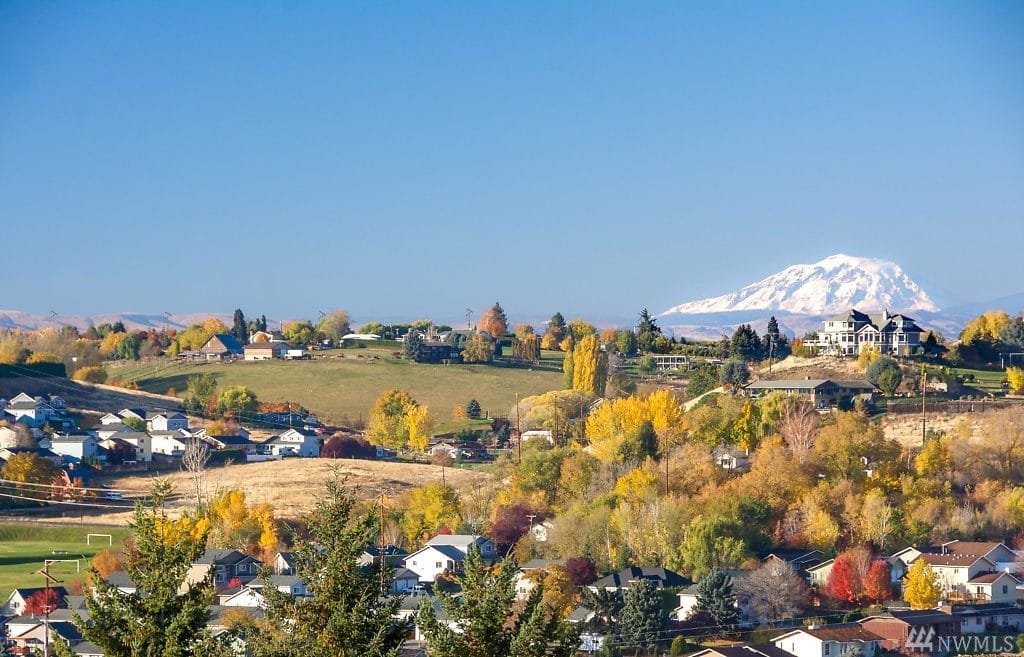
    According to the Livonia, MI crime rate in 2019, there were 1,411 property crimes (1,173 thefts, 126 burglaries, 112 vehicle thefts) reported. When it comes to violent crime, 167 instances were reported (127 assaults, 18 robberies, 22 rapes). Fortunately, no murders were reported that year.

    Not much can be considered a bad side to living in Livonia. It is one of the cities in Michigan that suits most people, so it is definitely one of the best places to live in Michigan.

    Livonia, Michigan - safest cities in michigan

    Ann Arbor

    (Property: 1,728; Violent: 251)

    • Population: 117,082
    • Median age: 27.5
    • Median household income: $65,745
    • Median house value: $379,600

    Ann Arbor is one of the rare Michigan cities that wasn’t affected by the downfall of Detroit’s industry. The city has been dependent on the University of Michigan for a long time, as it employs more than a quarter of the population.
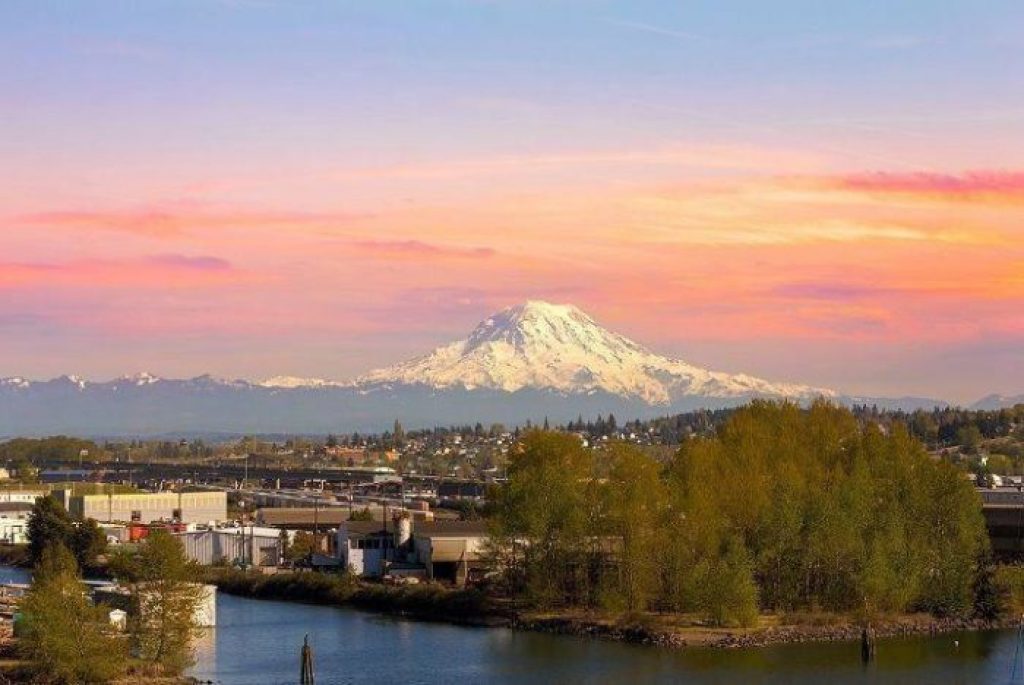
    There are 117,082 people living in Ann Arbor. The median household income is $65,745, and the median age, driven down by college students, is 27.5 years. Buying a home in one of the biggest cities in Michigan by population costs a median price of $379,600.

    Ann Arbor is a fairly large city with plenty to do. You’ll find a botanical garden, a museum of art, and many other amenities related to the University. This is a city full of young people, but it doesn’t repel the older generations in any way. Finding a peaceful spot in the city is not hard, with plenty of parks around. Finding work is easy as well, with the unemployment rate sitting at 3.9%. Ultimately, its crime rate is what separates it from similar cities in the US.
    The Ann Arbor, Michigan crime rate in 2019 shows that the property crimes reported amounted to 2,124 (1,789 thefts, 197 burglaries, 138 vehicle thefts), while violent crimes reached 309 during the year (184 assaults, 46 robberies, 77 rapes, 2 murders).

    Ann Arbor’s main negative point is the fact that the job market is not diverse enough. Centered around the university and its medical center, this city’s job industry has a long way to go. However, there have been some encouraging improvements with high-tech companies moving to the city. Also, for a city of this population size, it’s surprising that Michigan crime statistics show that it’s still pretty high-ranking when it comes to safety.

    Ann Arbor, Michigan - safest cities in michigan

    Southfield

    (Property: 2,056; Violent: 273)

    • Population: 72,115
    • Median age: 42.9
    • Median household income: $55,705
    • Median house value: $176,800

    Being one of Metro Detroit’s most sought-after business districts, Southfield is home to five golden skyscrapers. More than 100 Fortune 500 companies have offices in Southfield. For business enthusiasts, it’s probably one of the best cities in Michigan to visit. However, the city offers so much more as well. 

    Nowadays, 72,115 people live in Southfield. Their median household income is $55,705, the median age sits at 42.9, and a median home in the city is valued at $176,800.

    Even though it’s mostly centered around business, Southfield has a thing or two to offer its residents and visitors. Public education is well-funded, and the cost of living is the same as the national average. 

    However, the crime numbers in the city are a slight cause for concern. The Southfield, MI crime rate for 2019 shows that 1,508 property crimes were committed (898 thefts, 358 burglaries, 252 vehicle thefts) and 200 violent crimes (121 assaults, 45 robberies, 33 rapes, 1 murder).

    Property crime rates could be a major concern for those looking to move to Southfield, as property crimes in the city are 30% higher than that of the state. On the other hand, violent crimes are not as bad as at the state level. In particular, the murder rate in Southfield is significantly lower than the Michigan murder rate.

    However, another con to living in Southfield is that the city’s unemployment rate of 6.9% is above the national average of 5.9%.

    Southfield

    Grand Rapids

    (Property: 1,908; Violent: 637)

    • Population: 202,767
    • Median age: 31.4
    • Median household income: $50,103
    • Median house value: $164,900

    Grand Rapids is the largest of the West Michigan cities and the second-largest city in the state. It is also known as “Furniture City,” as five of the world’s largest office furniture producers are located here. Moreover, it’s deemed as one of the nicest cities in Michigan with both affordable cost of living and big-town feels. 

    Now, the city has 202,767 inhabitants, a median household income of $50,103, and a median age of 31.4 years. The price of a median home listed for sale in Grand Rapids is $164,900.

    Grand Rapids is a large city with plenty to see. Museums, parks, and one of the largest urban historic districts in the US make it one of the best cities in Michigan to visit. Although the city’s unemployment rate of 6.3% is higher than the US average, it has also seen a positive job growth of 2% over the last year. Additionally, the cost of living in Grand Rapids is 12.2% lower than the US average, which is another major positive side of living in this city. 

    The crime rate, however, might be discouraging to some. In 2019, the Grand Rapids, MI crime rate was not impressive: 3,850 property crimes were reported (2,754 thefts, 595 burglaries, 501 vehicle thefts), together with 1,286 violent crimes (860 assaults, 274 robberies, 144 rapes, 8 murders).

    The city’s main flaw is its high crime rates, and it is one of the major concerns that discourage people from moving into this otherwise great city.

    Grand Rapids, Michigan - safest cities in michigan

    Dearborn

    (Property: 2,241; Violent: 325)

    • Population: 93,038
    • Median age: 31.6
    • Median household income: $53,670
    • Median house value: $142,700

    When looking at Michigan crime stats, the next city on the list is nowhere from being considered safe. The eighth-largest city in Michigan and home to the largest Muslim population in the US, Dearborn is also the birthplace of Henry Ford. He built the largest Ford factory there, and Dearborn was one of the cities most heavily impacted by the crash of the car industry. Luckily, the city has mostly recovered since then. 

    Today, 93,038 people live in Dearborn. The median household income in the city is $53,670, the median age is 31.6 years, and the median home price is $142,700. 

    Where is the best place to retire in Michigan? Well, with numerous amenities and a cost of living that’s 5.4% lower than the national average, Dearborn could easily fit the requirements. In addition to these positive things, the city has an unemployment rate of 6.6%, which is well below the US average. 

    Dearborn does a lot to honor Henry Ford. The Henry Ford Museum, Fair Lane, the estate of the Ford family, and the Automotive Hall of Fame all stand to show how proud the city is of its car industry heritage. 

    However, the Dearborn, MI crime rate for 2019 is somewhat worrying, especially when it comes to property crime. That year, there were 2,104 property crimes (1,637 thefts, 201 burglaries, 266 vehicle thefts) and 305 violent ones ( 209 assaults, 56 robberies, 36 rapes, 4 murders) reported.

    The city is still recovering, most evident by the high property crime rate shared among cities with the same past. This represents the main downside to living in Dearborn, Michigan.

    However, on the bright side, when looking at Michigan crime statistics by city, violent crimes in Dearborn are still 14% lower than the national average.

    Dearborn, Michigan - safest cities in michigan

    Saginaw

    (Property: 1,549; Violent: 1,474)

    • Population: 47,725
    • Median age: 35
    • Median household income: $29,582
    • Median house value: $102,800

    Once a lumber town, Saginaw is now focused on producing clean energy. It is also a town of entrepreneurs and manufacturers, with more patents per employee than other mid-sized communities and a higher proportion of manufacturing jobs than most of the US. On this list, it is the smallest city in Michigan by population. 

    Nowadays, 47,725 people live in Saginaw. The median household income is low, at $29,582. The median age is 35, and at $102,800, the median home price is proportional to the income.

    Despite all the flaws you’ll see listed below, Saginaw is shaping up to become a popular city in Michigan. The city invests in amenities that will attract more families, such as the Children’s Zoo and the Children’s Museum. On the other hand, adults can find entertainment here too. For now, the city’s main upsides are the affordable housing and a cost of living that’s 20.3% lower than the national average. Its main downside, however, is its crime rates. 

    The Saginaw crime rate in 2019 shows 743 registered property crimes (421 thefts, 245 burglaries, 77 vehicle thefts) and 707 violent crimes (613 assaults, 51 robberies, 34 rapes, 9 murders). It can be disheartening to think that violent crimes in Saginaw are 289% higher than the national figures. 

    To add to the rampant crime, the unemployment rate in the city is a whopping 13.7%. This is not a city for those unwilling to wait a few years until it recovers fully.

    Saginaw

    Flint

    (Property: 2,086; Violent: 1,349)

    • Population: 94,762
    • Median age: 35.5
    • Median household income: $28,834
    • Median house value: $18,800

    The next city on our list is definitely not one of the safest places to live in Michigan. Flint earned its nickname, “Vehicle City,” by being one of the leading cities for automotive manufacturing. Companies such as Buick and Chevrolet had their main facilities there until the recession of the early 1980s hit. Nowadays, the city is most known for its drinking water crisis, which has been ongoing since 2014.

    Today, 94,762 people live in Flint, and that number has been dropping year over year, indicating that the city is probably not one of the best places to live in Michigan. The city is characterized by a median household income of $28,834, a median age of 35.5 years, and a staggeringly low median home price of $18,800.

    For those who decide to visit or move to Flint, all hope is not lost. You will find plenty of things to do in the city. It might also help you save some money, as the cost of living is 28.4% lower than the US average, and the houses are so cheap to buy. In addition, public education investments are nearly $4,000 higher than the national average.

    The city’s crime rates, however, are a cause of concern. The Flint, Michigan crime rate in 2019 shows a total of 1,986 property crimes (1,220 thefts, 559 burglaries, 207 vehicle thefts) and 1,284 violent crimes (1,119 assaults, 78 robberies, 64 rapes, 23 murders) reported.

    To add to the increasing crime rates and the lack of drinking water, which many suspects won’t be resolved soon, Flint has an unemployment rate of 19.7%.

    Flint, Michigan - safest cities in michigan

    Pontiac 

    (Property: 2,174; Violent: 1,286)

    • Population: 58,832
    • Median age: 31.9
    • Median household income: $33,568
    • Median house value: $70,700

    Another one of the most popular cities in Michigan is Pontiac. The city was founded in 1818 and is the second European-American settlement in the Detroit area, founded right after Dearborn. 

    The city has a population of 58,832. The median household income is $33,568, the median age is 31.9 years, and the median house value is $70,700, showing that this is one of the poorest and cheapest cities on the list.

    Although it’s not one of the safest cities in Michigan, Pontiac can still be a great place. It has a Sea Life Aquarium, a LEGOLAND Discovery Center, and a ton of other stuff that children and adults will love. Also, the cost of living is 15.9% below the US average, and schools are funded nearly $4,000 more than an average school in the country. 

    However, Pontiac had some crime issues in 2019: 1,300 property crimes were reported (875 thefts, 315 burglaries, 110 vehicle thefts), together with 769 violent crimes (585 assaults, 108 robberies, 66 rapes, 10 murders).

    Another negative side to living in Pontiac is its unemployment rate of 11.9%. The Pontiac, Michigan crime rate being well above the national and state averages for property and violent crimes is another major concern.

    Pontiac, Michigan - safest cities in michigan

    Detroit

    (Property: 4,303; Violent: 1,965)

    • Population: 664,139
    • Median age: 34.7
    • Median household income: $30,894
    • Median house value: $53,700

    One of the most prosperous cities on the planet just a few decades ago, Detroit has turned into a shadow of its former self. At the 1950 census, the city had 1.85 million residents. Today, it is a city with thousands of empty buildings, and urban decay is present wherever you look. Despite that, efforts were made to restore some of the historic buildings, and some parts of Detroit are even seeing an increase in population, but things haven’t been the same since. 

    Is Detroit safe? The answer is No. This is probably why Detroit now only has 664,139 inhabitants, roughly a third of its population almost 70 years ago. The median household income in the city is $30,894, the median age is 34.7 years, and the median house value is $53,700.

    Regardless of the population decrease and the depression, Detroit still remains a large city with plenty of things to do for entertainment. The cost of living is 12.4% lower than the US average, and public schools here invest $6,000 more per student than the average American school. 

    When it comes to crime rates, it’s horrifying to think that the Detroit murder rate is 728% higher than the national average per 100,000 inhabitants. Additionally, in 2019, there were 28,550 property crimes (14,844 thefts, 6,820 burglaries, 6,886 vehicle thefts) and 13,040 violent crimes (9,467 assaults, 2,346 robberies, 952 rapes, 275 murders) reported in the city. 

    The unemployment rate of 15.7% and the high crime rate are the main reasons behind Detroit’s population decline.

    Detroit, Michigan - safest cities in michigan

    Conclusion

    From the decayed concrete of Detroit to the state’s small, quaint suburbs, we hope that this list of the safest cities in Michigan equips those looking to move to this state with the necessary knowledge to make the right choice.

    If you’re not moving here, pay a visit and get to know the cradle of the American automotive industry and one of the former moving forces of the nation.

  • Safest Cities in New York

    Safest Cities in New York

    When you think of the safest states in the United States, New York might not be the first one that pops in your head. However, that doesn’t mean that you can’t feel safe here. Before we cite the safest cities in New York for you to choose from, let’s learn some basic information about the Empire State. 

    About New York

    New York is the fourth largest state in the United States by population, with 19.30 million residents, 40% of whom live in New York City and Long Island. The state was named by the arriving English after the Duke of York. The state’s capital is not New York City, as many might misconceive, but rather Albany, a city so unsafe that you won’t see it on this list of safest places to live in New York. 

    Now, let’s look at some vital facts about the state: 

    • Median age: 39
    • Median household income: $68,486
    • Median house value: $305,400

    Now that the basics are out of the way, let’s dive into the cities that we consider are the safest in New York to help you make the right decision when moving there. Next to each entry, we’ve listed the number of property and violent crimes per 100,000 inhabitants, which were used as the basis for these rankings. 

    In addition to the crime rates, you’ll also find information about each city’s population, unemployment rates, home prices, and available amenities.

    Safest Cities in New York in 2021

    Rye

    (Property: 456; Violent: 31)

    • Population: 15,547
    • Median age: 43
    • Median household income: $192,688
    • Median house value: $1,784,500

    Not to be mistaken with the much larger town of Rye, the city was first incorporated as a village in 1904 and then as a city in 1942. It’s a place where one of the founding fathers, John Jay, was born and later buried.

    Nowadays, the city of Rye has 15,547 inhabitants, a median household income of $192,688, and a median age of 43. Buying a house in Rye will cost you a median price of $1,784,500. 

    In this city with the lowest crime rates in New York, tourists and residents can expect to visit some exciting places. For one, you should never miss Playland Park. Located just 27 miles from Downtown Manhattan, this is where most people from the city bring their kids. Rye also holds dozens of events every year to celebrate its heritage — perfect for history buffs. 

    With an unemployment rate of 4.1%, residents in this city can easily expect to find a job. Additionally, public schools in Rye invest 78.6% more money per student than the average school in America. 

    Being one of the safest cities in America, the crime rate in Rye in 2019 looks like this: 15 property crimes (11 thefts, 1 burglary, 3 vehicle thefts) were reported, together with 1 violent crime, which was a robbery. 

    There are some negatives to living here, most notably the cost of living, which is 221.5% higher than the US average, and the real estate prices.

    Rye, New York - safest cities in new york

    Long Beach

    (Property: 589; Violent: 62)

    • Population: 33,368
    • Median age: 44.9
    • Median household income: $97,022
    • Median house value: $584,300

    Located just south of Long Island, Long Beach is one of the best places to live in New York. Since its urban renewal in the 1990s, Long Beach became one of the most desirable bedroom communities in the US. People living here can quickly get to their jobs in New York City while living in a quiet and safe beach town.

    Nowadays, Long Beach has a population of 33,368, a median household income of $97,022, and a median age of 44.9 years. Buying a house here costs a median price of $584,300.

    Even though it’s one of the safest places to stay in New York, it might not be everyone’s cup of tea as there’s not much to do, except for the beaches and a few parks. However, its close proximity to New York City is its greatest perk. In addition, new residents are drawn by the unemployment rate of 4.4% and the public education investments that are 226% higher than the US average. 

    The report in 2019 shows that 66 property crimes (53 thefts, 5 burglaries, 8 vehicle thefts) and 19 violent crimes (17 assaults, 2 robberies) were committed in Long Beach. No murders were reported that year, which is a huge leap from the murder rate in New York City. 

    As expected, the cost of living is relatively high, sitting at 69.3% above the US average. However, this still makes Long Beach one of the best and cheapest choices in the area.

    Long Beach

    Glen Cove

    (Property: 551; Violent: 29)

    • Population: 27,062
    • Median age: 40.6
    • Median household income: $80,702
    • Median house value: $568,300

    Glen Cove is known for being one of the major landing points for immigrants — first from Ireland and Italy and, more recently, from Central and South America. It is also one of the safest areas in New York that drive down the Long Island crime rate. 

    Nowadays, 27,062 inhabitants, a median household income of $80,702, and a median age of 40.6 years are the figures that characterize Glen Cove. The median home cost is the lowest on this list so far, at $568,300.

    Museums, a nature preserve, and plenty of other amenities are available to visitors and residents. Even though it’s not the most entertaining, its proximity to Queens and its unemployment rate of 2.2% make this city one of the best places to live in New York state. 

    Glen Cove’s low crime rates are another reason behind its popularity. In 2019, 84 property crimes (137 thefts, 12 burglaries, 2 vehicle thefts) were reported, along with 5 violent crimes (1 assault, 4 robberies). No rapes or murders were reported that year, fortunately. 

    In case you haven’t figured it out yet, the state of New York is expensive to live in. Glen Cove shares this characteristic, with the cost of living being 62.1% above the national average.

    Glen Cove

    Port Washington

    (Property: 511; Violent: 26)

    • Population: 15,808
    • Median age: 42.3
    • Median household income: $141,667
    • Median house value: $879,000

    Aside from being one of the safest cities in New York, Port Washington used to be one of the major sand-mining towns in the US. Most of New York’s skyscrapers were built using local sand, until 1998 when the sand mines were redeveloped. By then, Port Washington became one of the cities near New York City where the rich can come to play golf and go yachting.

    Today, 15,808 people are living in the city. The median household income is $141,667, the median age is 42.3 years, and a median home can be bought for $879,000. 

    Golf courses, marinas, and museums are just some of the entertainment options available in Port Washington. The city offers similar perks that you would find in any of the best small towns in New York state. Those visiting from the city can find a place to relax while being just miles away from their home and the rush of New York. Additionally, Port Washington has an unemployment rate of just 2.2%, and it invests 108.7% more into public education than the average American city. 

    Crime statistics from 2019 show that Port Washington is extremely safe: 91 property crimes (82 thefts, 6 burglaries, 3 vehicle thefts) and 6 violent crimes (4 assaults, 2 robberies) were reported. Like Glen Cove, no rapes or murders were reported that year, and overall crime in the town is 71% lower than the New York crime rate. 

    Once again, the cost of living prevents more people from moving here; Port Washington is 107.6% more expensive to live in than an average American city.

    Port Washington, New York - safest cities in new york

    Irvington

    (Property: 492; Violent: 116)

    • Population: 6,423
    • Median age: 41.3
    • Median household income: $139,917
    • Median house value: $960,200

    Irvington is one of the most affluent places on the Hudson River. Located less than 20 miles from Times Square, it has become one of the top bedroom communities and best places to live in NY. 

    The latest data shows that the small village of Irvington has a population of 6,423. Their median household income is $139,917, the median age is 41.3 years, and the median house is valued at $960,200.

    This charming place offers bike tours through its historic sites, scenic areas, and elaborate mansions to escape the nearby concrete jungle. Those moving here are encouraged by the low unemployment rate of 3.4% and the public school funding that is 130% higher than the national average, making it one of the best places to raise a family in New York. 

    When it comes to crime in Irvington, we have to work with estimates as villages in the state of New York don’t usually provide detailed data. However, even the estimates can attest to its safety, with around 447 property crimes and 117 violent crimes per 100,000 inhabitants. Both of these numbers are more than 60% below the state figures, according to New York state crime statistics. 

    Irvington is not even close to being considered a reasonably priced place. With a median home value that’s just shy of a million and a cost of living that’s 111% higher than the US average, not many can afford to move here.

    Irvington, New York - safest cities in new york

    Roslyn Heights

    (Property: 492; Violent: 116)

    • Population: 6,553
    • Median age: 39.9
    • Median household income: $137,150
    • Median house value: $851,900

    Roslyn Heights brings us back to Long Island. This is neither a city nor a village, but rather a hamlet, and it happens to be one of the best places to live in NY state.

    Recent data shows that it has a population of 6,553. Their median household income is $137,150, the median age is 39.9 years, and a median home listed for sale in Roslyn Heights is valued at $851,900.

    It has a Botanic Garden, an art museum, and many other amenities that will make any stay here pleasurable, whether it’s a short visit or a permanent move. Public schools invest 149% more money per student than an average American school, which makes it one of the best places to live in New York for families. Additionally, the unemployment rate of 4% is attractive as opposed to the national average of 5.9%. 

    Roslyn Heights is one of the safest towns in New York, with estimated property crime numbers at 447 per 100,000 people and violent crime numbers at 117. 

    Being so close to NYC and not having to worry about crime comes with a price — a cost of living that is 105% higher than an average American city.

    Roslyn Heights

    Manhasset

    (Property: 531; Violent: 125)

    • Population: 7,985
    • Median age: 47.3
    • Median household income: $177,321
    • Median house value: $1,508,800

    Located less than 20 miles from Manhattan, Manhasset is one of the most prominent towns in New York. In 2005, it held the first spot on the Wall Street Journal’s list of best places to raise a family in the New York metropolitan area.

    Today, Manhasset has a population of 7,985, a median household income of $177,321, and a median age of 47.3 years. Buying a house here will burn a hole through your pocket, with the median house value being $1,508,800.

    When it comes to entertainment, there are various options available. For one, you can visit the Americana Manhasset, which is one of the most popular luxury shopping centers on the East Coast.

    Also, the Leeds Pond Preserve is there for those who enjoy spending time in nature. Its proximity to the big cities while being away from the typical New York crime rate is one of the main advantages of living in Manhasset. The town has an unemployment rate of 3.7%, and it is located in one of the best school districts in the country.

    When it comes to crime in Manhasset, estimates show that it had 482 property crimes and 126 violent crimes per 100,000 residents in 2019.

    The main downsides of living in Manhasset are expensive housing and a high cost of living, which is 190.4% above the US average.

    Manhasset

    Tarrytown

    (Property: 577; Violent: 136)

    • Population: 11,302
    • Median age: 44.7
    • Median household income: $124,046
    • Median house value: $691,400

    Is New York safe? Tarrytown is another village that assures us of a positive answer. Tarrytown has 11,302 residents nowadays. Their median household income is $124,046, the median age is 44.7 years, and a median home has a value of $691,400.

    The most interesting thing for tourists here is Sleepy Hollow, the neighboring village described in Washington Irving’s The Legend of Sleepy Hollow. Spots, such as The Old Dutch Church, are visited by fans from around the world, making it one of the best small towns in New York for tourists. Moreover, the Rockefeller State Park Preserve is there for all your recreational needs and activities. 

    Sleepy Hollow and Tarrytown also jointly operate the public schools in the area, and they receive 85% more funding than the average school in the US. The unemployment rate in Tarrytown is a mere 4.5%, and its crime rate warrants it a place on every list of safest places in New York. Estimates in 2019 tell us that Tarrytown reported 523 property crimes and 137 violent crimes per 100,000 residents.

    Living in Tarrytown might be a dream come true for many, but not everyone can afford it; the cost of living is 73.4% higher than the US average.

    Tarrytown

    Garden City Park

    (Property: 602; Violent: 142)

    • Population: 8,335
    • Median age: 43.4
    • Median household income: $108,894
    • Median house value: $679,400

    Another hamlet in North Hempstead, Garden City Park significantly contributes to bringing down the skyrocketing NY crime rate. Even though it’s located near Queens and New York City, Garden City Park does not share their crime rates. 

    Nowadays, 8,335 people live in this village. Their median household income is $108,894, the median age is 43.4 years, and a median home is priced at $679,400. 

    The village itself doesn’t offer a lot of amenities.

    However, living in Garden City Park will allow you to avoid the crime rate in New York City while being close enough to access the amenities. It is the more affordable option, with less than a 30-minute train ride separating it from Manhattan. Living here means that you’re in one of the best school districts in the country that invests 89% more on education than the average American city.

    Additionally, having an unemployment rate of just 3.1% means that you won’t have that much of a hard time finding a job here. 

    Sitting on the outskirts of one of the safest neighborhoods in NYC, Garden City Parks is estimated to have reported 546 property crimes and 143 violent crimes per 100,000 people in 2019.

    The main con of living in this small village is the cost of living, which is 81.4% higher than the US average. The lack of entertainment options also comes as a close second.

    Garden City Parks, New York - safest cities in new york

    Peekskill

    (Property: 742; Violent: 141)

    • Population: 24,511
    • Median age: 38.7
    • Median household income: $57,206
    • Median house value: $332,700

    Peekskill was one of the early American industrial centers. Crayola’s manufacturer, the Binney & Smith Company, started here in 1864. Peekskill is the cheapest place to live in New York state on this list so far. 

    Today, the city has 24,511 residents, a median household income of $57,206, and a median age of 38.7 years. Peekskill has the most affordable housing on this list so far, with a median home value of $332,700.

    Bear Mountain State Park, Blue Mountain Reservation, and a part of the Appalachian Trail are all located near Peekskill, making this city the best place to live in New York for nature enthusiasts. It also has one of the best-funded public education systems in the country, an unemployment rate of 5.6%, and a particularly low crime rate. 

    In 2019, Peekskill had 209 property crimes (196 thefts, 7 burglaries, 6 vehicle thefts) and 30 violent crimes (22 assaults, 7 robberies, 1 rape). No murders were reported that year, which is not unusual for the safest neighborhoods in New York. 

    Even though it’s cheaper than other cities on this list, the cost of living in Peekskill is still 27% higher than the US average. There’s also not much to do in the city, so those who have hobbies other than hiking, biking, and enjoying natural attractions will have to travel 45 miles to New York City for entertainment.

    Peekskill-New-York-safest-cities-in-new-york

    Most Popular Cities in New York Ranked by Safety

    Yonkers

    (Property: 1,004; Violent: 402)

    • Population: 201,344
    • Median age: 39
    • Median household income: $63,849
    • Median house value: $525,200

    Yonkers sits just outside of the Bronx, is a Westchester County city, and ranks fourth among the most populated cities in New York. The city is famous due to the controversy behind the low-income housing built there during the 1990s.

    Yonkers has a population of 201,344, a median household income of $63,849, and a median age of 39 years. Recent real estate data shows that a median house in the city costs $525,200. 

    The Untermyer Park and Gardens, the Hudson River Museum, and a few other attractions bring tourists to Yonkers. Its position just outside NYC makes it primarily a bedroom community for those working in the city. 

    The Yonkers, NY crime rate points to 1,826 property crimes (1,466 thefts, 208 burglaries, 152 vehicle thefts) and 708 violent crimes (436 assaults, 224 robberies, 42 rapes, 6 murders) in 2019.

    The bright side to living in Yonkers is that its public education funding is 64.4% higher than the US average. However, the days of affordable housing in Yonkers are gone, as evidenced by the median home value.

    The city’s unemployment rate of 6.6% is also slightly higher than the national average of 5.9%. To top it off, like many of the biggest cities in New York, the cost of living in Yonkers is 53.7% higher than average, representing another issue with living here.

    Yonkers, New York - safest cities in new york

    New York City

    (Property: 1,449; Violent: 539)

    • Population: 8,230,290
    • Median age: 36.7
    • Median household income: $63,998
    • Median house value: $680,500

    The most populous city in the US, New York City, is surprisingly not at the bottom of this list, although its crime rates surpassed the overall New York crime rates. 

    Today, “The City That Never Sleeps” has a population of 8,230,290. The median household income is $63,998, the median age is 36.7 years, and the median home price is $680,500.

    The Statue of Liberty, Central Park, the Empire State Building, the Metropolitan Museum of Art, Broadway, and other famous attractions draw millions of tourists to New York City every year. Living in NYC is a dream for many, and those who achieve it can expect an unemployment rate of 6.3%, public schools with excellent funding, and property crime that’s lower than the national rate.

    The NYC crime rate in 2019 shows that there were 122,299 property crimes (106,931 thefts, 9,846 burglaries, 5,522 vehicle thefts) and 47,821 violent crimes (31,336 assaults, 13,396 robberies, 2,770 rapes, 319 murders) reported in the city.

    Additionally, according to the latest data, Staten Island and parts of Queens and Brooklyn are reported to be the best and safest neighborhoods in NYC.

    We all know New York City is one of the most expensive cities in the world to live in. Apartments in up-and-coming neighborhoods quickly sell for millions of dollars, and the city’s cost of living is 87.2% above the national average.

    Aside from this, New York city’s violent crime rate is 50% higher than the national average. So, although it’s not at the bottom of this list, it’s definitely not the safest place to live in New York in 2020, either.

    New York

    Poughkeepsie

    (Property: 1,999; Violent: 706)

    • Population: 30,669
    • Median age: 37.8
    • Median household income: $43,794
    • Median house value: $229,300

    Poughkeepsie is a city located in the New York City metropolitan area. The area where the city is situated was purchased from Native Americans in 1686. The city was then officially incorporated in 1854.

    Although it’s not the safest city in Upstate New York, Poughkeepsie is home to 30,669 people. The median household income is $43,794, the median age is 37.8 years, and the median home price sits at $229,300.

    Poughkeepsie is the perfect place in New York for nature lovers. Surrounded by trails and parks, nature is this city’s greatest asset, along with its relative proximity to NYC. The unemployment rate in Poughkeepsie is 9.4%, which is higher than the US average. On the other hand, public schools receive more than sufficient funding, and the cost of living is only 5.7% higher than the US average, which, compared to most cities in New York, is reasonable.

    The Poughkeepsie, NY crime rate in 2019 shows that the city had 513 property crimes (402 thefts, 73 burglaries, 38 vehicle thefts) and 235 violent crimes (143 assaults, 63 robberies, 26 rapes, 3 murders). 

    The crime rate is the main thing that keeps people from moving to this otherwise beautiful city. Specifically, violent crime in Poughkeepsie is 104% higher than the national average.

    Poughkeepsie, New York - safest cities in new york

    Ithaca

    (Property: 2,909; Violent: 181)

    • Population: 31,193
    • Median age: 21.9
    • Median household income: $34,424
    • Median house value: $242,000

    Ithaca is one of the best places to live in Upstate New York and one of the most popular college towns globally, as the famous Cornell University is located here.

    The city has a population of 31,193. The median household income is $34,424, while the median age is dragged down to 21.9 years by the influx of college students. Lastly, the median house value is $242,000. 

    In this city, you’ll find the Ithaca Falls, which is quite a sight to see. Collegetown is the city’s center of entertainment. Those who decide to remain in Ithaca after college can enjoy an unemployment rate of just 4.8% and a reasonable cost of living (1.2% lower than average).

    The Ithaca, NY crime rate in 2019 shows the following numbers: 840 property crimes (768 thefts, 56 burglaries, 16 vehicle thefts) and 41 violent crimes (26 assaults, 9 robberies, 5 rapes, 1 murder) were reported that year.

    Isolation and harsh winters are what most Ithaca residents complain about. The property crime rate, which is above the state and national averages, is also a slight cause for concern when living here.

    However, the NY murder rate is slightly higher than the figure in Ithaca, and overall violent crime in the city is 65% lower than the national average.

    Ithaca, New York - safest cities in new york

    Newburgh

    (Property: 2,660; Violent: 1,236)

    • Population: 28,143
    • Median age: 30.7
    • Median household income: $41,769
    • Median house value: $222,600

    Located 60 miles north of NYC is Newburgh, a city that was once the headquarters of the Continental Army. More recently, the city had a similar misfortune to Flint, Michigan, which resulted in the city requesting help for its contaminated water supply in 2016. So, it’s probably not the best place to live in New York until this is resolved. 

    The population of Newburgh includes 28,143 people. Their median household income is $41,769, the median age is 30.7 years, and you can buy a house for a low median price of around $222,600.

    A museum of modern art, a hiking/climbing trail, and the famous Orange County Choppers are common tourist spots in Newburgh. Those who like isolation will love this place, as it doesn’t have the hustle and bustle you would see in any of the top cities in New York. The cost of living is reasonable, at 10.7% above the national average. The public schools in Newburgh are on par with the rest of New York, which means they’re funded more than an average US city. 

    In 2019, crime data showed 640 property crimes (484 thefts, 137 burglaries, 19 vehicle thefts) and 317 violent crimes (213 assaults, 82 robberies, 19 rapes, 3 murders) reported in Newburgh.

    The negatives of living in this city include an unemployment rate of 6.6% and the skyrocketing Newburgh, NY crime rate, which is above the state and national averages. The isolation of the city can be taken as either positive or negative, depending on personal preference.

    Newburgh, New York - safest cities in new york

    Schenectady

    (Property: 3,179; Violent: 892)

    • Population: 65,129
    • Median age: 36.2
    • Median household income: $45,438
    • Median house value: $125,400

    Schenectady got its complicated name from a Mohawk word that means “beyond the pines.” This is where some of the most influential companies of the 20th century, such as General Electric and the American Locomotive Company, started. Nowadays, it’s considered one of the best places to live in New York, and you’ll find out why. 

    The city has 65,129 permanent residents with a median household income of $45,438 and a median age of 36.2 years. The median value of a home in Schenectady is a mere $125,400.

    The Rivers Casino, Museum of Innovation and Science, and Via Aquarium are the go-to places when it comes to tourist attractions. What attracts new residents to the city is the mixture of an attractive setting, a low cost of living (15.8% below the national average), and public schools that receive 46% more than the average funding. 

    The Schenectady crime rate in 2019 shows 1,770 property crimes (1,392 thefts, 248 burglaries, 130 thefts) and 528 violent crimes (336 assaults, 133 robberies, 56 rapes, 3 murders) reported in the city.

    With a violent crime that’s 112% higher than the national average, it’s not exactly considered a safe city. Other people might also find the city’s unemployment rate of 9.2% a little concerning.

    Schenectady, New York - safest cities in new york

    Syracuse

    (Property: 3,367; Violent: 705)

    • Population: 141,491
    • Median age: 31.2
    • Median household income: $38,276
    • Median house value: $88,200

    According to Forbes, Syracuse ranked fourth among the best places to live in New York for families in 2010. It is also often described as the economic and educational heart of the region, with the biggest airport in the area located within the city.

    Today, the city has a population of 141,491, a median household income of $38,276, a median age of 31.2 years, and a median home value of just $88,200.

    Here’s why it remains to be one of the best places to live in Upstate New York: you can find everything you need for a comfortable visit or a pleasant life in Syracuse — from the local zoo and museums of art and technology to the lakes and parks you can relax in. In addition to all the necessary amenities, Syracuse’s cost of living is 21% lower than the US average. It also has one of the best public school systems in the country — something it shares with most other cities in New York.

    The Syracuse, NY crime rate in 2019 looks like this: 4,464 property crimes (3,051 thefts, 850 burglaries, 563 vehicle thefts) and 1,129 violent ones (759 assaults, 246 robberies, 105 rapes, 19 murders) were reported.

    Clearly, Syracuse has an issue with both violent and property crimes. Moreover, at 9.3%, the city’s unemployment rate is above the national average, with only minimal job growth over the past year.

    Syracuse

    Rochester

    (Property: 3,804; Violent: 897)

    • Population: 205,077
    • Median age: 32
    • Median household income: $35,590
    • Median house value: $75,200

    Rochester is where companies such as Kodak, Western Union, and Xerox started, and it had the second-largest economy in New York until 2010. Being the state’s third most populous city, it’s not surprising that Rochester is not one of the safest cities in Western New York.

    Nowadays, Rochester’s population is 205,077. Their median household income is $35,590, the median age is 32 years, and the median house value is the lowest on this list at $75,200. 

    Rochester has a zoo, a water park, and plenty of other entertainment options that make the city suitable for families. Additionally, houses are cheap, living costs are 21.6% lower than the US average, and public schools invest 113.53% more money per student than average.

    In 2019, 7,142 property crimes (5,222 thefts, 1,269 burglaries, 651 vehicle thefts) and 1,540 violent crimes (976 assaults, 429 robberies, 102 rapes, 33 murders) made up the Rochester, NY crime rate figures. 

    Finding work in Rochester might be a tricky task, as the unemployment rate is 10.2%. The property and violent crime rates are 65% and 97% higher than the New York average, respectively, making it seem like an unsafe place. However, those who find these numbers tolerable might find the perfect home in Rochester.

    Rochester

    Buffalo

    (Property: 3,836; Violent: 1,019)

    • Population: 254,290
    • Median age: 33.1
    • Median household income: $37,354
    • Median house value: $85,300

    Buffalo ranks second among the most populated cities in New York. It’s commonly called the City of Light because it was one of the earliest adopters of electric power.

    Nowadays, the city has 254,290 inhabitants. Their median household income is $37,354, the median age is 33.1 years, and a median home in Buffalo sells for $85,300.

    Located just 16 miles from Niagara Falls, Buffalo is one of the top cities in New York for tourists. Other amenities in the city include the Buffalo Zoo, the Albright-Knox Art Gallery, the Buffalo Museum of Science, and everything else you’d expect a city of this size to have. Buffalo offers low real estate prices, a low cost of living (20.5% below average), and excellent public education (119% higher investment than the US average) to those who decide to make it their home.

    However, looking at the Buffalo, NY crime rates might dissuade you from moving here. In 2019, 8,298 property crimes (6,009 thefts, 1,610 burglaries, 679 vehicle thefts) and 2,533 violent crimes (1,563 assaults, 802 robberies, 121 rapes, 47 murders) were reported, earning it a spot near the bottom of this list. 

    To add to the high crime rates, Buffalo also has an unemployment rate of 7.1%, so finding a job here might not be as easy as in an average American city.

    Buffalo, New York - safest cities in new york

    Binghamton

    (Property: 4,368; Violent: 797)

    • Population: 43,601
    • Median age: 35.8
    • Median household income: $34,487
    • Median house value: $77,800

    The last spot on this list of the safest cities in New York belongs to Binghamton, the county seat of Broome County. The city was one of the most prosperous cities in the US, earning itself the nickname “The Valley of Opportunity.” The city produced cigars, shoes, and computers, but today, the economy’s main driving forces are healthcare and education.

    Binghamton has 43,601 residents. Their median household income is $34,487, the median age is 35.8 years, and a median house costs $77,800, making it one of the best places to live in the New York state, especially for those who can’t afford to live in the big cities. 

    People come to this city to visit the Roberson Museum and Science Center, the Discovery Center, which focuses on getting children interested in science, and the Museum of History & Art. Binghamton University is one of the city’s largest employers and why interest in the city is exponentially increasing every year. The cost of living (25.5% below average) and the well-funded public schools also attract new residents. 

    The Binghamton, NY crime rate is what keeps people on their toes. In 2019, 1,907 property crimes (1,429 thefts, 417 burglaries, 61 vehicle thefts) and 355 violent crimes (245 assaults, 66 robberies, 42 rapes, 2 murders) were reported, which is pretty high for a city of this size. 

    Aside from the skyrocketing crime rates, the unemployment rate of 10.4% and negative job growth over the past year are a cause for concern for those looking to move here.

    Binghamton, New York - safest cities in new york

    Conclusion

    Those thinking about visiting or moving to New York tend to equate the state with the city. We rarely consider how the state of New York is much larger than NYC and that there are other better and safer cities and towns to consider.

    We hope this list of the safest cities in New York has widened your options of places to visit or move to in the Empire State. Now, all you have to do is decide which place — be it hamlet, village, town, or city — suits you and your family’s needs.

  • Safest Cities in America (Infographic)

    Safest Cities in America (Infographic)

    When looking for the best places to live in the US, our safety and that of our loved ones plays a huge role in the decision process.

    Questions such as What’s the traffic like? and Is the water okay to drink? are rarely the first ones we ask—no, the most common first question when moving to a new area is What are the crime rates? and Is the city safe to live in?

    In order to help with choosing your new city, we’ve compiled a list of the safest cities in America using the data available in last year’s FBI Crime in the US report.

    Top 10 Safest Cities in The US Infographic

    Safest Cities in America - Albuquerque, New Mexico

    Albuquerque, New Mexico

    With the population of 559,721 people, Albuquerque has 965.8 violent crimes per 100,000 inhabitants. And when it comes to property crimes, Albuquerque has an average of 6,073.2 crimes per 100,000 residents, with over 4,000 of those classified as larceny-theft.

    Anaheim, California

    Disneyland Park is far from the only thing that Anaheim has to offer. The city of 350,000 sits at the top of the list of the safest cities in California and is one of the safest cities in the US, overall. Anaheim reports 363.7 violent crimes per 100,000 residents annually, and 2,872.3 property crimes. The majority of the violent crimes reported last year were aggravated assaults, at 196.

    Safest Cities in America - Anaheim, California
    Safest Cities in America - Anchorage, Alaska

    Anchorage, Alaska

    Anchorage, the beautiful Alaskan city that is closer to Russia than it is to the US, has a population of 301,239. Crime rates per 100,000 people in this corner of the US amount to 1,070.9 violent crimes and 3,917.5 property crimes.

    Arlington, Texas

    Arlington is populated by 387,565 people, according to the 2016 census. This city sees 502.1 violent crimes per 100,000 residents, and 3,443.6 property crimes. The most common violent crime in one of the safest cities in Texas is aggravated assault, accounting for more than 50% of all violent crimes in Arlington.

    Safest Cities in America - Arlington, Texas
    Safest Cities in America - Atlanta, Georgia

    Atlanta, Georgia

    The capital, as well as the most populated city of Georgia, has an estimated population of 486,000. Atlanta has managed to lower its crime rates significantly in the last decade, denouncing its reputation as one of the most prominent gang towns in the US. Nowadays, Atlanta has 1,119.6 violent and 5,499.3 property crimes reported yearly, per 100,000 inhabitants.

    Aurora, Colorado

    With a population of 360,237, a violent crime rate of 460.8, and a property crime rate of 2,936.7 per 100,000 residents, Aurora definitely earns its spot on the list of the top 100 safest cities in the US. Last year, Aurora had 6.7 murders and manslaughters per 100,000 people, and 232.3 aggravated assaults—the most common violent crime in the US.

    Safest Cities in America - Aurora, Colorado
    Safest Cities in America - Austin, Texas

    Austin, Texas

    Austin is the fourth most populous city in Texas and the eleventh most populous city in the United States, with 967,629 people living in it. Austin is the fastest-growing city in America, as the city gained over 200,000 new residents since the 2010 census. This city has impressively low crime rates per 100,000 residents; there were 372.5 violent crimes and 3,771 property crimes last year in Austin.

    Bakersfield, California

    California can boast having more than one city on our list of the safest cities in America, with a population well over 100,000. Even though it’s part of the notoriously violent West, Bakersfield—with its 373,887 residents, 484.1 violent crimes, and 4,161.4 property crimes per 100,000 people—definitely deserves a spot on that list.

    Safest Cities in America - Bakersfield, California
    Safest Cities in America - Baltimore, Maryland

    Baltimore, Maryland

    15 years after The Wire, Maryland has managed to repair its reputation significantly. Still, Baltimore is not the first city that comes to mind when you think of the safest place to live in the US. The city has 621,252 residents, and in 2017, it had 1535.9 violent crimes and 4980.4 property crimes reported per 100,000 residents.

    Boston, Massachusetts

    Boston, home of the Red Sox, has a population of 665,258. Last year, this city had 706.8 violent crimes and 2,316.1 property crimes reported per 100,000 people.

    Safest Cities in America - Boston, Massachusetts
    Safest Cities in America - Buffalo, New York

    Buffalo, New York

    The second-largest city in the state, Buffalo is one of the safest places to live in New York. According to the data available from the 2016 census, Buffalo has 258,096 residents. The FBI’s 2017 data shows that the city’s violent crime rate is 1,118.6 per 100,000 members of the community, while property crime sits at 4,330.2.

    Chandler, Arizona

    Chandler, a prominent suburb of Phoenix, is one of the most peaceful cities in the US, according to crime statistics. This city has a population of 258,875 and a violent crime rate of just 189.3 per 100,000 townsfolk. The property crime rate in Chandler, Arizona, is 2,083.2 per 100,000 residents.

    Safest Cities in America - Chandler, Arizona
    Safest Cities in America - Charlotte, North Carolina

    Charlotte, North Carolina

    Charlotte is the largest and one of the safest cities in North Carolina. It has a population of 877,817 and a violent crime rate of 677.6 per 100,000 people. The property crime rate is equally impressive, especially for this large city, sitting at 3,767.9.

    Chicago, Illinois

    Chicago is the largest city yet on this list, with 2,728,695 residents. The rate of violent crime this city saw last year was 903.8, while the property crime rate was 2,946.3 per 100,000 people.

    Safest Cities in America - Chicago, Illinois
    Safest Cities in America - Chula Vista, California

    Chula Vista, California

    Have you been wondering Which state is the safest place to live? California might be your answer. Chula Vista, located right next to San Diego, is the 14th largest city in the state. This California town has 265,215 people living in it and a violent crime rate of just 265.8 per population of 100,000. The property crime rate in Chula Vista was equally impressive in 2017, with the FBI reporting it to be only 1,741.6 per 100,000.

    Now that we’ve introduced the first few safe US cities to live in and we all understand the importance of these statistics, let’s look at the rest of the 100 Safest Cities in America, based on the FBI’s 2017 report.

    Violent crime and property crime rates are per 100,000 inhabitants.

    CityStatePopulationViolent Crime RateProperty Crime Rate
    CincinnatiOhio298,478925.05,510.0
    ClevelandOhio388,6551,334.35,434.4
    Colorado SpringsColorado452,410438.33,648.0
    ColumbusOhio860,090546.33,934.3
    Corpus ChristiTexas324,326645.03,465.6
    DallasTexas1,301,977694.23,440.2
    DenverColorado682,418673.93,529.9
    DetroitMichigan673,2251,759.64,093.6
    DurhamNorth Carolina257,911847.24,115.8
    El PasoTexas686,077366.61,914.2
    Fort WayneIndiana259,712378.93,058.4
    Fort WorthTexas829,731525.43,585.7
    FresnoCalifornia520,837551.24,148.3
    GreensboroNorth Carolina285,950597.03,568.5
    HendersonNevada282,554168.51,893.1
    HonoluluHawaii999,307243.93,110.7
    HoustonTexas2,275,221966.74,397.5
    IndianapolisIndiana863,6751,288.04,790.8
    IrvineCalifornia258,19855.81,498.1
    JacksonvilleFlorida867,258648.33,673.0
    Jersey CityNew Jersey265,159521.61,594.9
    Kansas CityMissouri473,3731,417.34,441.3
    LaredoTexas256,280379.33,370.9
    Las VegasNevada1,562,134920.72,995.3
    LexingtonKentucky314,077332.43,949.7
    LincolnNebraska276,585370.63,265.9
    Long BeachCalifornia476,318580.73,010.0
    Los AngelesCalifornia3,962,726634.82,359.6
    LouisvilleKentucky680,550631.84,166.0
    MemphisTennessee657,9361,740.15,630.8
    MesaArizona471,034418.72,527.4
    MiamiFlorida437,9691,021.34,367.4
    MilwaukeeWisconsin600,4001,596.14,264.2
    MinneapolisMinnesota413,4791,062.94,193.9
    MobileAlabama250,346610.84,311.6
    NashvilleTennessee658,0291,101.03,805.8
    New OrleansLouisiana393,447949.63,874.2
    New YorkNew York8,537,673585.81,518.7
    NewarkNew Jersey279,1101,077.72,851.2
    OaklandCalifornia419,4811,442.55,856.8
    Oklahoma CityOklahoma630,621765.63,956.1
    OmahaNebraska452,252515.03,595.6
    OrlandoFlorida268,438940.66,015.5
    PhiladelphiaPennsylvania1,567,8101,029.03,147.4
    PhoenixArizona1,559,744593.83,491.3
    PittsburghPennsylvania306,870706.23,224.5
    PlanoTexas282,968153.01,799.1
    PortlandOregon615,672472.85,234.8
    RaleighNorth Carolina428,993392.33,063.0
    RiversideCalifornia323,064446.03,259.7
    SacramentoCalifornia489,717737.43,369.5
    San AntonioTexas1,463,586587.25,029.5
    San DiegoCalifornia1,400,467398.62,082.0
    San FranciscoCalifornia863,782776.86,138.0
    San JoseCalifornia1,031,458329.62,427.1
    Santa AnaCalifornia337,304482.12,155.3
    SeattleWashington683,700598.75,522.0
    St. LouisMissouri317,0951,817.16,316.1
    St. PaulMinnesota300,721703.33,282.1
    St. PetersburgFlorida255,821741.95,622.7
    StocktonCalifornia304,8901,352.04,263.2
    TampaFlorida364,383630.72,295.9
    ToledoOhio279,5521,128.94,475.0
    TucsonArizona529,675655.56,642.8
    TulsaOklahoma401,520903.65,203.2
    Virginia BeachVirginia452,797138.32,205.6
    WashingtonDistrict Of Columbia672,2281,202.64,516.2
    WichitaKansas389,824984.85,041.2

    Crime 20 Years Ago and Now

    According to the FBI’s official data, the number of crimes across the US has been on a slow but steady decline, ever since the end of the 1990s. Back in 1998, the number of reported violent crimes in the US was 1,533,887. In 2017, that number sat at 1,247,321, meaning that the violent crime rate, on the federal level, went down from 567.6 to 382.9 per 100,000 inhabitants.

    Crime rates have been decreasing across the nation, meaning even less crime in the already safest cities in the US. This is partially due to the new technologies available to law enforcement, as well as the advancements and developments in the science that crime prevention has become.

    Taking into account the fact that the number of aggravated assaults went down from nearly a million (976,583) in 1998 to just above 800,000 (810,825) in 2017, while the population of the US increased by over 50 million during the period, we can confidently say that crime rates are on a declining spiral.

    The Methodology Behind Choosing the Safest Cities in America

    In order to bring you this list, we reviewed and analyzed the FBI’s crime report data, as well as the data provided by the US Census Bureau.

    The FBI does not recommend using the data available for rankings, as they can lead to simplistic and incomplete analyses that may cause misleading perceptions about the actual safety of the cities listed. This is the reason why the cities are ranked alphabetically.

    The data presented by the FBI should also not be used to judge the efficiency of law enforcement agencies, as there are numerous other factors impacting these US city crime rates.

    Because most agencies are not required to report statistics other than murders, Wikipedia was actually a helpful resource in making this list. The data compiled on the website helped shed some light on information that is often more difficult to obtain.

    How Can You Improve Your Community?

    For those not looking to move, there are multiple ways to improve the safety of your own community and get it on the list of the safest cities in the US.

    According to the West Yorkshire Police, there are some steps that can be taken by residents, in addition to those taken by local police departments, to increase safety and reduce the crime rate in any area:

    • Increase the security of your own home.

    This step requires the implementation of basic safety measures, like locks on your doors and windows. Sash jammers help protect vulnerable and exposed windows and doors. Online safety is another major concern that can easily be put to rest just by using secure passwords.

    Keeping packages out of plain sight and your car in a garage are both major contributors to reducing crime rates and increasing safety.

    • Control the access to your property.

    The cities with the lowest crime rate stats have managed to reach that status by their residents employing methods such as locking the doors to their homes and vehicles, as well as implementing security systems in the areas that are more prone to crime. In some instances, building a physical barrier, such as a fence, is necessary, especially for commercial sites.

    Removing tall hedges and avoiding fences that are too tall can also prove to be major factors in crime prevention, as they provide a perfect cover for criminals to work unseen.

    • Take care of the neighborhood’s appearance.

    When it comes to both the safest small towns in America and the biggest cities, multiple studies show that areas with graffiti, broken street lamps, and overall physical disorder have higher crime rates than the clean ones. Gathering your community together to cover up the graffiti in your neighborhood, reporting broken street lighting to the city, and cleaning up after yourself can prove to be just what your town needs in order to deter potential offenders.

    • Establish a neighborhood watch.

    Some of the lowest crime rate cities actively maintain neighborhood watches or have organized groups of civilians who are devoted to preventing crime and vandalism within the neighborhood. They work together to educate residents on proper safety measures, as well as on the proper process of reporting any crimes they may witness.

    Neighborhood watches should work with the local police department and should not begin operation without consulting them first. All suspicious activities should be reported to the police, and the members of the watch should not put themselves or others at risk by intervening.

    There are numerous other factors that go into making the safest cities in America as safe as they are, but the ones listed above should be more than enough to start noticing a difference in your community.

    Where is the safest place to live?

    The FBI’s data shows that certain regions of the US have significantly lower property and violent crime rates than others.

    The Northeast had 1,558.6 property crimes and 304.7 violent crimes per 100,000 inhabitants, meaning this region is the safest one in the US.

    The Midwest reported 2,207.8 property crimes and 380.7 violent crimes per 100,000 inhabitants during 2017.

    The South is where things get a bit more violent. Questions such as Which state has the lowest crime rate? are unlikely to include many of the states from this region in the list of answers.  With 2,609.9 property crimes and 423.8 violent crimes reported per 100,000 residents in 2017, the South is the second most violent region in the country.

    The data provided by the FBI shows that the Western region of the US is statistically the most unsafe part of the country, as there were 2,688.6 property crimes and 423.1 violent crimes reported last year per 100,000 residents.

    What Are the Safest Cities to Live In?

    Avoiding cities and areas with high crime rates can prove to be a difficult task. Those choosing colleges, moving for better business opportunities, changing cities due to an increased cost of living, or escaping an already violent town can face the toughest decision of their lives when deciding on the city they want to move to.

    Although there’s no such thing as a crime-free city, some parts of the US come really close to this status and therefore earn their spot on this list of the 100 safest big cities in America (meaning cities with more than 250,000 residents).

    Safest-Cities-Across-The-States in 2021