Category: Health Safety

  • Safety Tips for Working From Home and Safety Moment Ideas

    Safety Tips for Working From Home and Safety Moment Ideas

    When the Covid-19 pandemic hit, it sent many people to work remotely. The first thing people did was upgrade their Netflix and HBO packages, and things like safety tips for working from home somehow didn’t raise much interest. Are you surprised?

    When thinking about working from home, safety isn’t the first thing that comes to mind. After all, there are no apparent dangers there. 

    You don’t have any construction cranes, open flames, dangerous machinery, or hazardous materials in your home (if you do, maybe you should reconsider your life choices). We have to admit—when working from home, safety concerns are simply not at the top of the list.

    The truth is that the stealthy nature of the work-from-home risks makes them dangerous. The symptoms of work-related issues take some time to appear, and the damage can be irreparable.

    Working from home has its benefits: no commuting, more flexibility, and so on. But you can only enjoy them if you are healthy and safe. Here are some tips for staying safe:

    Work From Home Safety Tips:  #1 A Designated Work Area

    Many people who work from home find that their productivity and efficiency improve when they have a dedicated work area. It should be separate from the living and sleeping areas in your home, as this will help create a distinct boundary between work and leisure time.

    It is also important to keep all work-related materials and documents organized and filed away in this area. This will help keep your mind focused on work and make it easy to find what you need when you need it. Here are some safety topics for working from home you should keep in mind:

    Your home workstation should provide the following:

    • Enough lighting and space. You don’t want your elbows constantly hitting something or your equipment jammed together and overheating. Also, when it comes to light, you don’t want a significant contrast between ambient light and the screen because it hurts the eyes.
    • Computers and devices should be far away from heat sources and faucets. In fact, electrical safety while working from home should be one of your first concerns. Creating a home office often implies bringing in different devices such as printers, scanners, and similar. You probably already know that electronics don’t go very well with heat and water.
    • Keep doorways and paths unobstructed. You want to be able to get around without tripping over something and falling. Statistics show that falls are the second leading cause of unintentional injury worldwide.

    To improve your home office safety, you should also:

    • Use power cord ties. You don’t want to trip over cords, dragging all the equipment to the floor.
    • Use surge protectors. You will need it to save your work in case of a power outage.
    • Cybersecurity is important – avoid unnecessary  risks. You should practice good computer hygiene and use the best VPN and antivirus software.
    • Keep your workspace clean and clutter-free. Around 53.6% of accidents happen in the household, and mess greatly increases chances of some unforeseen event.

    Ergonomic Safety Tips—How to Set Up an Ergonomic Workstation

    Working from home has become the new normal for many people, but it can be hard to maintain a healthy posture when you’re not in an office setting. Therefore, setting up an ergonomic workstation in your home is important to help reduce the risk of pain and injuries. Here are some tips:

    • Don’t use a dining table or coffee table as a makeshift desk—these aren’t designed for prolonged periods of sitting. Instead, invest in a proper desk and chair you can adjust to your height.
    • Make sure your computer screen is at eye level. This is one of the most overlooked ergo safety tips, which is a mistake. If you have to look down or up at your screen, it puts strain on your neck and shoulders. You may not notice it immediately, but it will take its toll later.
    • Take regular breaks to stretch and move around. Set a timer to remind you to get up and walk around every 20 minutes.
    • Check your posture regularly. Are you slouching? Are your shoulders hunched? Stand up straight and take a few deep breaths to relax your muscles.

    Work From Home Safety Tips: #2 Working Hours

    Establish regular working hours and stick to them as much as possible. When you work from home, it can be tempting to let your work schedule slide. After all, there’s no one around to tell you when to start and stop working. However, it’s important to establish regular working hours and stick to them as much as possible.

    Not only will this help you be more productive, but it will also prevent you from burning out. Moreover, it’s important to take breaks every few hours. Get up and move around, stretch, or grab a snack. If you’re tired or stressed, take a break instead of plowing ahead.

    Working From Home Safety Tips: #3 Socializing

    When working from home, it’s important to stay connected with your coworkers. You should be active in chat apps, email threads, or video conferencing calls. Staying engaged will help you feel connected to your team and prevent you from feeling isolated. 

    However, you shouldn’t overdo it. Namely, 52% of Americans between 23 and 38 years old admit to being addicted to social media.

    Try to leave the house for lunch or coffee breaks and, if possible, enjoy them with your coworkers. Just because you are working from home doesn’t mean you are a hermit.

    For people living alone and working from home, safety implies staying in touch with coworkers. It is always good to have someone who would notice your absence straight away. We don’t usually talk to our friends and family every day, but we do with our coworkers.

    Maintain Good Communication With Coworkers

    We all know how office drama can take the stress levels through the roof. Even though you don’t work in an office, you still work with people. Working remotely increases the chances of people misunderstanding you. 

    This subject is rarely touched during the safety moment for people working from home, and it is a mistake to overlook.

    Pay attention to what you are saying and how you communicate it. People can’t see your face or your posture. They can’t know if you are joking, sarcastic, or serious. That’s why you should somehow let them know.

    If your company chat allows it, maybe you should use emojis. (We are fully aware of how it sounds). Using them can reduce stress levels in communication. More than 6 in 10 Americans claim work is their primary cause of stress. Try to be in those other four.

    Safety Tips for Working From Home:  #4 Drink Enough Water and Choose Healthy Snacks

    When you work from home, it’s easy to get caught up in your work and forget to take care of yourself. Remember to drink plenty of water and eat healthy snacks throughout the day. Avoid alcohol that can dehydrate you and make it difficult to focus.

    If you are tempted to reach for a beer or glass of wine at the end of the day, remember that alcohol can interfere with sleep and make it more challenging to focus the next day. So, if you want to be productive when working from home, stick to water and steer clear of booze.

    On the other hand, if you want to be happy while working from home, a bit of alcohol to relax probably won’t hurt. Just don’t make it a habit.

    Safety Tips for Working From Home: #5 Surroundings

    When you work from home, it’s important to be aware of your surroundings. If you have children or pets, you’ll need to take steps to ensure they don’t interrupt or distract you while you’re working. 

    If you live in an apartment, you may need to be mindful of noise levels not to disturb your neighbors (or them disturbing you).Moreover, if you have expensive work equipment, it’s important to ensure it’s secure and out of reach for anyone who might break it.

    Fire Safety

    One of the most important things on your working from home safety checklist should be fire safety. Even if your home office is relatively small and low-risk, it’s still important to take basic home safety precautions.

    First, make sure you have good-quality smoke detectors and carbon monoxide detectors installed and in a good working order. Second, keep a fire extinguisher handy, just in case. Third, be aware of potential fire hazards in your home office, such as electrical cords or overloaded sockets.

    Telework Safety Tips—Summary

    Work from home has become routine. The process has begun with the increase in internet availability and speed. In fact, the covid-19 pandemic only speeded up the process. We now have to deal with things others were taking care of while in offices. 

    We are now cleaning services, maintenance crews, and similar. But getting off on the right foot doesn’t have to be difficult. We hope we’ve helped.

    People Also Ask

    What are dos and don’ts while working from home?

    There are a few important things to keep in mind to make the most out of your at-home work experience. First, it is important to create a dedicated workspace. This will help you avoid getting distracted by household tasks or other activities.

    It is also important to set regular working hours and take breaks throughout the day. This will help you stay focused and avoid burnout. Finally, it is important to communicate with your team and supervisor. You shouldn’t mix work and home tasks, turn the TV on, eat snacks all day and work in your PJs.

    What are the five recommended safety tips to ensure safety?

    1. Establish a dedicated workspace: Create a physical boundary between work and leisure.

    2. Take frequent breaks: Get up, move around regularly, and stretch your arms and legs periodically.

    3. Use ergonomic furniture: This can help prevent strain on your back, neck, and shoulders.

    4. Stay hydrated: Dehydration can lead to fatigue and headaches. Make sure to drink plenty of water throughout the day and avoid excessive caffeine or alcohol intake.

    5. Limit distractions: One of the biggest safety hazards when working from home is distractions. Turn off the TV, and turn the volume down on your radio.

    Why is it important to be safe while working from home?

    Working from home has its risks. By following basic safety precautions, we are protecting our physical and mental health. This is important because both are affected by equipment-cramped spaces, lack of physical activity, bad posture, and a sense of isolation. Remaining active both physically and socially is very important. People often overlook safety when working from home because dangers are not obvious.

    How can I make my home office safe?

    Here are a few tips to help you create a safe and productive workspace. First, invest in a good chair that supports your back and provides adequate lumbar support. A footrest can also help reduce fatigue and keep your feet from dangling.

    Second, ensure your monitors are at the correct height to avoid neck strain. Place them at eye level, about an arm’s length away from your face. Third on the list of safety tips for working from home is to keep cords and cables tidy and out of the way to avoid trips and falls. Use zip ties or cord coverings to keep them organized and ensure they’re not stretched across high-traffic areas.
  • The Essential Items For Your Coronavirus Survival Kit

    The Essential Items For Your Coronavirus Survival Kit

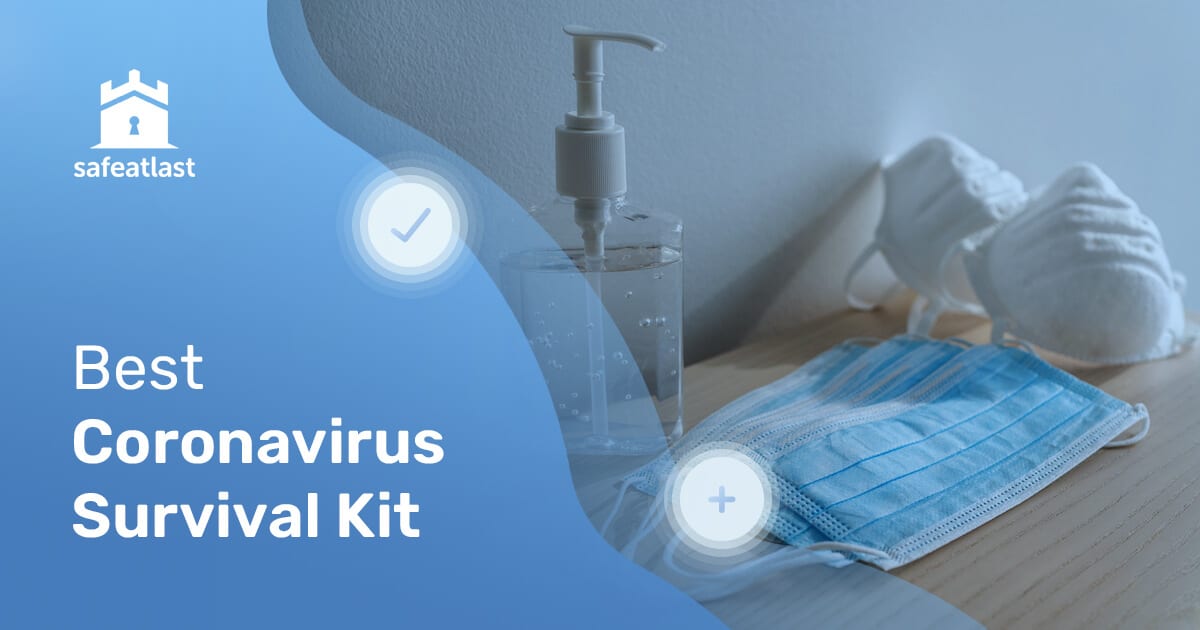
    Coronavirus has been a significant threat to our well-being. It affects virtually every aspect of our lives, leading to many changes and adjustments to how we act and think.

    Even though vaccines are now widely available, it’s still imperative to know how to protect yourself and your family and choose the right products to carry with you at all times. 

    We did some digging and found excellent items you should consider adding to your Coronavirus survival kit. One thing to keep in mind — we did not add any medicine as that’s up to you and your doctor.

    Keep reading to find out how to stay safe!

    Top 5 Coronavirus Survival Kits

    Face mask

    Because the virus is airborne, it’s paramount we all have good face masks. There are tons of disposable and reusable options, but we recommend sticking to CDC guidelines and advice when choosing masks for your COVID survival kit.

    Reusable Face Mask

    Reusable Face Mask

    Price from $27.89

    Pros

    • Comfortable
    • Ethically made
    • No fogging
    • Different sizes

    Cons

    • Long delivery time

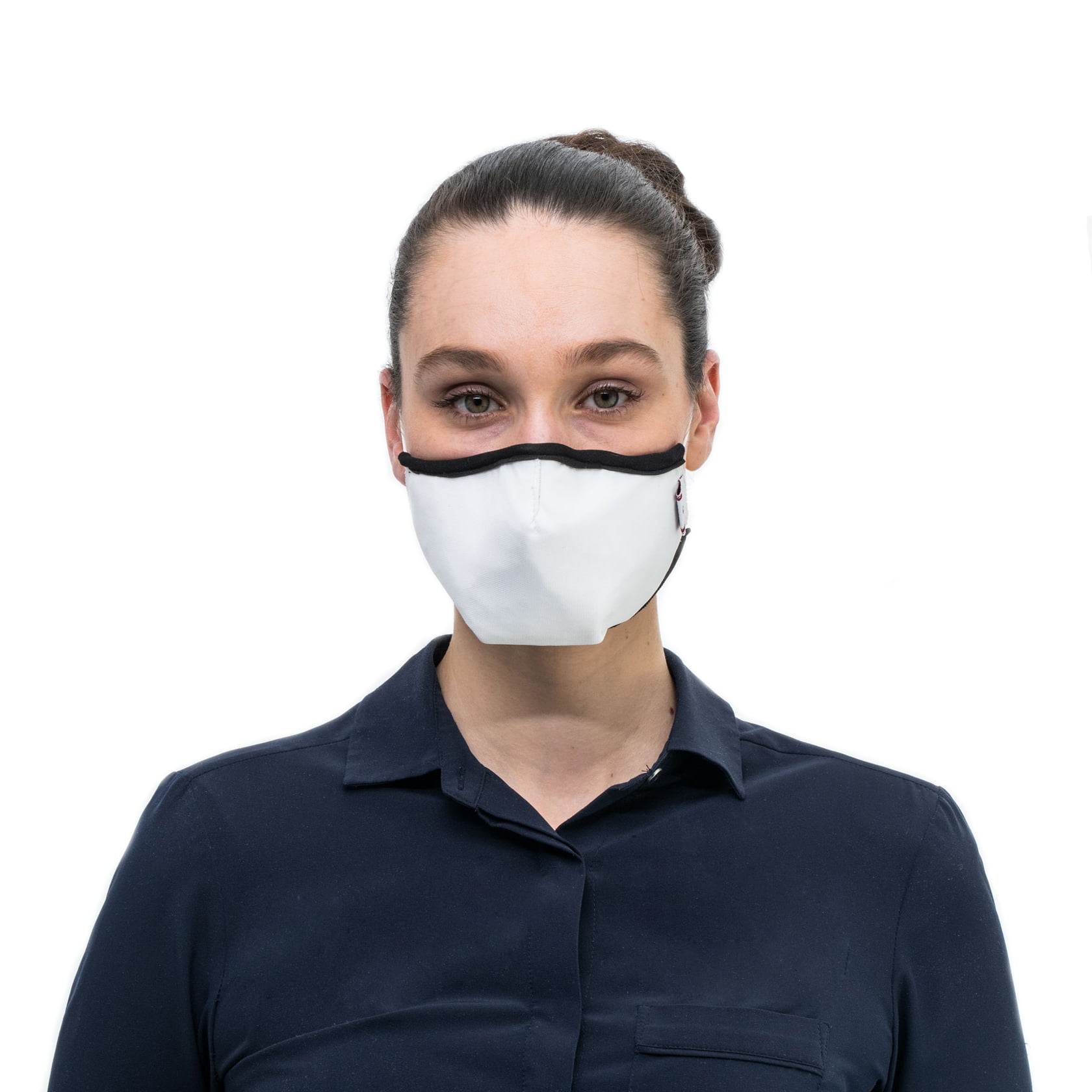
    Ethically designed and manufactured in Canada, these masks provide incredible comfort, excellent breathability, and highly efficient filtering. They’re available in smaller sizes, including for children. 

    The 3D design, with strategically placed flaps, prevents the mask from obstructing your mouth while you speak or breathe. In addition, the unique cushioning on the nose, chin, and cheeks makes them a perfect addition to your family’s COVID essentials kit.

    It has an adjustable nose bridge and elastic ear loops. Moreover, the ëTECH is also an excellent option for people with glasses as it doesn’t fog up. If you’re going to wear your mask for a whole day or in a hot environment, then this feature is of extra importance. 

    This mask follows the ASTM International Standards for workplaces, so you can add it to your back-to-work survival kit for COVID.

    The manufacturer made sure that none of the four layers —  including the outer polyester and inner polypropylene — were not chemically treated. Therefore, these masks are safe for you and for the planet, too. 

    This model comes in different colors, designs, and three available sizes. Furthermore, you can purchase an optional headband or adjustment cord to enhance comfort or enable touchless removal. 

    Mesh laundry bags and canvas bags are also available. Washable storage for your masks is super convenient for every Coronavirus survival kit.

    As the prices decrease with the increasing quantity, you can make a high-volume order, and the company ships across North America. However, delivery time can be longer, up to six weeks, if the item isn’t in stock.

    Frëtt Solution ëTECH mask has three life cycles. First, it serves as a workplace mask, holding shape and keeping efficiency even after 100+ washes. After that, it can be a personal mask. And finally, you can place it into a Zero Waste box so it can get recycled and become part of someone else’s Coronavirus kit.

    Disposable Face Mask

    Disposable Face Mask

    Price from $29.95

    Pros

    • 30 disposable masks
    • N95 quality
    • Reusable mask brace

    Cons

    • Not refundable

    If you don’t like reusable masks or can’t find one that will fit you as snug as you’d like, then this Armbrust the Better Mask High Filtration System is a perfect match for you. 

    Not only do you get 30 disposable masks, but you also get an FTM Essential mask brace for a more secure fit. The mask brace is reusable, so you can use it with other surgical masks you have in your pandemic survival kit to improve their fit and provide a better seal around your face.

    The mask brace has a patent-pending nose cushion design that adjusts to any face shape by applying light pressure across your cheeks, not on your nose. Plus, it comes in three sizes — S, M, L.

    The masks are made of the same material as regular N95 masks and have a particle filtration rate of 98%. As N95 models are always in high demand and can be hard to find, this fantastic mask system can be an excellent alternative for your Coronavirus emergency supply list.

    The Armbrust system complies with F3502 and NIOSH’s new Workplace Performance Plus standards, and the masks are FDA-approved. Everything is made in the US and doesn’t rely on a global supply chain, but it doesn’t offer refunds or exchanges.

    Thermometer

    Thermometer

    Price from $31.19

    Pros

    • Color-coded background
    • Features silent mode
    • Placement sensor
    • Three-year warranty

    Cons

    • No memory for previous readings
    • High price

    The virus is spread through bodily fluids, so it’s best you get a no-touch or forehead thermometer to avoid having to sanitize it in between uses. 

    Our recommendation for a forehead thermometer for your Coronavirus preparedness kit is Braun’s digital no-touch forehead thermometer. It utilizes patented technology that captures two times more body heat than other thermometers, leading to fast and accurate results. 

    Every parent will love this thermometer, especially its silent mode. This feature is particularly useful when you need to take a sleeping baby’s temperature. Additionally, pediatricians highly recommend this model.

    Also, you don’t need to turn the lights on and risk waking up your kid — the LED display is readable in complete darkness. So if you’re building a COVID survival kit gift suitable for parents, this thermometer is a must.

    This model is relatively straightforward to use, providing readings in Fahrenheit or Celsius. The instructions are printed on the box and are easy to follow. 

    To start, remove the protective cap and press the power button to turn it on. After that, place it directly on the forehead or hold it up to two inches away. With this item in your COVID-19 home care kit, you’ll be able to get an accurate reading in less than two seconds. 

    A positioning sensor casts a beam of light on your forehead, so you know the right point for taking temperature. The digital display will show an error if the positioning isn’t proper and indicate if you need to bring the device closer.

    The thermometer displays the reading in different background colors — green for normal, yellow for a slightly higher temperature, and red for a severe fever. That can help you get by even if your eyesight isn’t the best.

    It’s a great addition to the emergency kit for the pandemic, even for the elderly and those with not-so-good vision. What’s more, it beeps ten times if the temperature is over 99.4°F.

    When the battery is at 20%, a flashing battery symbol will notify you. The device comes with two AA batteries and a three-year warranty.

    Keep this in mind, this thermometer doesn’t store previous readings, and it’s a bit pricey. Nevertheless, we’re sure you won’t regret including it in your COVID-19 emergency home care kit.

    Pulse Oximeter

    Pulse Oximeter

    Price from $186.00

    Pros

    • Fast and accurate readings
    • Works for kids and adults
    • Suitable for patients with darker skin
    • Long battery life
    • Four-year warranty

    Cons

    • High price

    A pulse oximeter is a small device that attaches to your finger or your earlobe and measures the oxygen level in your blood painlessly and quickly. Although it cannot detect COVID-19, it is commonly found in Coronavirus preparedness supplies as it can identify low blood oxygen levels early. 

    However, to adequately assess your health, you’ll need to know your blood oxygen baseline level. If you don’t have other symptoms, you should seek medical treatment if the reading falls below 92% or 90%.

    You can receive a pulse oximeter from your doctor or buy one over the counter. OTC oximeters haven’t been FDA-approved because they’re considered wellness or sporting and aviation equipment rather than medical devices.

    American-made Nonin Onyx Vantage 9590 pulse oximeter is an excellent addition to any Coronavirus prep kit. It’s FDA-approved, and it works fast and accurately on adults and children, as well as those with more skin pigmentation or low perfusion. Even if you have nail polish on your nails, it works great.

    It’s powered by two AAA batteries, which will get you up to 6,000 spot checks. The device turns on and shuts off automatically when put on or removed. It has an LED screen you can read from any angle, day or night. 

    Although this pulse oximeter is among the priciest items in our Coronavirus emergency kit, we consider it worth every penny. Rugged construction allows this little device to survive at least 50 drops. 

    A CD with instructions, batteries, a lanyard, and a carrying case are included in the purchase. Turner Medical offers free shipping, and Nonin provides a four-year warranty.

    Gloves

    Gloves

    Price from $19.99

    Pros

    • Latex-free
    • Ambidextrous
    • Durable

    Cons

    • Hard to find in your local stores

    Gloves are a must in a Coronavirus safety kit, as we all know by now. In general, you can go for any disposable gloves from any brand, as long as they fit you and you use them correctly and toss them afterward. 

    Our choice is a pack of 100 disposable Venom Nitrile gloves. Nitrile rubber is powder and latex-free, which is excellent as many people are allergic to latex. 

    Not only are these an essential part of every emergency kit for Coronavirus, but you can also wear them if you have skin conditions, use them in your home or work when cleaning, painting, or handling various chemicals. 

    Mind you, although these are advertised as chemical-resistant, no gloves can give an absolute guarantee. That said, this model is very thick and durable and won’t break easily when exposed to household chemicals and cleaning products. 

    They will handle alcohol and any products from your Coronavirus emergency pack for home sanitization.

    If you’re using the gloves to clean or work around your home, you can reuse them if they’re still intact. You can get Venom gloves in different sizes from your local stores or Amazon. Another benefit is that these gloves are ambidextrous and fully textured for an excellent grip.

    Sanitization Supplies

    Surface Disinfectant

    Sanitization Supplies

    Price from $6.39

    Pros

    • Environment-friendly
    • Non-toxic
    • Effective against COVID-19 and many other viruses

    Cons

    • One bottle can be insufficient

    Envirocleanse-A is an EPA-registered multi-purpose disinfectant for use against COVID-19 on hard surfaces in residential and commercial areas. Not only is it just what you need to survive a pandemic, but it’s also effective against Norovirus, Clostridioides difficile, Listeria, Salmonella, MRSA, and kills odors. 

    The active ingredient is Hypochlorous acid, which is non-toxic, non-corrosive, and non-flammable. The environment-friendly formula is safe to use around kids and pets, and there’s no need for PPE or rinsing. Furthermore, Envirocleanse-A offers a 12-pack.

    Hand Sanitizer

    Planet_Halo_Sanitizer_1Gallon

    Price from $14.95

    Pros

    • FDA-approved
    • Kills 99.9% of viruses, bacteria, germs
    • Doubles as a surface disinfectant
    • Moisturizing formula

    Cons

    • You can’t always get a refund

    A gallon bottle of Planet Halo hand sanitizer should be another staple in Coronavirus emergency supplies. It’s 80% Ethyl alcohol that kills 99.9% of viruses, bacteria, and germs. The formula is FDA-approved and consistent with WHO recommendations. 

    This hand sanitizer is free of fragrance, paraben, triclosan, dye, and preservatives and contains glycerin that moisturizes your skin. It can double as a surface disinfectant, you just need an empty spray bottle.

    The seller offers free shipping and only accepts returns of defective products.

    Antibacterial Wipes

    Antibacterial Wipes

    Price from $19.99

    Pros

    • Cleans 99.9% of all viruses and bacteria
    • Convenient packaging
    • Multi-surface

    Cons

    • Slightly unpleasant smell

    When thinking about how to fight COVID-19 at home, we can’t skip disinfecting wipes. Lysol has a long tradition of doing top-notch cleaning and disinfecting supplies, and they rarely disappoint. 

    These wipes are EPA-tested and proven to eliminate the COVID-19 virus in 15 seconds on hard, non-porous surfaces. They kill 99.9% of bacteria, viruses (Salmonella, Herpes Simplex Type 1, and others), and 95% of allergens. Furthermore, they’re available with three different scents.

    You can come up with practical COVID care package ideas for your loved ones and include a box of these wipes, as Amazon sells packs of six.

    How to Choose a Proper Mask? 

    CDC and WHO recommend that you pay attention to the following when shopping for a mask: 

    Level of Protection

    This feature signifies a mask’s ability to filter harmful airborne particles. There are three levels of protection: 

    • Level 1 — a low barrier that doesn’t protect from sprays, fluids, or aerosols 
    • Level 2 — medium protection from liquids, sprays, and aerosols 
    • Level 3 — maximum barrier protection

    You should look for ASTM-certified disposable masks for your Coronavirus survival kit.  

    Respiratory Protective Equipment Types

    To be able to find the perfect mask, you should know what options to choose from. So, let’s go through the most common types.

    Surgical Masks

    These masks are intended for single use in a medical environment, and they protect against large particles of droplets, splashes, sprays, germ splatters. In addition, they can help shield others from your spit and saliva. 

    However, they are not designed to provide a super-snug fit and are not optimal for virus protection. So, if possible, you should avoid putting these on your Coronavirus survival kit list.

    N95 Respirator 

    This type of disposable mask offers better protection from COVID-19 than surgical masks. It forms a seal around your nose and mouth and prevents the transfer of body fluids, viruses, bacteria, and microorganisms.

    N95 respirators are NIOSH-regulated and commonly used in industrial jobs and health care. 

    Unfortunately, these don’t fit children and may not suit people with facial hair properly. Also, if you suffer from medical conditions that make your breathing difficult, ask your doctor before getting an N95.

    KN95 Masks

    As N95 respirators can be hard to find, your Coronavirus survival kit can benefit from adding KN95 masks. 

    Manufactured in accordance with foreign manufacturing standards, these masks are similar in quality to the previous type and provide equivalent levels of protection. You can use a single KN95 mask up to three times, airing it out in between uses. 

    Reusable (Fabric) Masks

    Reusable masks are non-medical, meaning they don’t provide as much filtration as N95 respirators. That, however, doesn’t mean you can’t use them, as they will indeed protect you from COVID-19 and are environmentally friendly.

    We consider that a high-quality, ethically-made reusable mask is a great item to include in your COVID feel better kit.

    The best thing about these is that you can wear them for some time, wash them, and repeat. Many prefer using this sort of protection as it’s more environmentally friendly. 

    WHO recommends using fabric masks to the general public under 60 years old if they don’t have any underlying health conditions.

    How to Know If a Reusable Mask Is Good? 

    A good reusable mask is one of the essential items in the Coronavirus survival kit. However, it can be challenging to pick the best model for your needs among the multiple options. 

    Reusable masks should have at least two layers of breathable fabric. According to WHO, the innermost layer should be from absorbent material (e.g., cotton), while the middle and outer layers should be non-absorbent (e.g., polypropylene).

    A perfect reusable mask for your Coronavirus emergency list should not leave the space around your nose and mouth uncovered or be ill-fitting. Furthermore, it’s best if it features a nose wire or some other fit-enhancing feature.

    You can test how good a reusable mask is against a candle flame. To do that, hold it in front of your eyes — if you can’t see the light through it, then it’s suitable.

    Another candle test is when you try to blow out the candle through the mask. Again, if you can’t, that’s a good sign, and the mask can be put on your Coronavirus survival list.

    When to Double-Mask? 

    CDC recommends double-masking only if you’re putting a surgical mask first.

    Additional Tips

    • Get a mask brace to improve the fit if you have facial hair;
    • Don’t use N95 with an exhaust valve if sterile conditions are required;
    • Don’t get masks with exhaust valves, so you don’t spread the virus if you are sick; 
    • Children should wear masks that are made for them, so the best fit is achieved.

    People Also Ask

    The best option to test for a COVID infection is PCR (Polymerase Chain Reaction). It’s a molecular technology amplifying the RNA (ribonucleic acid) of the virus. 

    A fluid sample from the nasopharyngeal area is most commonly taken, even though any bodily fluid will do. A long cotton swab is inserted into the patient’s nostril, swirled for ten seconds, and sent to a special lab.

    This particular sample might be the most reliable since the area where the sinuses meet your throat contains the highest volume of the virus. Due to the complexities of the chemical reaction, PCR results come out in one to two days.

    Any soap you have in your house will do the trick. The chemical reaction that happens when soap comes in contact with the COVID-19 molecule can be explained simply. The soap dissolves the lipid (fat) coat on the molecule, thus destroying the virus.

    So you can keep on using the brand you like and have without any worries about its efficiency.

    Coronavirus can’t be transmitted through food or food packaging. However, you should keep a distance from other shoppers and avoid touching your face or eyes after handling different items in the store, especially carts, trolleys, and baskets. 

    Use hand sanitizers whenever possible, as many stores offer those upon the entrance. Also, don’t forget to wash your hands when you get home and after you’ve unpacked the items you’ve purchased.

    Because the Coronavirus is transmitted through cough or sneeze droplets, the immediate area around an infected person could be a source of contact transmission. Research shows that the virus survival time varies depending on the surface and other factors. 

    While it can survive up to 72 hours on stainless steel, but it lives only up to four hours on copper surfaces. It’s important to note that this research is conducted under controlled lab conditions, so the results may vary in the real-life environment. You can kill the virus within a minute using rubbing alcohol or sodium hypochlorite — essential items in your Coronavirus survival kit.

  • Life-Saving Military First Aid Kit Options in 2024

    Life-Saving Military First Aid Kit Options in 2024

    Military medical kits include supplies to handle the leading causes of preventable death on a battlefield. The correct items can save a life, whether the danger is from uncontrolled blood loss from extremities, collapsed lungs, or obstructed airways.

    Only certified medical personnel used to provide medical help on the battlefield. However, nowadays, most soldiers are trained to give self or buddy-aid, which significantly improves survival chances.

    Every option from our curated military first aid kit list can help you save your own life or assist a comrade in need without waiting for a medic.

    Keep reading to find a suitable model for your needs.

    Our Top 3 Military First Aid Kit Recommendations

    1. Blue Force Gear Helium Whisper Micro Trauma Kit Essentials

    Blue Force Gear Helium Whisper Micro Trauma Kit Essentials Supplies, Wolf Gray, HW-TKN-MTKN-ESS-WF
    Features
    • Versatile
    • Rugged bag with water and sand-resistant zipper
    • IR signature reduction hardware
    Price: From $44.99

    2. First MilitaryTrauma Kit (TMK-CL)

    Chinook Combat Lifesaver Kit (TMK-CL)
    Features
    • You can add your favorite hemostatic agent
    • Made in the US
    • Berry Amendment compliant
    Price: From $175.00

    3. First Military Medication Kit

    First Tactical Medication Kit, Yellow, One Size, 180043-275-1SZ
    Features
    • High-quality vintage-looking bag
    • Convenient three-fold design
    • Over 300 items
    Price: From $16.95

    Best Military First Aid Kit Options for 2022

    Blue Force Gear Tactical Operator Response Kit

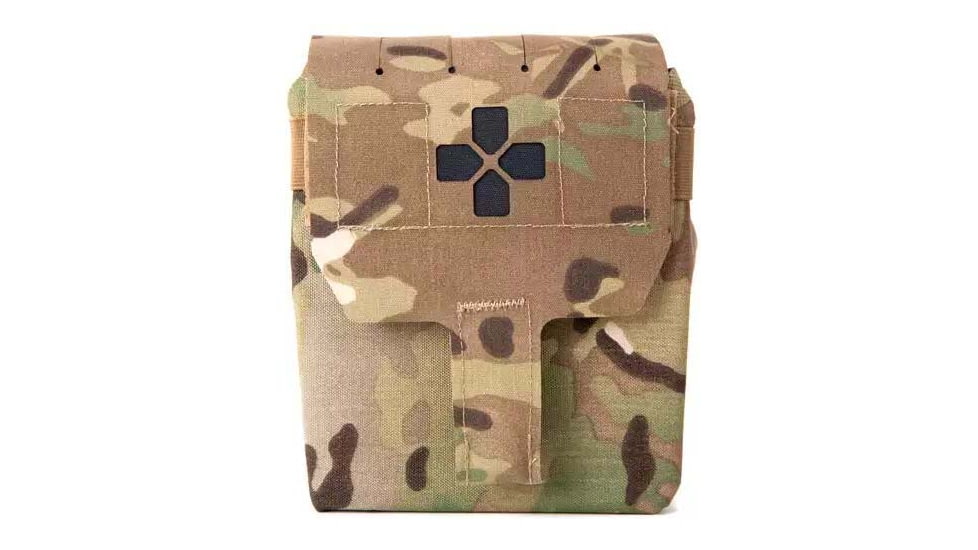
    Blue Force Gear Helium Whisper Trauma Kit Essentials Supplies, MultiCam, HW-TKN-MED-ESS-MC

    Price from $32.95

    Pros

    • Quick opening
    • Various content options
    • Best-quality items

    Cons

    • Requires Medical Device Authorization for purchase

    NAR developed their Tactical Operator Response IFAK for medics and military to prevent the leading causes of death in a tactical environment. 

    The nylon bag is compact, and MOLLE and PALS webbing allows it to be worn on body armor or a vest. Alternatively, you can separately buy the company’s Quick Detach Panel. NAR’s signature Red-Tip Technology one-pull tab makes opening the bag extremely rapid.

    T.O.R.K is the best IFAK for blast trauma and penetrating injuries. It consists of primary life-saving equipment, and you can choose between different options: 

    • The Basic kit holds a premium-quality CAT tourniquet, HyFin Chest Seal (twin pack), Nitrile gloves, trauma shears, emergency trauma dressing, S-Rolled gauze, and Polycarbonate eye shield.
    • The Basic with combat gauze kit focuses on stopping bleeding. It contains all of the items from the Basic kit, plus a Z-fold combat gauze (hemostatic dressing). 
    • The Advanced military med kit with combat gauze includes the items to handle airways obstruction — nasopharyngeal airway (28F) with lubricant, and ARS needle decompression kit (14 G needle, 3.25 inches long) are added to the contents of the previous kit.
    • The Advanced with ChitoGauze kit replaces combat gauze with ChitoGauze (PRO hemostatic gauze). The other contents are the same.

    Blue Force Gear makes among the best first aid kit models for military purposes. The price ranges from $80 to $150, but you know you’re getting products of outstanding quality. However, you need a Medical Device Authorization to purchase it.

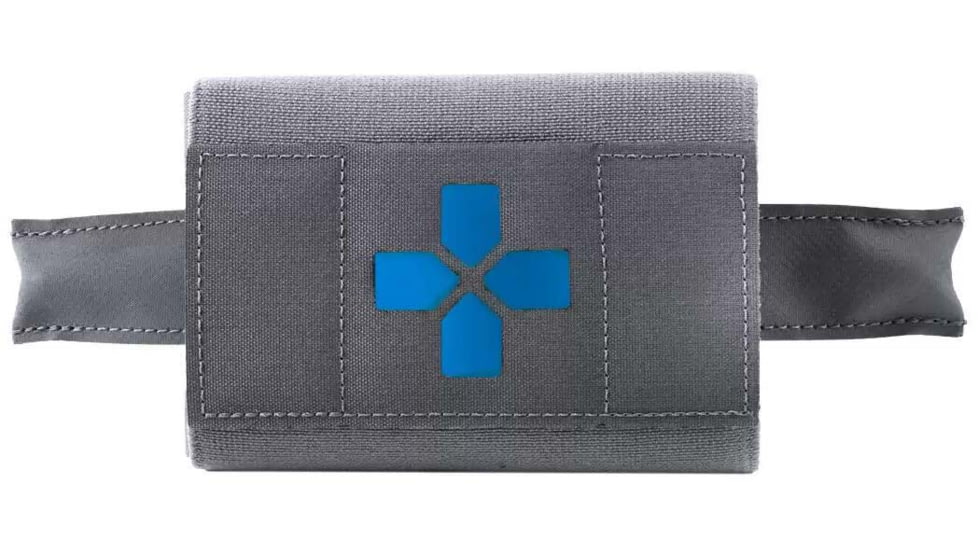
    Blue Force Gear Helium Whisper Micro Trauma Kit Essentials

    Blue Force Gear Helium Whisper Micro Trauma Kit Essentials Supplies, Wolf Gray, HW-TKN-MTKN-ESS-WF

    Price from $44.99

    Pros

    • Versatile
    • Rugged bag with water and sand-resistant zipper
    • IR signature reduction hardware

    Cons

    • Only purchasable with Medical Device Authorization

    NAR’s Combat Casualty Response Kit is probably the best first aid kit for the money. It efficiently deals with the three leading causes of death caused by penetrating trauma — bleeding, tension pneumothorax, and airway obstruction. 

    The bag is made from durable 500 Denier CORDURA solution-dyed nylon with a zipper resistant to water and sand. It’s also self-repairing and features silent 550 cord pulls. The bag is equipped with Ghillie-Tex Near Infrared Signature Reduction hardware, meaning that an IR radar is less likely to detect you. 

    You can carry the kit in several ways — over-the-shoulder, fanny pack, MOLLE webbing, and with attachments for three-day assault packs. The enhanced hip stabilization makes it additionally secure. You can also get this military first aid bag separately.

    Some of the contents of the kit are: 

    • HyFin chest seal and petrolatum gauze 
    • Abdominal emergency trauma dressing 
    • Five pairs of Nitrile gloves 
    • Two ARS needle decompression kits 
    • Two CAT tourniquets and two SAM splints
    • Two 28F nasopharyngeal airways with lubricant 
    • Trauma shears 

    Shears are stored on the front part so that you can access them quickly. Keep in mind you can obtain Squad CCRT tactical first aid kit only if you have Medical Device Authorization.

    Rothco Surgical Kit

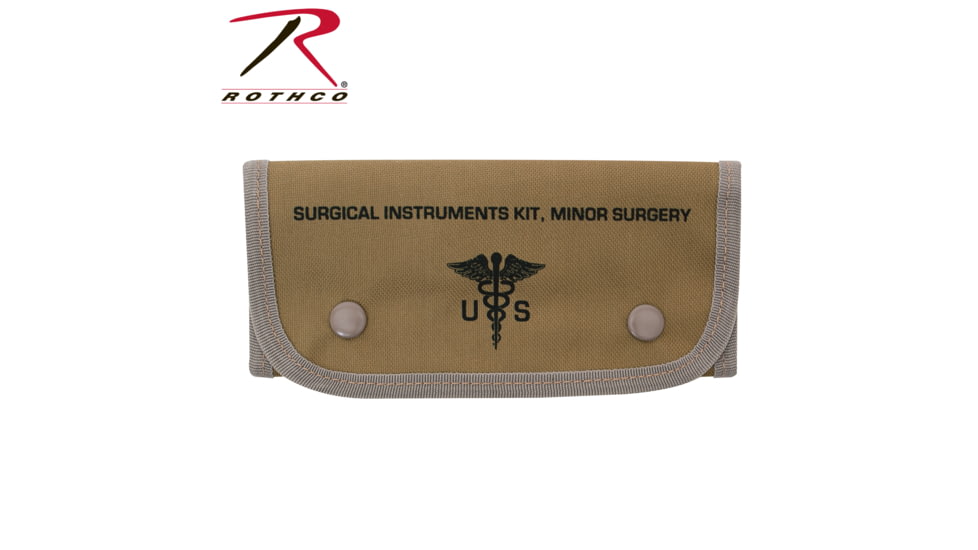
    Rothco Surgical Kit, Tan, 8306-Tan

    Price from $19.99

    Pros

    • Ideal for treating multiple patients
    • You can purchase module contents separately
    • M4L ballistic armored protection

    Cons

    • Very high price

    Savior 7 kit is a perfect match for tactical medics and active shooters. It’s great for treating multiple patients at once or when you can’t restock for a while. It follows the MARCH algorithm — Massive bleeding control, Airway management, Respiratory management, Circulation, Hypothermia. 

    It holds five identical modules with combat medical supplies, and each one is detachable. The MOLLE-compatible MERET Savior 7 PRO Combat Trauma System backpack is made from a 1200 Denier coated thermoplastic elastomer (TPE) that’s resistant to water and stains. 

    It is sleek enough not to slow you down or obstruct your movements, even in narrow or confined spaces. It features a four-point strap system attaching to a vest and disengaging rapidly using quick-release buckles.

    M4L Ballistic Armored Protection makes it one of the finest military medical bags on the market. In addition, it provides excellent armor protection to your vital chest region. 

    The shoulder straps, adjustable waist, and sternum belts are fully concealable. The handles on the top and the sides allow you to carry the bag that way. 

    The bag has zippered pockets to put QuikLitter (sold separately) or IV solutions. It opens by pulling on EZ-Pull to access the medical supplies immediately.

    Some of the RE Savior 7 military first aid kit contents include:

    • Two NAR CAT Gen7 tourniquets 
    • HyFin chest seal (twin pack) 
    • Trauma shears 
    • Two H&H flat fold Thin H bandages 
    • Two NAR S-rolled gauzes 
    • Two thermal blankets 
    • Two 28F nasal airways with lubricant

    Each module features a loop where you can put a label. Bleeding Control labels are available for purchase. Even though we heartily recommend the bag, we have to say it’s costly — short of 1000 bucks.

    If you don’t want to spend that much, you can get five army first aid kit modules separately in a sealed poly-bag for about $559.99. Rothco Surgical Kit offers payments in four interest-free installments with Klarna.

    First Military Trauma Kit

    Chinook Combat Lifesaver Kit (TMK-CL)

    Price from $175.00

    Pros

    • You can add your favorite hemostatic agent
    • Made in the US
    • Berry Amendment compliant

    Cons

    • Requires Medical Device Authorization

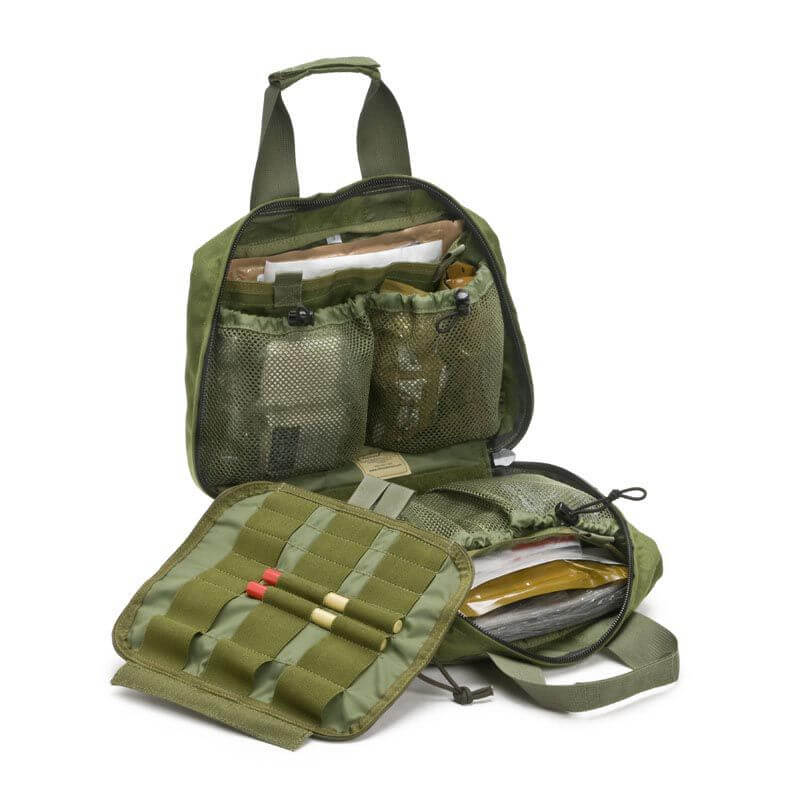
    TMK-CL comes in a MOLLE-compatible bag in multiple colors and is an excellent combat first aid kit. The bag has a removable central panel with loops for attaching smaller pieces of equipment. 

    It also features a bunch of mesh, canvas, and clear pockets and pouches, with zipper closure and elastic straps, and can be purchased separately. 

    500 Denier CORDURA nylon bags are made in the US and are Berry Amendment compliant. The waist strap can also be worn on the shoulder. Also, side straps prevent the combat medical kit contents from falling out even if the bag is open. 

    Some of the contents of the kit are:

    • Two CAT tourniquets and four compressed gauzes
    • Two Israeli bandages and an Israeli abdominal bandage
    • Two decompression needles
    • Two nasopharyngeal airways (28 F) with lubricant
    • Bolin chest seal and HALO chest seal (twin pack)
    • Splint and two Cravat triangular bandages
    • CoFlex UMAFD

    You can add the hemostatic agent of your choice to this field medical kit. You can pick among QuikClot, QuikClot XL, HemCon ChitoGauze, and CELOX. Bear in mind that you’ll need a Medical Device Authorization to purchase this kit.

    It may substitute some items to ship your kit on time. Unfortunately, they do not deliver outside the US.

    First Military I.V. First Aid Kit

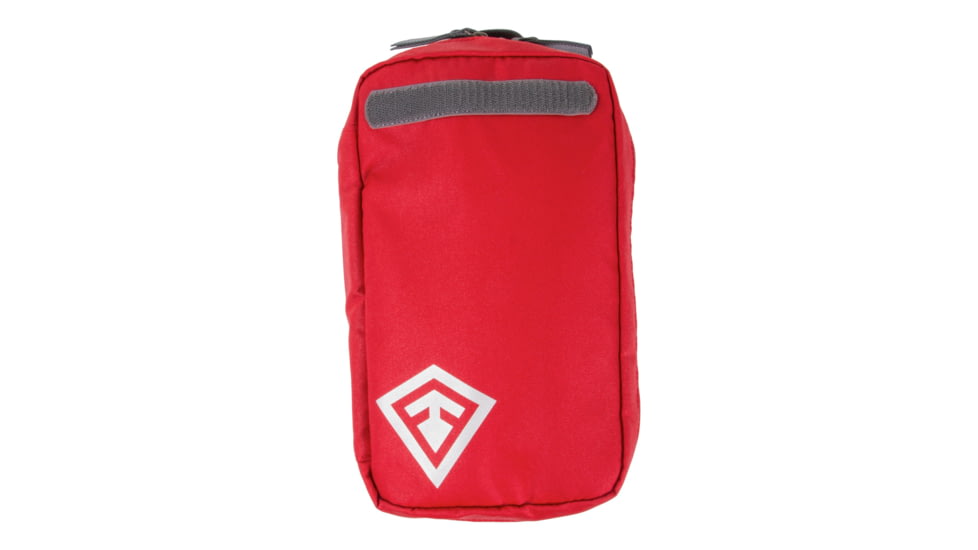
    First Tactical I.V. First Aid Kit, Red, One Size, 180042-400-1SZ

    Price from $44.74

    Pros

    • Padded back and adjustable shoulder straps
    • Easy access
    • Multiple compartments for convenient storage
    • Over 300 life-saving supplies and equipment
    • Features a hydration bladder port

    Cons

    • Heavy when fully loaded
    • No CAT tourniquet

    STOMP military medical kit comes either in a MOLLE backpack with multiple color options or as contents only. You can also get the empty backpack separately. It is made from durable nylon materials that withstand harsh conditions and regular use. 

    It has two interior sections with multiple compartments, including mesh pockets, velcro, and zippered pockets. The bag has MOLLE webbing so that you can attach additional military first aid pouches. 

    The front velcro is excellent if you want to attach patches or ID. This fantastic backpack even has a hydration bladder opening on the inside.

    It’s comfortable to carry, featuring a padded back, comfortable adjustable shoulder straps, and a waist belt. The top and sides also feature grab handles, and all zippers are waterproof. 

    The bag is designed to enable quick access to life-saving items. Each section can be opened flat, so the inside pouches and pockets are easy to see and reach.

    More than 300 professional items have you covered for any emergency. The military first aid items include:

    • Multiple pairs of Nitrile gloves 
    • Various bandages and wipes
    • Different hemostats and splints (universal and SAM)
    • Dressings (trauma, multi-trauma) and various gauzes
    • Two pairs of EMT shears
    • Eye-skin wash and pads
    • Butterfly closure strips, scalpel handle with multiple blades, and stethoscope 

    The kit doesn’t come with a CAT tourniquet, however. For the full list and more details about this military trauma kit content, visit it’s official website.

    The biggest downside of this kit is that the backpack gets really heavy when it’s fully loaded, especially if you add more of your own items to it. But, other than that, it’s a perfect medkit for trauma and basic needs.

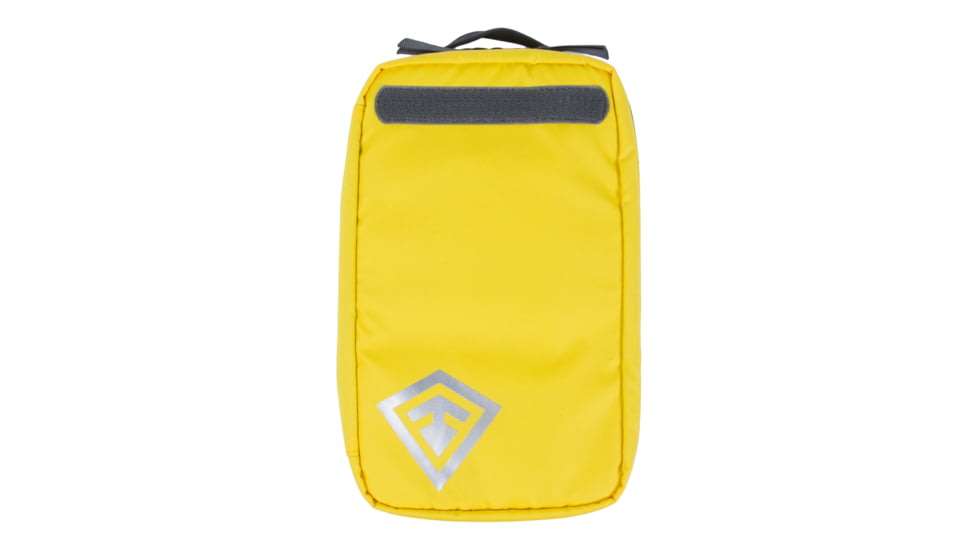
    First Military Medication Kit

    First Tactical Medication Kit, Yellow, One Size, 180043-275-1SZ

    Price from $16.95

    Pros

    • High-quality vintage-looking bag
    • Convenient three-fold design
    • Over 300 items

    Cons

    • No CAT tourniquet

    The M-17 vintage military first aid kit bag remains true to its original Vietnam design, including olive drab color and classic metal parts, with slight updates concerning ergonomics. You can buy the bag, made from tough nylon fabric, separately. 

    It has a carrying handle and adjustable shoulder straps so that it can be worn both ways. Moreover, it features a web belt, sternum strap, and four adjustable side straps for additional contents’ safety.

    The three-fold pack features six individual interior pockets that allow easy access to over 300 items. M-17 army medical kit includes a wide assortment, and some of the products are:

    • Bandages, pads, and dressings
    • Wipes, bandage strips, and pads
    • Scalpel handle with blades, suture sets, and stethoscope 
    • Tongue depressors and airway
    • Tweezers, hemostats, and ammonia inhalants
    • Burn spray and burn aid packages
    • Trauma shears, butterfly strips 

    For a complete list and more details about the items, you should visit it’s official website. Unfortunately, this military medic kit also comes without a CAT tourniquet, but we recommend purchasing one separately.

    Rothco MOLLE Military Trauma & First Aid Kit Pouch

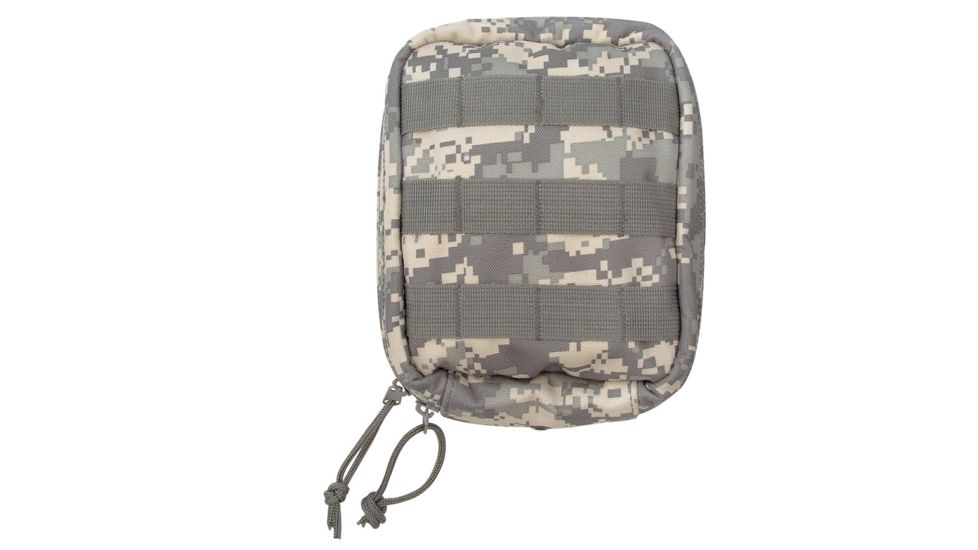
    Rothco MOLLE Tactical Trauma & First Aid Kit Pouch, ACU Digital Camo, 9766-ACUDigitalCamo

    Price from $31.99

    Pros

    • Excellent-quality CORDURA nylon bag
    • Berry Amendment compliant
    • Eligible for FSA, HSA, and HRA reimbursement
    • Easy-to-open vacuum-sealed trauma kit

    Cons

    • Medical Device Authorization needed

    Rothco MOLLE compliant and US-made. It offers some of the best trauma kit options you can buy. Its trauma kit pouches come with a Fatboy or a Tallboy design in multiple colors. Both open rapidly, with a pull of the handle, and are MOLLE and PALS-compatible. 

    The bags are 500 Denier CORDURA nylon with cloth interior, binding tape on all seams, and dirt-resistant zippers. They have a central compartment, two interior pockets, an inside flap with webbing, and shock cord closure. 

    With the bag, you’ll get an ITS Med PVC patch that you can attach to velcro on the outside and a replaceable shock cord and cord lock. You can purchase ITS military first aid kit bags empty, or you can select some or all of the following: 

    • ETA trauma kit
    • SOFT-T tourniquet
    • CAT tourniquet
    • A pair of long or short MALICE clips
    • Clauss titanium bonded shears 

    The ETA trauma kit treats the leading preventable causes of death. It features vented chest seals, QuikClot gauze, 28 ft nasopharyngeal airway, decompression needle, compressed gauze, pressure dressing, and a pair of Nitrile gloves. 

    It’s vacuum-sealed in ITS puncture-resistant TruFlex material, which is more durable than others on the market. It also opens more quickly than other comparable products. 

    ETA military emergency medical kit is exceptionally compact, too. It fits in your pocket, any bag, glove box, and, of course, in a Fatboy or Tallboy pouch.

    This kit is eligible for FSA, HSA, and HRA reimbursement. In addition, it offers free shipping on all US orders that exceed $75 and for all US members.

    However, if you don’t have the Medical Device Authorization needed for purchasing this kit, you should consider another military first aid kit for sale.

    What is Medical Device Authorization?

    Reading this article, you’ve noticed particular kits require a Medical Device Authorization to purchase. So, what is it, and why is it so important?

    Although many medical devices are widely available without any authorization or prescription, some are FDA-restricted. For example, a prescription medical device labeled “Caution” or “Rx Only.” is the QuikClot combat gauze found in many military medical kits. 

    FDA guidelines’ definition for a prescription device is as follows:

    A device which, because of any potentiality for harmful effect, or the supervision of the method of its use, or the collateral measures necessary to its use is not safe unless under a practitioner licensed by law to direct use of this device, and hence for which adequate directions for use cannot be prepared.”

    A lot of military first aid kit options on the market include items with the characteristics mentioned above. That means that an “Rx Only” device can be purchased exclusively by a licensed medical practitioner.

    Consequently, Federal law demands that you present a valid license if you’re a healthcare provider or if you’re working under an individual who’s licensed to purchase them. In any other scenario, you won’t be able to buy such kits. 

    People Also Ask

    What goes in a military first aid kit?

    These kits must contain items that address the three leading causes of preventable death on a battlefield — blood loss, obstructed airways, and collapsed lungs. The contents should be packed into a waterproof or water-repellent bag or utility pouch.
    Some of the recommended items include:
    – Tourniquets 
    – An assortment of bandages (elastic and triangular)
    – Israeli dressings
    – Pressure dressings
    – Combat gauze (hemostatic)
    – Nasopharyngeal airways
    – Chest seals
    – Abdominal pads
    – Surgical adhesive tape

    What is in a Level 3 first aid kit?

    Level 3 first aid kit is designed for high-risk or large worksites that are more than 20 minutes surface travel from medical aid or hospital. Some of the items in these kits include but are not limited to:
    – Emergency blanket
    – Adhesive dressings
    – Adhesive tape rolls
    – Tourniquet (windlass style)
    – Triangular bandages
    – Sterile pressure dressings
    – Sterile abdominal dressings
    – Conforming gauze bandages
    – Sterile gauze dressings
    – Face shields

    What is the best IFAK?

    NAR’s Tactical Operator Response Kit (TORK) is among the best options. Not only does it come in a compact MOLLE bag with a one-pull tab for rapid access, but it can also be customized to your needs. 
    NAR offers several options for kit contents: 
    – Basic — CAT tourniquet, HyFin Chest Seal (twin pack), Nitrile gloves, trauma shears, emergency trauma dressing, S-Rolled gauze, and Polycarbonate eye shield;
    – Basic with combat gauze — everything listed above plus Z-fold combat gauze; 
    – Advanced with combat gauze — added combat gauze, nasopharyngeal airway with lube, and needle decompression kit;
    – Advanced with ChitoGauze — the same as the previous model with ChitoGauze instead of combat gauze.

    What is the best first aid kit?

    Our recommendation for an excellent model is the Combat Casualty Response Kit (Squad CCRT) from NAR. It addresses the leading causes of death — hemorrhaging, airway obstruction, collapsed lungs. 
    Furthermore, the bag is tough, with water and sand-resistant zippers. And finally, it features Ghillie-Tex Near Infrared Signature Reduction hardware, so you’re less likely to be detected by an IR radar.
    This NAR’s military first aid kit comes with a wide variety of items, some of which are:
    – HyFin chest seal
    – Petrolatum gauze
    – Abdominal emergency trauma dressing 
    – Nitrile gloves
    – Needle decompression kits
    – CAT tourniquets

  • The Best Equipped Tactical First Aid Kit Options

    The Best Equipped Tactical First Aid Kit Options

    A tactical first aid kit can mean the difference between life and death under challenging conditions. The supplies they contain can help with emergencies and prevent the situation from getting worse. 

    The standard kits can’t help you with deep cuts or broken limbs, while a specially prepared assortment of supplies can make all the difference. 

    Here is our review of the best first aid kit options on the market and tips on what to look for when choosing.

    However, to ensure you know how to use all of the pieces correctly, we recommend undergoing the appropriate certification and training procedures.

    Our Top 3 Recommendations

    1. Lightning X Spread Eagle Molle Tactical IFAK

    1. Lightning X Spread Eagle Molle Tactical IFAK
    Features
    • Excellent for gunshot/stab/puncture wounds
    • Equipped for gun range accident
    • A limited lifetime warranty
    Price: From $129.99

    2. North American Rescue Solo IFAK

    2. North American Rescue Solo IFAK
    Features
    • Complete kit for one user
    • Rugged pouch
    • For minor and major injuries
    Price: From $110.70

    3. Rescue Essentials First Responder Vehicle Kit

    3. Rescue Essentials First Responder Vehicle Kit
    Features
    • High-quality bag
    • Comfortable to wear
    • Plenty of excellent products
    Price: From $11.95

    The Best Tactical First Aid Kit Options

    Blue Force Gear Micro Trauma Kit

    Blue Force Gear Micro Trauma Kit

    Price from $88.95

    Pros

    • Belt and Molle compatible
    • Compact
    • Easy access
    • Essential/Pro/Advanced supplies
    • Military-grade pouch materials and supplies

    Cons

    • Tourniquets are not included
    • Medical authorization is required to purchase some of the models

    Blue Force Gear’s Micro Trauma Kit Now (Micro TKN) is designed with law enforcement pros, military, and hunters in mind, but it is suitable for everyone with similar needs. 

    With this EDC first aid kit, you get the essential trauma supplies in a convenient little pouch that you can carry on your belt or a Molle (Modular Lightweight Load-carrying Equipment) platform. 

    Medical supplies are organized into a removable insert for speedy access. You can pull the BLIP tabs with one finger from the left or right side to get the insert out. That is a great design for tactical medical kits. 

    The pouch is made from military-grade materials and threads so that it will last a long time. You can customize its appearance with the inserts for the laser-cut medical cross insignia at the front. It comes with options in various colors and a glow-in-the-dark one, or you can simply leave the insert out. 

    You can also choose among Essential, Pro, and Advanced kit supplies or get the empty pouch.

    • In the Essential tactical first aid kit, you get one of each — Mylar hypothermia blanket (30 sq ft unfolded), pair of Nitrile latex-free trauma gloves, mini compression dressing (4 in), QuikClot bleeding control dressing (3 in wide, 4 ft long), and flat fold tape (2 in wide, 100 in long). This kit helps prevent hypothermia, stops bleeding, and is suitable for inexperienced users. 
    • The Pro kit comes with a Swat-T pressure device, Quikclot combat gauze LE (1 in wide, 4 yds long), hypothermia blanket (30 sq ft unfolded), and pair of Nitrile trauma gloves. That is a great first responder and police trauma kit at the local, state, and federal levels. However, the QuickClot combat gauze LE requires medical authorization for purchase.
    • The Advanced fill includes a QuikClot combat gauze MIL (1 in wide, 4 yds long), a pair of Nitrile trauma gloves, a twin pack HyFin chest seal (4.75 in by 4.75 in), a mini compression dressing (4 in), a flat fold tape (2 in wide, 100 in long), a decompression needle (14 ga, 3.25 in long), a pair of Nitrile trauma gloves, and a nasopharyngeal airway (size 28 French). 

    The advanced tactical medical gear follows the MARCH protocol from TCCC training for treating traumatic injuries. QuickClot combat gauze is designed for military and first responders at the federal level. You’ll also need proof of medical authorization to purchase these items. 

    Tourniquets, apart from the Swat-T pressure device that can be used as a second tourniquet, are not included in any of these options, so it’s best to buy them separately. This tactical first aid kits pouch won the NRA Golden Bullseye “Accessory of The Year” award in 2018.

    Lightning X Spread Eagle Molle Tactical IFAK

    Lightning X Spread Eagle Molle Tactical IFAK

    Price from $129.99

    Pros

    • Excellent for a gunshot, stab, and puncture wounds
    • Well-thought-out and molle-compatible design of the bag
    • Equipped for gun range accident
    • A limited lifetime warranty

    Cons

    • You must fit the products into the bag yourself

    As you know, Shooters’ first aid kit is a vital piece of equipment on every shooting range, and Lightning X Spread Eagle kit is an excellent Molle-compatible option. It can save your life in critical situations, not only for gunshot-related incidents but with stabbing and puncture wounds.

    The laser-cut construction is double-layered, with double elastic loops and pocket depth. The bag sports additional velcro and loops for tools on the front and sides. It attaches to the vest, bag, pack, or a Molle platform with modular webbing straps. 

    Lightning X’s best gun range bag first aid kit lies flat when the zipper is opened and has four storage flaps for supplies and equipment. On the front lap, there are corded loops with adjustable drawstring fasteners, ideal for smaller items. The design of the bag and all the compartments make one-handed access easy.

    This kit comes with a rubber red cross patch you can attach to the velcro on the front of the bag. You can also purchase the bag separately if you wish to build the kit on your own.

    This shooting range first aid kit contains everything you might need in a gunshot emergency:

    • NAR Combat Action Tourniquet (CAT) and Gen 7 tourniquet 
    • NAR HyFin Vent Chest Seal (Twin pack)
    • Compressed Krinkle gauze and self-adherent gauze (2 in) 
    • Conforming stretch roll gauze (2 in, 3 in, 4 in) 
    • Two pairs of nitrile gloves 
    • Israeli combat pressure bandage (4 in) and burn dressing (4 by 4 in) 
    • Woven elastic bandage with clips (2 in) 
    • QC comb gauze Z-folded LE (3 in by 4 yds) 
    • Nasal airway 28FR 
    • Abdominal (ABD) pad (5 in by 9 in)
    • EMT shears (7.5 in)
    • Thermal blanket

    The only possible downturn to Lightning X’s gun range first aid kit is that the contents don’t come pre-packed into the bag. Nonetheless, you can arrange them in a way that works for you. Lightning X products have a limited lifetime warranty.

    Surviveware Survival Trauma First Aid Kit

    Surviveware Survival Trauma First Aid Kit

    Price from $84.95

    Pros

    • Various ways of carrying
    • Heavy-duty construction
    • High-quality supplies for stopping bleeding and treating bone injuries
    • Excellent customer service and return and refund policy

    Cons

    • It comes without an airway tube and hemostatic agent

    Surviveware offers different tactical medical kits that are FSA eligible and HSA approved. We chose a model that comes with a complete assortment of supplies, well-organized into sleeves and pockets.

    The Molle-compatible removable pouch is made of heavy-duty polyester (600 Denier), with triple-stitched lining and durable zippers. A MED patch comes with the bag and attaches to the velcro on the front. It is water-resistant but not waterproof. 

    This kit focuses primarily on stopping bleeding, treating lower body temperature shock, and bone fractures and sprains. Exsanguination is the most significant cause of preventable death in all accidents, so this is an excellent set in such situations. 

    Surviveware’s fully stocked molle tactical trauma kit first aid pouch comes with: 

    • Trauma shears and NAR trauma dressing 
    • Recon Medical tourniquet and pressure bandage 
    • Antiseptic towelettes and hygiene supplies
    • Compressed gauze and gauze pads (2.95 in by 2.95 in) 
    • HyFin chest seal (twin pack) 
    • Thermal blanket 
    • 18-inch splint roll 
    • Permanent marker 
    • Safety glasses and three pairs of nitrile gloves 
    • Manual and room to add more 

    Surviveware ensures you never get expired products, and they are partners with reputable manufacturers — Recon Medical and North American Rescue (NAR) — to provide premium-quality med supplies. However, the set lacks an airway tube and hemostatic agent.

    It’s one of the best tactical first aid kits for police officers and a perfect choice for every tactical medic, first responder, hunter, outdoorsman, military, or keeping in your car.

    Thanks to the Molle platform, you can carry it in various ways.The website offers free shipping for orders over $25, hassle-free returns, and a 100% money-back guarantee.

    Surviveware kits aren’t the cheapest, but the website offers the possibility of getting this best tactical trauma kit in four interest-free payments with Affirm. The customer service is also fantastic.

    Lightning X Stocked Tactical Kit Molle Backpack

    Lightning X Stocked Tactical Kit Molle Backpack

    Price from $319.99

    Pros

    • High-quality supplies for different emergencies
    • Comfortable
    • Hydration bag

    Cons

    • You have to fill the bag yourself

    Sometimes you’ll find yourself in a situation where more than one person could be injured, so it’s best to be prepared. The fully equipped EMS MB45 modular tactical medical backpack features Molle platforms on the front and back sides so that you can attach additional pouches, tools, patches, and badges. 

    It’s designed to be comfortable on your back — the shoulder straps won’t cut into your flesh or cause any discomfort. You can wear it for extended periods, and the hidden hydration port is tremendously helpful on those occasions.

    A 2.5L hydration bladder is included with this tactical first aid kit Molle bag, but the bag can hold any kind or size of a container with a left or right-side opening. 

    The main compartment holds four removable and mutually interchangeable zippered pouches, all ready to go. These have one transparent side, so you can easily see where you put the items. 

    The bag contains pretty much anything you may need in emergency scenarios of chest trauma, hemorrhage control, and airway management. Here are some of the tactical first aid kit contents, and you can see the complete list on its website:

    • Multiple sizes and types of bandages (self-adhesive, elastic ace, triangle, QuickClot, Israeli) and chest seal and cervical collar 
    • Pads (gauze, ABD, eye, sting, and bite relief) and band-aids
    • Wipes (Iodine, Isopropyl Alcohol) 
    • Splints (SAM finger splint, roll) 
    • Sprays (burn, antiseptic, hemostatic) and eyewash
    • Dressing (trauma, burn) and shears (bandage, trauma)
    • Airway kits (Berman, nasal), cold packs, and tourniquet
    • Ammonia ampoules and Iodine antibiotic ointment
    • Stethoscope, digital blood pressure cuff, and pulse oximeter
    • CPR and MPR masks and gloves, a suture set, kelly hemostats, and tweezers 

    This tactical first aid bag also includes a First Aid Guide. However, it comes with the contents separately. It may seem challenging to fit everything inside at first, but you’ll get everything conveniently arranged in the bag with a bit of practice.

    North American Rescue Solo IFAK

    North American Rescue Solo IFAK

    Price from $110.70

    Pros

    • Complete kit for one user
    • Rugged pouch
    • For minor and major injuries

    Cons

    • Some of the supplies require training to be used

    North American Rescue (NAR) offers one of the best complete IFAK kit options for treating both minor and life-threatening injuries. 

    The kit comes in a sturdy, compact pouch that you can wear on a belt or vest. The bag weighs only 1.35 lb and is 5 in long, 3.5 in wide, and 7.5 in high. It’s Molle-compatible and has velcro and additional loops for attaching patches or tools. The set features a luminous MED patch. 

    For treating severe injuries, you get the following items — a CAT tourniquet, a QuikClot dressing, a compressed gauze, an emergency trauma dressing, and a thermal blanket. NAR’s Solo tactical first aid kit includes various items, among which are: 

    • Dressings, bandages, and trauma shears  
    • Gauze, pads, petrolatum gauze, and flat fold surgical tape 
    • Burntec burn dressing and triangular bandage for splinting
    • Clear adhesive dressings 
    • Wound closure strips and irrigation syringe 
    • Flexible fabric bandages 
    • Silver bandages 
    • Polycarbonate eye shields 
    • Penlight and permanent marker
    • Pair of Nitrile gloves, CPR mask, and splinter forceps

    Solo is among the best first aid kit with tourniquet options, which will keep a patient stable until the paramedics come. NAR is the number one pick for military and combat medics and is ideal for sportspeople, hunters, and adventurers.

    Our recommendation is to keep one of these kits in your car or take them on the go as an everyday carry kit.

    Rescue Essentials First Responder Vehicle Kit

    Rescue Essentials First Responder Vehicle Kit

    Price from $11.95

    Pros

    • High-quality bag
    • Comfortable to wear
    • Plenty of excellent products
    • Space to add more

    Cons

    • Size

    Rescue Essentials’ vehicle kit for first responders is one of the best tactical medical bags you can purchase. It’s developed for Denver International Airport vehicles to provide emergency help until the paramedics arrive at the scene. 

    The bag, which you can also purchase empty, is exceptionally rugged. It’s made of 1000 Denier polyester and is comfortable to wear thanks to the adjustable shoulder strap. 

    The main compartment has three sections — two zippered pockets on the sides, two pouches on the front, a zip-flap pocket on the front, and various tool loops. Quick access is guaranteed due to quick-release buckles.

    Rescue Essentials’ best tactical first aid kit can be used for minor and major wounds and burns, minor to severe bleeding, bone injuries, such as splinting and immobilization, and trauma. Different medications and topicals also come with the kit:

    • Gen7 CAT tourniquet 
    • Trauma shears and pressure, and Tegaderm dressing 
    • ABD pads and HyFin chest seal (twin pack) 
    • Gauze (compressed, hemostatic), roller gauze, and gauze sponges
    • Thermal blanket 
    • Eye pads and gel, and fox eyeshields 
    • Different bandages and adhesive tape
    • Needle forceps
    • SAM splint and finger splints 
    • Cold packs, burn gel, and dressings 
    • Glucose tablets, Aspirin and Diphenhydramine  
    • Antibiotic ointment and antiseptic wipes 

    Tactical trauma kits should feature some personal safety equipment. Rescue Essentials gives you multiple pairs of Nitrile gloves, hand sanitizer, and a CPR pocket mask. Of course, there’s plenty of space to add other needed items. 

    This kit may be a bit expensive, but remember you get top-notch items. Rescue Essentials’ website offers you four interest-free payments with Klarna. As we already said, you can buy the bag empty and build your own kit or buy only the supplies.

    Elite First Aid Tactical Trauma Kit #3

    Elite First Aid Tactical Trauma Kit #3

    Price from $169.95

    Pros

    • It comes with 200+ items
    • Comfortable backpack
    • Easy access

    Cons

    • The bag isn’t waterproof

    Elite trauma first aid kit comes in a rugged backpack with solid zippers, comfortable, padded, adjustable shoulder straps, additional sternum straps, and a web belt. The back panel features a velcro strip, where you can attach patches and other panels. In addition, you have a few color options — red, black, tan, and olive. 

    Elite first aid tactical trauma kit offers easy access to the items and leaves more space to customize by adding your own supplies. The backpack, which you can also purchase empty, is constructed from sturdy but lightweight nylon. The material is water-resistant but not waterproof. 

    It features padded shoulder straps and many zippered compartments for supplies. What’s more, Molle webbing lets you attach other pouches or tools onto the bag’s exterior. 

    The kit includes over 200 items, perfect for military, law enforcement, first responders, and medics. You can find the complete list of items on the website, but among them, Elite tactical first aid kit features:

    • Various bandages (bleed stop, triangle, elastic, knuckle) 
    • Pads (eye, abdominal) 
    • Wipes (after bite, antiseptic) and calamine lotion
    • Strips (bandage, butterfly) and adhesive tape
    • Hemostats, suture sets, and tweezers
    • Trauma shears, dressing, and tourniquet 
    • Stethoscope and blood pressure cuff kit
    • Instant ice packs 
    • Pair of latex gloves and tongue depressors
    • Antibiotic packages, ammonia inhalants, and pain relievers

    Advice for Choosing the Bag for the Best Tactical First Aid Kit 

    Purchasing a ready-made trauma kit is cheaper, however, you might have unique needs or want to cater to particular types of injuries more often. It’s also possible that you find none of the available options fulfill your needs and are missing some equipment. Then it’s best to build your own kit. 

    • You can get any trauma first aid kit from your local pharmacy or online and add to it. That’s a good option, but if you opt for building the best survival medical kit from scratch, you’ll first have to choose the type and size of the bag to fit all the supplies in and easily carry it around. 
    • Consider your needs. For example, if you spend a lot of time outside and possibly in the rain or water, your bag needs to be waterproof and resistant to elements. If you’re going to walk a lot, it’s easiest if the pouch has comfortable shoulder straps. 
    • You don’t need a massive bag if you’re building an EDC kit — a simple belt mount, ankle, or leg-wrapping pouch will do.
    • Tactical first aid bags with the Molle platform are always a great option. They offer quick access and can be attached to other bags or equipment.
    • You could separate the items into a few categories and compartments or individual pouches, boxes, or zip lock bags — such as trauma, bone injuries, chest injuries, personal protective equipment, etc. That way, everything is neatly organized. 
    • Remember that you have to access the contents speedily and efficiently in case you have to react immediately. 

    People Also Ask

    A tactical kit should consist of reliable life-saving gear packed neatly and compactly for quick access. Since these kits are meant for severe injuries and emergencies, they should include the following:

    • Patient assessment tools (stethoscope, blood pressure cuff, pulse oximeter)
    • A good-quality tourniquet (Everlit Survival SOFT-T, SWAT-T)
    • Gauze, pressure dressings, and trauma shears
    • Burn care 
    • Chest seals and decompression dressing
    • Hemostatic dressing
    • Israeli bandage
    • Thermal blanket 
    • Splint 
    • Airway stabilization tools
    • Common over-the-counter medications, antibiotic and allergy medications

    A caregiver should also have personal protective equipment, such as masks, gloves, and eye protection.

    NAR makes an excellent IFAK kit for one user. It’s called solo IFAK and comes in a rugged, compact pouch that can be mounted onto a belt or vest. In it, you get everything you need:

    • to treat minor to severe injuries — irrigation syringe for wounds, bandages, gauze pads, wound closure strips, etc. 
    • to stop bleeding — a CAT tourniquet 
    • to deal with shock after blood loss — emergency thermal blanket 
    • or make a splint for bone injuries — triangular bandage 

    These are some of the items included, and you’ll also get essential personal protection equipment like Nitrile gloves, polycarbonate eye shields.

    Lightning X’s EMS modular medical backpack with an elaborate first aid kit offers everything you need for treating more than one injured person. It’s ideal for keeping in your home or taking it with you on adventures. 

    It comes with a large number of emergency and survival supplies, including:

    • Bandages, dressings, and chest seal
    • Wipes, gloves, and masks
    • Splints and cold packs 
    • Sprays and airway kits 
    • Gauze and band-aids
    • Stethoscope and pulse oximeter
    • Tourniquet
    • Suture set and hemostats
    • Thermal blanket 
    • 2.5-liter hydration bladder, comfortable to wear for a long time and much more

    Individual First Aid Kit, or IFAK, is a well-curated emergency kit meant for treating the most common and most dangerous life-threatening injuries until paramedics arrive. That isn’t a standard first aid kit but rather a collection of life-saving equipment.

    You can purchase a complete IFAK or build your own. It needs to be portable, accessible in an emergency, and well-organized so you can quickly grab what you need. These kits are usually worn attached to the front of the uniform, on a belt, a bag, or strapped around the leg or ankle.

    North American Rescue (NAR) is likely the number one brand for reliable first aid kits, especially for professional use like law enforcement, military, first responders, and medics. 

    NAR’s goal is to make top-notch equipment for saving lives on the battlefield, as well as on the homefront. Its products are developed and tested following the Tactical Combat Casualty Care (TCCC) guidelines. Military and tactical medics consult in the process to provide you with the most useful life-saving supplies.

    NAR’s tactical first aid kit is suited for the most common preventable death causes — bleeding, tension pneumothorax, and airways obstruction.

    They’ve compiled critical emergency products, such as CAT tourniquet (Combat Action Tourniquet), HyFin chest seal, ARS needle decompression kit, hypothermia prevention and management kit. Additionally, they constantly develop new products and improve existing ones.